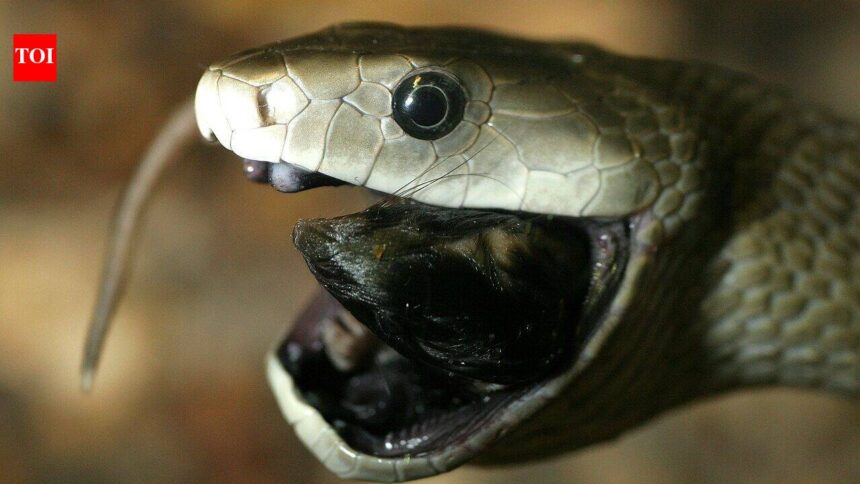
The black mamba, a serpent of unyielding ferocity and potent venom, has long been revered and feared in equal measure. Its reputation as one of the deadliest snakes in the world is well-deserved, given its aggressive behavior when cornered and the devastating effects of its venom. Found predominantly in the savannas and rocky outcrops of sub-Saharan Africa, the black mamba’s domain is as expansive as it is treacherous, encompassing several countries where its presence is a stark reminder of nature’s untamed power.
Geographical Distribution and Habitat
The black mamba’s geographical range stretches across southern and eastern Africa, with countries such as South Africa, Kenya, Tanzania, Mozambique, and Zimbabwe serving as its primary habitats. These regions provide the ideal combination of climate, terrain, and prey for the black mamba, allowing it to thrive in a variety of environments, from the arid savannas to the more lush, tropical zones. South Africa, in particular, is home to a significant population of black mambas, with the species being commonly found in the eastern and northern parts of the country.
The adaptability of the black mamba to different habitats is a key factor in its widespread distribution. It is as adept at navigating the dense foliage of woodlands as it is at scaling the rocky outcrops that dot the landscape of its territories. This versatility, combined with its speed and agility, makes the black mamba a formidable predator, capable of pursuing a range of prey from small mammals to birds and other reptiles.
Behavior and Venom
The black mamba is perhaps best known for its highly toxic venom, a potent neurotoxin that can kill a human being within 20 minutes if left untreated. The snake’s aggressive behavior when threatened or cornered exacerbates the danger it poses, as it is prone to striking multiple times in quick succession. This behavior, while dangerous, also underscores the black mamba’s primary intent: to defend itself rather than to attack without provocation.
The study of the black mamba’s behavior has provided valuable insights into the complex social dynamics of these snakes. While they are generally solitary animals, black mambas have been observed engaging in intriguing courtship rituals and territorial displays. The complexity of their behavior belies their reputation as mindless killers, revealing instead a nuanced and intelligent species that plays a vital role in the ecosystems it inhabits.
Conservation Status and Human Interaction
Despite its fearsome reputation, the black mamba faces several threats to its survival, including habitat destruction, persecution by humans, and the pet trade. Efforts to conserve and protect the black mamba and its habitats are underway, recognizing the importance of preserving biodiversity and the delicate balance of ecosystems. Education and awareness campaigns are crucial in changing perceptions about the black mamba, from a snake to be feared and killed to a species that deserves respect and protection.
As humans, our interaction with the black mamba and its habitats must be guided by a sense of responsibility and stewardship. By understanding and appreciating these incredible creatures, we can work towards ensuring their survival for generations to come. The black mamba, with its sleek, ebony body and piercing gaze, is a symbol of the wild beauty and untamed power of Africa, a reminder of the awe-inspiring diversity of life on our planet.