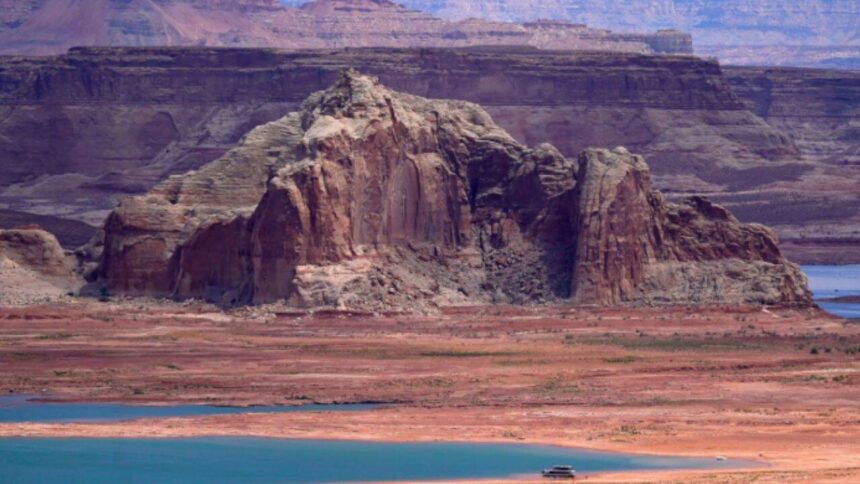
The American West is facing a water crisis of epic proportions, with two of its most iconic reservoirs, Lake Powell and Lake Mead, teetering on the brink of disaster. As the region’s megadrought shows no signs of abating, scientists have been racing to find a solution to the impending catastrophe. One radical idea that has emerged is to drain most of Lake Powell and store the water in Lake Mead instead, a move that could potentially save the latter from becoming a notorious ‘dead pool’. This drastic measure would require a fundamental shift in the way the two lakes are managed, but it may be the only way to prevent a complete collapse of the water supply for millions of people and countless industries.
Understanding the Crisis
Lake Powell, the second-largest reservoir in the US, has been struggling to maintain its water levels due to a combination of factors, including climate change, over-extraction, and evaporation. Meanwhile, Lake Mead, the largest reservoir in the US, has been facing similar challenges, with its water levels plummeting to historic lows. The consequences of inaction would be severe, with the potential for widespread water shortages, crop failures, and economic devastation. By transferring water from Lake Powell to Lake Mead, scientists hope to mitigate these risks and ensure a more stable water supply for the region.
The proposal to drain Lake Powell is not without its challenges, however. The reservoir is a popular destination for recreation and tourism, generating significant revenue for local communities. Moreover, the Glen Canyon Dam, which impounds Lake Powell, is a critical component of the regional power grid, producing hydroelectric energy for millions of homes. Any attempt to drain the lake would need to carefully balance these competing interests and find alternative solutions to minimize the impact on local economies and energy production.
Scientific Rationale
So, what’s behind the scientific rationale for draining Lake Powell? Essentially, it boils down to a simple yet compelling argument: Lake Mead is more critical to the regional water supply than Lake Powell. By transferring water from the former to the latter, scientists aim to prioritize the water needs of cities, farms, and industries that rely on Lake Mead. This approach would also help to reduce the risk of Lake Mead reaching a ‘dead pool’ level, at which point the water level would be too low to flow through the Hoover Dam, crippling the regional water infrastructure.
Furthermore, studies have shown that Lake Powell loses a significant amount of water to evaporation and seepage, estimated to be around 860,000 acre-feet per year. By transferring this water to Lake Mead, scientists believe they can reduce these losses and make more efficient use of the available water resources. While the proposal is still in its infancy, it highlights the urgent need for innovative solutions to address the region’s water crisis and ensure a sustainable future for generations to come.
Implementation and Next Steps
So, what would it take to implement this radical plan? First and foremost, it would require a concerted effort from federal agencies, state governments, and local stakeholders to coordinate the transfer of water from Lake Powell to Lake Mead. This would involve a range of technical, logistical, and regulatory challenges, from modifying the dam infrastructure to updating the water management protocols. Additionally, scientists would need to conduct extensive environmental impact assessments to ensure that the proposal does not harm the region’s delicate ecosystems or disrupt the natural flow of the Colorado River.
As the clock ticks down to a potentially catastrophic water shortage, the proposal to drain Lake Powell and store the water in Lake Mead has sparked a vital debate about the future of water management in the American West. While the idea may seem radical, it underscores the urgent need for creative solutions to address the region’s water crisis and ensure a sustainable future for millions of people and countless industries. As scientists, policymakers, and stakeholders come together to discuss the proposal, one thing is clear: the status quo is no longer an option, and bold action is needed to prevent a disaster of epic proportions.