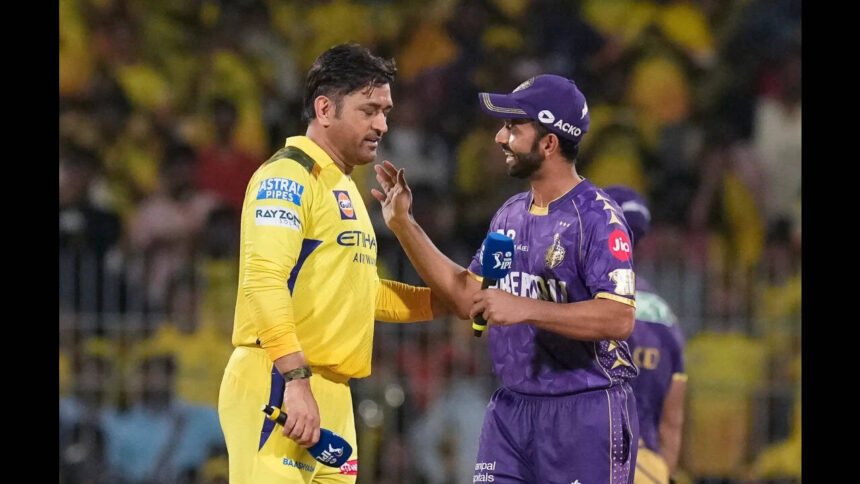
When Ajinkya Rahane reflects on his time under the leadership of Mahendra Singh Dhoni, memories of the former India captain’s unique approach to team management flood his mind. One aspect that stands out, as Rahane revealed in a recent conversation, was Dhoni’s unspoken yet unwavering rule: a player was never to be spoken to directly by the captain in the middle of the dressing room. It may seem like an insignificant detail to some, but for the players who experienced it firsthand, this rule spoke volumes about Dhoni’s commitment to creating a comfortable and trusting environment.
The Comfort Zone
Rahane, who made his international debut under Dhoni’s leadership, recalls being part of a team that was constantly evolving and growing. Dhoni’s management style, he says, played a significant role in this growth, allowing players to feel at ease and express themselves freely. ‘No one was allowed to speak to you when you were in the middle of the dressing room,’ Rahane explained, emphasizing the importance of this unwritten rule. ‘It was like a sanctuary. You could just focus on your game, and not worry about anything else.’ This sanctuary, as Rahane called it, was a testament to Dhoni’s understanding of the pressures that come with being a professional cricketer.
The impact of this rule was palpable, with many players crediting Dhoni for helping them navigate the challenges of international cricket. ‘It was a big advantage,’ Rahane said, ‘because you knew that you had a certain space where you could be yourself, without being judged or interrupted.’ The result was a team that was not only united but also confident, with players who felt comfortable expressing their opinions and ideas.
The Power of Trust
The rule, as Rahane explained, was not just about creating a comfortable environment, but also about building trust among the players. Dhoni’s unwavering commitment to this trust, Rahane said, was something that set him apart as a leader. ‘He had a lot of trust in his players,’ Rahane said, ‘and that’s something that I think is essential for any team to succeed.’ This trust, Rahane emphasized, was not just about giving players the freedom to make their own decisions, but also about creating a sense of ownership and responsibility among team members.
The results of this trust were evident on the field, with the Indian team experiencing a period of unprecedented success under Dhoni’s leadership. From their World Cup wins in 2007 and 2011 to their consistent performances in Test cricket, the Indian team was a force to be reckoned with. And while Dhoni’s leadership was certainly a key factor in this success, his commitment to creating a comfortable and trusting environment was a crucial aspect of his approach.
A Legacy of Leadership
As the Indian cricket team continues to evolve and grow, Dhoni’s legacy as a leader remains an important part of their history. Rahane’s revelation about Dhoni’s unspoken rule is a testament to the former captain’s commitment to his players and his team. It may seem like a small detail to some, but for those who experienced it firsthand, it speaks volumes about Dhoni’s character and leadership style. As Rahane put it, ‘It was a big advantage…because you knew that you had a certain space where you could be yourself, without being judged or interrupted.’ In the end, it is this commitment to comfort and trust that has left a lasting impact on the Indian cricket team, and one that will continue to inspire future generations of players.
As the Indian team looks to the future, they would do well to remember the lessons of Dhoni’s leadership. A leader who understood the importance of creating a comfortable and trusting environment, Dhoni’s legacy is one that will continue to inspire and guide the team for years to come. And for those who were fortunate enough to experience it firsthand, his unspoken rule will always be remembered as a testament to his character and leadership style.