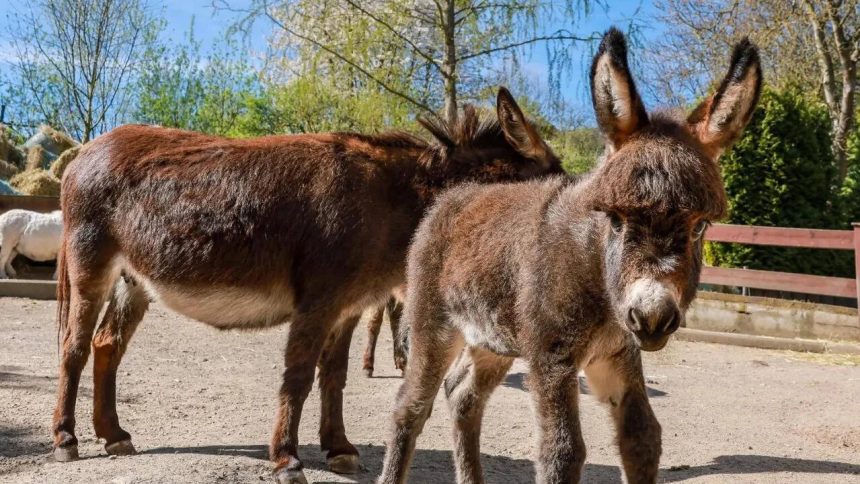
The world’s donkey population is facing an unprecedented crisis, driven by a soaring demand for ejiao, a traditional Chinese anti-ageing medicine made from donkey hides. The alarming rate of decline has prompted scientists to intervene, with Brazil now at the forefront of developing lab-grown donkey collagen as a potential solution. This innovative approach aims to provide a scalable and sustainable alternative to the current method of sourcing ejiao, which has led to the slaughter of millions of donkeys worldwide.
The Rise of Ejiao
Ejiao has been a cornerstone of traditional Chinese medicine for centuries, with its supposed anti-ageing properties making it a highly sought-after commodity. The medicine is typically made by boiling donkey hides to extract collagen, which is then used to create a range of products, from health supplements to cosmetics. As China’s middle class has grown, so too has the demand for ejiao, with the country’s increasing wealth and aging population driving the surge in demand.
The consequences of this rising demand have been devastating for donkey populations. In Africa, where many donkeys are sourced, the decline has been particularly severe, with some countries reporting a decline of up to 50% in recent years. The impact is not only limited to the donkeys themselves but also the communities that rely on them for transportation and livelihoods. As the donkey population dwindles, these communities are facing significant economic and social challenges.
The Quest for a Solution
In response to the crisis, scientists in Brazil have begun developing lab-grown donkey collagen as a potential alternative to traditional ejiao. This innovative approach involves using cell cultures to produce collagen, which can then be used to create ejiao. The benefits of this method are twofold: not only does it reduce the need for donkey slaughter, but it also provides a more consistent and high-quality product. By 2027, the scientists hope to have a scalable solution in place, which could help stabilize the donkey population and provide a more sustainable future for the species.
The development of lab-grown donkey collagen is a complex process, requiring significant investment in research and development. However, the potential rewards are substantial, with the global ejiao market estimated to be worth billions of dollars. As the demand for ejiao continues to rise, the need for a sustainable and humane solution has never been more pressing. The success of this project could have far-reaching implications, not only for the donkey population but also for the broader field of animal conservation.
A New Era for Conservation
The development of lab-grown donkey collagen is not only a significant breakthrough in the field of animal conservation but also a testament to human ingenuity and innovation. As the world grapples with the challenges of sustainability and environmental conservation, this project offers a beacon of hope for the future. By harnessing the power of science and technology, we can create solutions that not only benefit human societies but also protect and preserve the natural world.
The fate of the world’s donkey population remains uncertain, but one thing is clear: the current trajectory is unsustainable. As the demand for ejiao continues to rise, the need for a scalable and humane solution has never been more pressing. The development of lab-grown donkey collagen offers a glimmer of hope, and it is imperative that we support and invest in this innovative approach. The future of the donkey population, and indeed the future of our planet, depends on it.