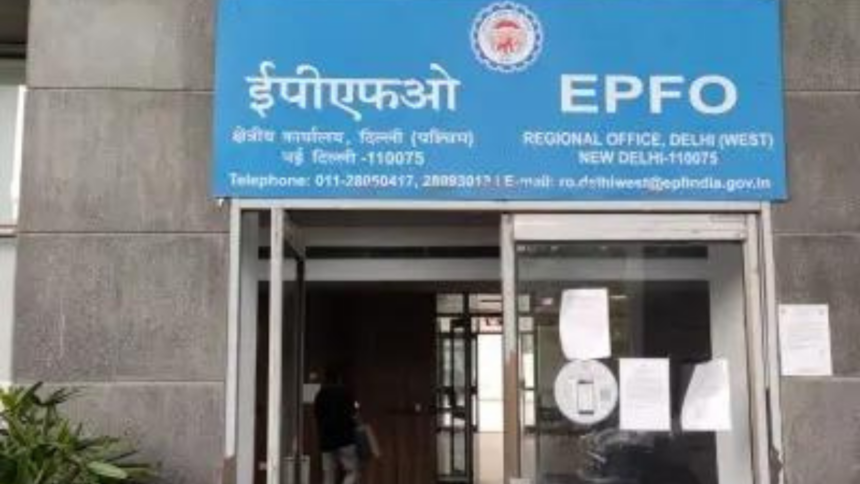
The Employees’ Provident Fund Organisation (EPFO) has taken a significant step towards simplifying compliance for establishments operating exempted Provident Fund (PF) Trusts. By launching a one-time Amnesty Scheme, 2026, the EPFO aims to bring these trusts under the Employees’ Provident Fund and Miscellaneous Provisions (EPF & MP) Act, 1952. This move is expected to have a profound impact on the compliance landscape for PF trusts, and it is crucial for employers and employees alike to understand the implications of this scheme.
What is the Amnesty Scheme, and how does it benefit exempted PF trusts?
The one-time Amnesty Scheme, 2026, allows establishments operating exempted PF trusts to regularise their status under the EPF & MP Act, 1952. This means that these trusts can now opt to become part of the EPFO, which would entail compliance with the Act’s provisions, including the mandatory contribution of 12% of the employee’s basic wage towards the PF. The scheme provides a one-time opportunity for these trusts to rectify any past non-compliance issues and bring their PF contributions up to date. By doing so, employers can avoid potential penalties and fines associated with non-compliance, while employees can benefit from the protection and security offered by the EPFO.
The benefits of the scheme extend beyond mere compliance. By joining the EPFO, exempted PF trusts can also take advantage of the organisation’s extensive services, including online facility for PF contributions, easy access to PF passbooks, and the ability to claim PF benefits online. This would streamline the PF administration process, making it more efficient and convenient for both employers and employees.
How to take advantage of the Amnesty Scheme, and what are the key dates to remember?
To participate in the Amnesty Scheme, 2026, exempted PF trusts must submit their applications to the concerned EPFO offices within the stipulated timeframe. The EPFO has specified that the scheme will remain open for a period of six months from the date of its launch. Employers are advised to carefully review the scheme’s guidelines and ensure that they meet the eligibility criteria before submitting their applications. It is also crucial to note that the scheme is one-time only, and any non-compliance issues not rectified during this period may attract penalties and fines.
The EPFO has also provided a detailed FAQ section on its website, which addresses common queries related to the scheme. Employers and employees can refer to this section for more information on the scheme’s eligibility criteria, application process, and key deadlines. Additionally, the EPFO has established a dedicated helpline for queries related to the scheme, which can be contacted for further assistance.
What is the future outlook for exempted PF trusts under the EPFO?
The launch of the one-time Amnesty Scheme, 2026, marks a significant milestone in the EPFO’s efforts to simplify compliance for PF trusts. As exempted PF trusts regularise their status under the EPF & MP Act, 1952, they can expect to enjoy a range of benefits, including streamlined PF administration, online access to PF contributions, and the protection of the EPFO’s regulatory framework. The future outlook for these trusts appears bright, with the EPFO committed to providing a supportive environment for compliance and growth.
In conclusion, the EPFO’s one-time Amnesty Scheme, 2026, presents a unique opportunity for exempted PF trusts to regularise their status under the EPF & MP Act, 1952. By participating in the scheme, employers and employees can benefit from the protection and security offered by the EPFO, while also taking advantage of the organisation’s extensive services. As the scheme remains open for a period of six months, it is essential for employers to act promptly and submit their applications to avoid any potential penalties and fines associated with non-compliance.