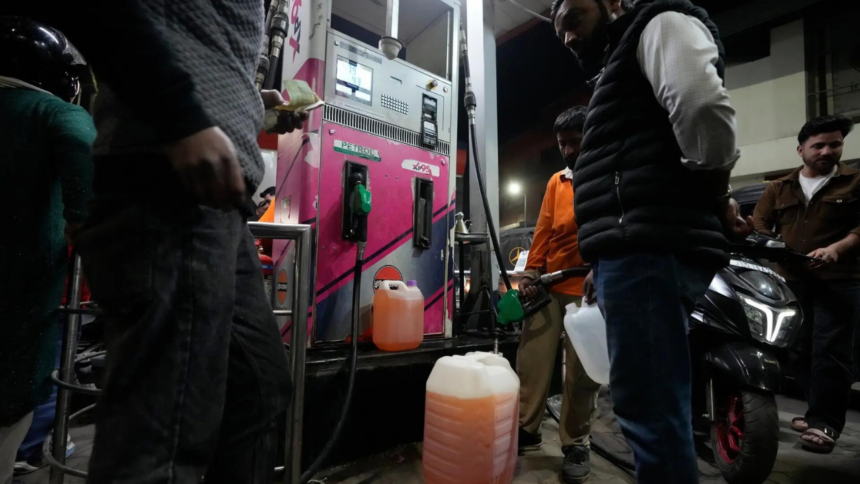
The Centre’s ambitious drive to make E20, a 20% ethanol-blended petrol, the standard fuel at petrol pumps across India has sparked a raging political debate. As the nation’s fuel landscape undergoes a significant transformation, the Opposition is accusing the Centre of hastily implementing the plan without adhering to the safeguards and phased transition outlined in a 2021 NITI Aayog report. The controversy has reignited the spotlight on the report, which proposed a gradual shift towards E20, raising questions about the Centre’s decision-making process.
Phased Transition: A Key Recommendation in the NITI Aayog Report
The NITI Aayog report, released in 2021, was a comprehensive study on the potential of ethanol-blended fuels to reduce India’s dependence on oil imports and promote sustainable agriculture. One of its key recommendations was to adopt a phased transition approach, where E20 would be introduced in select regions first, allowing the government to assess the impact on various stakeholders, including farmers, consumers, and the environment. However, the Centre’s recent decision to make E20 the standard fuel has raised concerns that this crucial aspect of the report has been ignored.
The report suggested that a phased transition would enable the government to address potential challenges, such as infrastructure gaps and supply chain disruptions, before rolling out the new fuel nationwide. It also emphasized the need for a robust support system for farmers, who would be required to adapt to the changing ethanol demands. The Opposition claims that the Centre’s decision to implement E20 without a phased transition has put the entire ecosystem at risk.
Impact on Farmers and Consumers: A Concerning Aspect of the E20 Rollout
The E20 rollout has also raised concerns about the impact on farmers and consumers. The Centre’s decision to promote ethanol-blended fuels is largely driven by the government’s desire to reduce oil imports and promote sustainable agriculture. However, the sudden shift to E20 has put pressure on farmers to adapt to the changing ethanol demands. Many farmers are worried that they will struggle to meet the increased ethanol production targets, which could lead to a decline in crop yields and reduced incomes.
Consumers, on the other hand, are concerned about the potential impact on the price of petrol. While the Centre claims that the E20 rollout will lead to significant cost savings, many experts argue that the costs associated with the transition will outweigh the benefits. The increased demand for ethanol could lead to price increases, which could be detrimental to the economy.
Why the Centre’s Decision is Under Scrutiny
The Centre’s decision to implement E20 without a phased transition and safeguards has raised several questions. Firstly, it is unclear whether the government has adequately addressed the potential challenges associated with the rollout. Secondly, the decision has been made without a comprehensive assessment of the impact on farmers, consumers, and the environment. Lastly, the Centre’s move has sparked concerns about the lack of transparency in the decision-making process.
The controversy surrounding the E20 rollout serves as a reminder of the complexities involved in implementing large-scale policy changes. As the nation’s fuel landscape undergoes a significant transformation, it is essential that the Centre engages in a more nuanced and inclusive dialogue with stakeholders to ensure a smooth transition.
With the E20 rollout ongoing, it remains to be seen whether the Centre will address the concerns raised by the Opposition and reconsider its decision-making process. One thing is certain – the controversy surrounding the E20 rollout has brought the spotlight back on the NITI Aayog report, highlighting the need for a more cautious and phased approach to policy implementation.