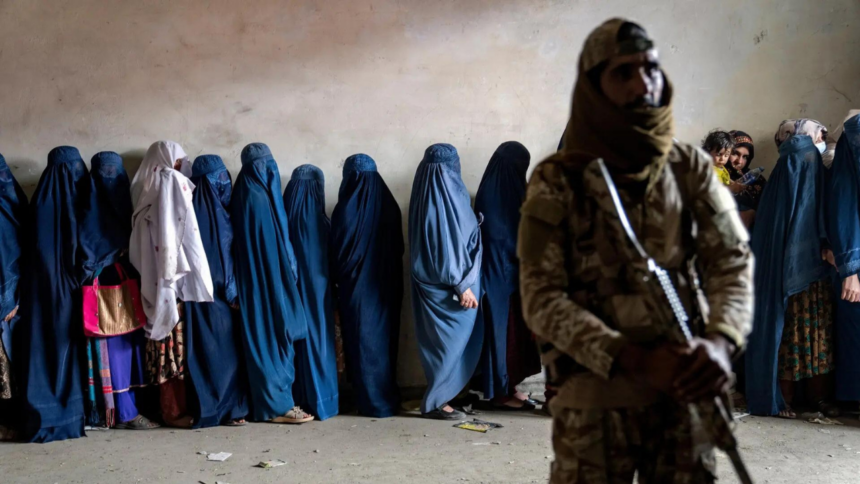
A delegation of senior Taliban officials has landed in Brussels, marking the first time the Afghan group has engaged in official talks with European Union officials. The closed-door meeting, scheduled for Tuesday, is set to focus on a contentious issue: the return of Afghan nationals from Europe. As the EU grapples with the complex challenge of deporting individuals deemed unworthy of asylum, concerns over human rights abuses and potential risks to national security are likely to dominate the discussions.
EU’s Reluctant Engagement
The EU has consistently refused to formally recognize the Taliban regime, citing concerns over the group’s human rights record and its treatment of women and minority groups. However, with the influx of Afghan asylum seekers reaching unprecedented levels, the bloc has been forced to reassess its stance. Brussels has long been wary of engaging with the Taliban, but the prospect of deporting thousands of Afghan nationals has created a sense of urgency, prompting the EU to take a more pragmatic approach.
The talks are also seen as an opportunity for the EU to press the Taliban on the issue of human rights, particularly with regards to women’s rights and the treatment of minority groups. EU officials are likely to emphasize the need for the Taliban to adhere to international human rights standards and to respect the rights of women and girls. As the international community continues to grapple with the fallout from the Taliban’s return to power, the EU’s engagement with the group is a critical test of the bloc’s commitment to upholding human rights and promoting democratic values.
Deportation Dilemmas
The issue of Afghan deportations has become a pressing concern for the EU, with many member states struggling to cope with the influx of asylum seekers. The number of Afghans seeking asylum in Europe has increased significantly since the Taliban seized power in August 2021, with many claiming to be at risk of persecution due to their ties to the former government or their membership in minority groups. However, concerns over the potential risks to national security and the likelihood of human rights abuses have led to a surge in deportations, with many Afghans facing the prospect of being sent back to a country where they may face persecution or even violence.
The talks in Brussels are likely to focus on finding a solution to the deportation dilemma, with the EU seeking to balance its commitment to upholding human rights with the need to manage the flow of asylum seekers. EU officials are likely to push for a more humane approach to deportations, one that takes into account the individual circumstances of each asylum seeker and provides adequate protection for those deemed to be at risk. As the EU navigates the complex web of international relations and human rights obligations, the outcome of the talks will be closely watched by human rights advocates and policymakers alike.
Regional Implications
The Brussels talks have significant implications for the region, with the Taliban’s return to power sparking a renewed interest in Afghanistan’s neighbors. Pakistan, in particular, has been accused of providing safe haven to Taliban leaders and fighters, raising concerns over the potential for terrorist networks to be re-established. The EU’s engagement with the Taliban is also likely to have implications for its relationships with other countries in the region, including Iran and Turkey. As the EU seeks to promote stability and security in the region, the outcome of the talks will be critical in determining the bloc’s ability to pursue its foreign policy objectives.
As the EU’s delegation meets with the Taliban delegation, the international community will be watching closely for signs of progress. The talks represent a critical test of the EU’s commitment to upholding human rights and promoting democratic values, and a failure to secure meaningful concessions from the Taliban would be a major setback for the bloc. Only time will tell if the EU’s pragmatic approach to engagement with the Taliban will yield tangible results, but one thing is certain: the outcome of the talks will have far-reaching implications for the region and beyond.