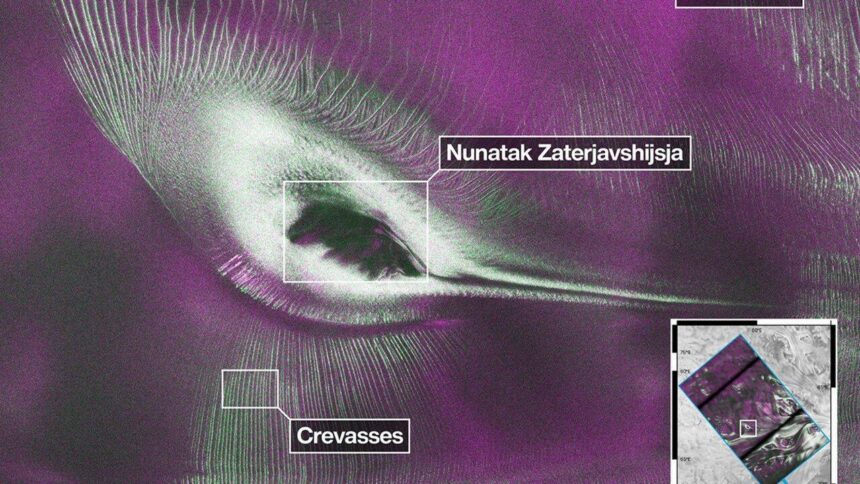
Nasa’s NISAR satellite has given us a glimpse of the breathtaking beauty that lies hidden beneath the icy surface of Antarctica, where a stunning pattern resembling a hummingbird has been captured in extraordinary detail. This remarkable image, which has left scientists and nature enthusiasts alike in awe, reveals the intricate dance of ice and stone that shapes the frozen continent’s landscape. The ‘hummingbird’ pattern, formed by the movement of glacier ice around a mountain, is a testament to the awe-inspiring forces that have sculpted the Earth’s surface over millions of years.
Unveiling the Secrets of Glacier Movement
The NISAR satellite, which stands for NASA-ISRO Synthetic Aperture Radar, has provided scientists with a unique opportunity to study the movement of glaciers and ice sheets in unprecedented detail. By using advanced radar technology to penetrate the ice and snow, the satellite has been able to map the flow of ice across the continent, revealing the intricate patterns and pathways that are shaped by the underlying topography. In the case of the ‘hummingbird’ pattern, the movement of glacier ice around a mountain has been slowed and disrupted, creating a unique and striking formation that is unlike anything seen before.
The movement of glaciers is a complex process that is influenced by a variety of factors, including the slope and shape of the surrounding terrain, the temperature and precipitation patterns, and the presence of obstacles such as mountains or valleys. By studying the movement of glaciers, scientists are able to gain insights into the Earth’s climate history, including the extent of past ice ages and the impact of human activities on the planet’s ecosystems.
NISAR’s Contribution to Climate Research
The NISAR satellite is a joint project between Nasa and the Indian Space Research Organisation (ISRO), and its primary mission is to study the Earth’s surface and subsurface using advanced radar technology. In addition to mapping the movement of glaciers, the satellite is also being used to monitor changes in sea level, track the movement of tectonic plates, and study the impact of human activities on the planet’s ecosystems. By providing scientists with a wealth of data and imagery, NISAR is helping to advance our understanding of the Earth’s climate and geology, and is providing valuable insights into the complex processes that shape our planet.
The ‘hummingbird’ pattern captured by NISAR is just one of many examples of the satellite’s capabilities, and it highlights the importance of continued investment in space-based research and development. As we continue to explore and understand the Earth’s surface and subsurface, we are gaining a deeper appreciation for the complex and dynamic systems that shape our planet, and for the critical role that science and technology play in advancing our knowledge and understanding of the world around us.
A New Era in Climate Research
The image captured by NISAR is not just a striking visual representation of the Earth’s beauty, but also a powerful reminder of the importance of continued investment in climate research and development. As the Earth’s climate continues to change, it is more important than ever that we have the tools and technologies to understand and address the impacts of these changes. The NISAR satellite, and the data and imagery it provides, are an important step forward in this effort, and they highlight the critical role that space-based research and development play in advancing our understanding of the Earth’s climate and geology.
The future of climate research is bright, and the data and imagery provided by NISAR and other space-based platforms are helping to drive a new era of discovery and exploration. As we continue to explore and understand the Earth’s surface and subsurface, we are gaining a deeper appreciation for the complex and dynamic systems that shape our planet, and for the critical role that science and technology play in advancing our knowledge and understanding of the world around us.
The ‘hummingbird’ pattern captured by NISAR is a powerful reminder of the awe-inspiring beauty and complexity of the Earth’s surface, and it highlights the importance of continued investment in space-based research and development. As we look to the future, we are filled with a sense of wonder and excitement at the prospects for discovery and exploration that lie ahead.