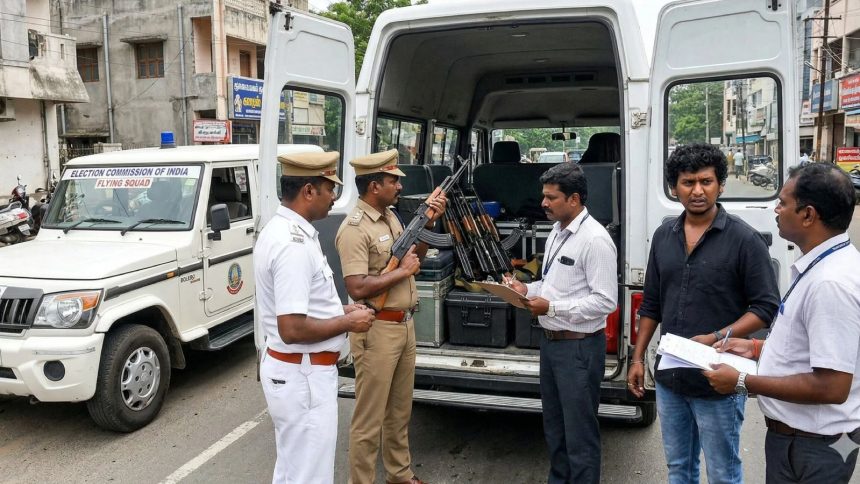
The city of Chennai was abuzz recently with the shocking seizure of 10 AK-47s, sending shockwaves through the community and raising more questions than answers. But what made this incident even more intriguing was the alleged link to renowned film director Lokesh Kanagaraj. As it turned out, the seized guns were dummy firearms meant for a film shoot, and after verification, they were returned to their rightful owners. But this episode has sparked a wider debate about the intersection of art and reality, and the potential consequences of blurring those lines.
The Art of Imitation
The use of dummy guns in film productions is not uncommon, as it allows actors to safely rehearse and perform complex scenes without the risk of actual harm. However, the sheer number of AK-47s seized in this instance has raised eyebrows, with many wondering how such a large quantity of replica firearms ended up in the city. While the link to Lokesh Kanagaraj’s film has been established, it’s still unclear how these guns were procured and what measures were in place to ensure their safe handling and storage.
As the investigation continues, it’s becoming increasingly clear that the film industry’s use of replica firearms is a complex issue, with many gray areas and loopholes. On one hand, these props are essential for creating realistic scenes and immersing audiences in the story. On the other hand, the potential risks and consequences of mishandling or misusing these replica guns cannot be ignored. The fact that the seized AK-47s were returned after verification suggests that the film’s production team had obtained the necessary clearances and followed established protocols, but it also highlights the need for stricter regulations and oversight.
Reality Check
The seizure of the AK-47s in Chennai has also sparked a wider conversation about the impact of film and media on our perception of reality. When we watch a movie or a TV show, we often suspend our disbelief and become fully immersed in the story. But what happens when the lines between reality and fiction become blurred? The use of replica firearms in film productions can be seen as a form of simulation, where the artificial is made to look and feel like the real thing. However, this can also have unintended consequences, such as desensitizing audiences to the dangers of real firearms or perpetuating negative stereotypes.
The film industry has a significant influence on popular culture and public opinion, and it’s essential to consider the potential impact of their work on society. By using replica firearms and depicting violent scenes, filmmakers can shape our attitudes towards guns and violence, often in subtle but profound ways. As such, it’s crucial for the industry to take responsibility for their creations and ensure that they are not contributing to a culture of violence or glorifying harmful behavior.
Behind the Lens
As we reflect on the curious case of the seized AK-47s in Chennai, it’s essential to consider the broader context of the film industry and its relationship with reality. Filmmakers like Lokesh Kanagaraj have a unique platform to shape our perceptions and challenge our assumptions, but they also have a responsibility to do so in a way that is respectful and mindful of the potential consequences. By exploring the intersection of art and reality, we can gain a deeper understanding of the complex issues at play and the need for greater awareness and sensitivity in the film industry.
The incident in Chennai serves as a reminder that the film industry is not just about entertainment, but also about the power of storytelling and its potential impact on our lives. As we move forward, it’s essential to consider the implications of this incident and the need for greater transparency and accountability in the film industry. By doing so, we can promote a more nuanced understanding of the complex issues at play and foster a more responsible and respectful approach to filmmaking.
The future of filmmaking in India is bright, with many talented directors and producers pushing the boundaries of storytelling and creativity. However, it’s essential to remember that with great power comes great responsibility, and the film industry must be mindful of its influence on society. As we look to the future, it’s crucial to prioritize sensitivity, awareness, and responsibility in the film industry, ensuring that the stories we tell and the images we create have a positive impact on our world.
In the end, the seizure of the AK-47s in Chennai has sparked a vital conversation about the film industry and its relationship with reality. As we continue to explore the intersection of art and reality, we must prioritize responsibility, awareness, and sensitivity, recognizing the profound impact that filmmaking can have on our lives and our world. The story of the seized AK-47s serves as a powerful reminder of the need for greater awareness and accountability in the film industry, and the importance of promoting a culture of respect, empathy, and understanding.