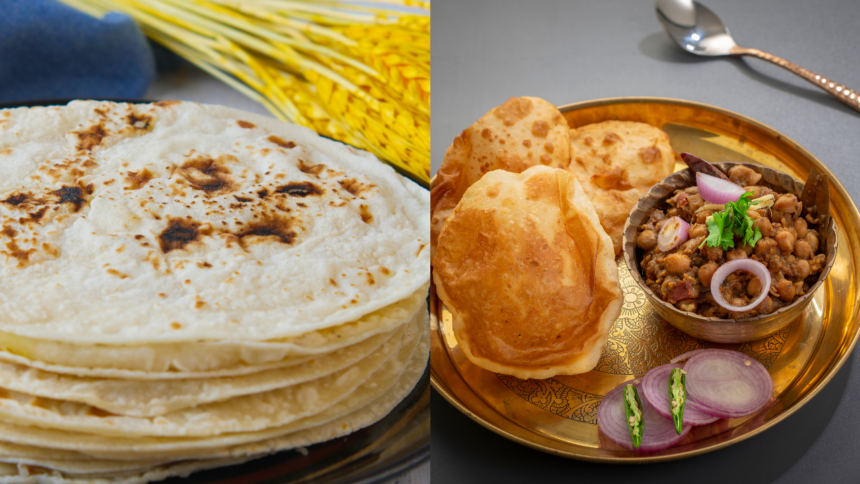
There’s something undeniably comforting about tearing into a warm, freshly baked Indian bread. Whether it’s a soft, fluffy roti paired with a steaming bowl of dal after a long day, a flaky, buttery paratha at breakfast, or a plate of crispy, golden-brown chole bhature reserved for special occasions, breads are more than just a side on an Indian plate – they’re an integral part of everyday life. Every region in India has its own beloved bread, each carrying generations of tradition, family recipes, and unmistakable flavours. Yet, despite sharing the same space on our dining tables, not all Indian breads are nutritionally alike. The type of flour used, the amount of oil or ghee added, whether the bread is baked, roasted, or deep-fried, and even its size can make a significant difference to its calorie count. A simple phulka cooked over an open flame is naturally lighter than a butter-laden naan, while millet-based rotis bring a different nutritional profile altogether. Of course, calories are only one piece of the puzzle when it comes to determining the healthiness of a food. A wholesome meal depends on the balance of carbohydrates, protein, fibre, and healthy fats, along with portion sizes and overall eating habits. Knowing the calorie content of your favourite breads simply helps you make informed choices without giving up the foods you love.
The Lighter Options
Some Indian breads are naturally lighter and lower in calories than others. Phulka, for example, is a simple, unleavened flatbread made from whole wheat flour, water, and salt. Cooked over an open flame, it’s a great source of fibre and nutrients, with approximately 80-100 calories per serving. Another light option is the makki di roti, a type of corn bread popular in the Punjab region. Made from maize flour, water, and salt, it’s a good source of complex carbohydrates and fibre, with around 120-150 calories per serving. The jowar roti, or sorghum bread, is another nutritious option, rich in protein, fibre, and minerals like iron and calcium. With approximately 150-180 calories per serving, it’s a great choice for those looking for a healthier bread option.
Other lighter options include the bajra roti, or pearl millet bread, which is high in fibre and minerals like copper and iron, and the ragi roti, or finger millet bread, which is rich in calcium and iron. Both of these breads have approximately 150-180 calories per serving, making them great choices for those looking to reduce their calorie intake.
The Middle Ground
Some Indian breads fall into a middle ground in terms of calorie count. The roti, for example, is a staple in many Indian households, made from whole wheat flour, water, and salt. While it’s a good source of fibre and nutrients, it’s also relatively high in calories, with approximately 200-250 calories per serving. The paratha, a flaky, layered flatbread, is another popular option, often made with a combination of whole wheat and all-purpose flour. While it’s higher in calories than the roti, with approximately 250-300 calories per serving, it’s still a relatively healthy option when made with whole wheat flour and cooked with minimal oil.
The naan, a leavened flatbread, is another bread that falls into the middle ground. While it’s often made with refined flour and cooked with butter or ghee, it can still be a relatively healthy option when made with whole wheat flour and cooked with minimal oil. With approximately 250-300 calories per serving, it’s a great choice for those looking for a slightly more indulgent bread option.
The High-Calorie Breads
Finally, some Indian breads are high in calories and should be consumed in moderation. The bhatura, a deep-fried bread often served with chole or other curries, is one such bread. Made from maida flour, water, and salt, it’s high in calories and fat, with approximately 400-500 calories per serving. The puri, a deep-fried bread often served with dal or chana masala, is another high-calorie option, with approximately 300-400 calories per serving. The garlic naan, a leavened flatbread often topped with garlic butter, is another high-calorie option, with approximately 300-400 calories per serving.
While these high-calorie breads can be a treat, it’s essential to enjoy them in moderation as part of a balanced diet. By knowing the calorie content of your favourite breads, you can make informed choices and still indulge in the foods you love.
So next time you reach for your favourite Indian bread, be aware of its calorie count and balance it with a variety of nutrient-dense foods. By doing so, you can enjoy the comforting, delicious taste of Indian breads while maintaining a healthy and balanced diet.