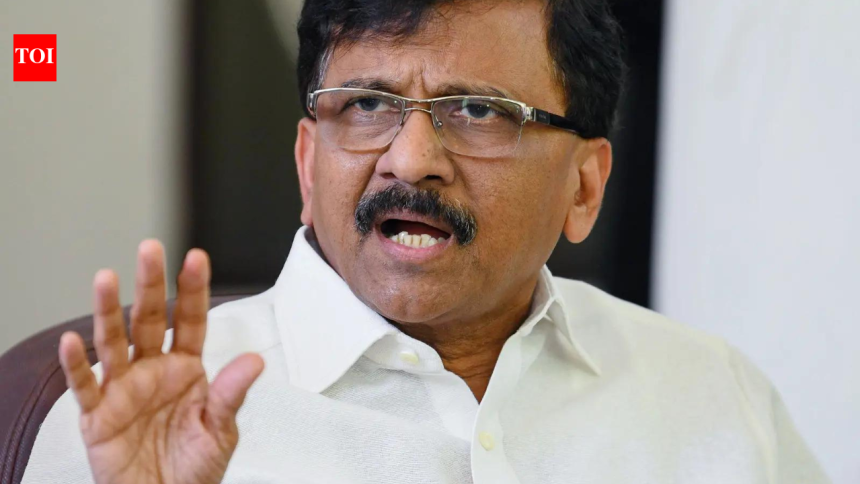
Indian politics has long been known for its dramatic twists and turns, but the latest controversy surrounding Sanjay Raut, a prominent leader of the Shiv Sena UBT, has left many stunned. In a shocking display of verbal aggression, Raut used explicit cuss words to describe defectors at a recent press conference, leaving the audience and the media in a state of utter dismay. The incident has sparked a heated debate about the use of foul language in politics and its implications on the country’s democratic discourse.
Politics of Provocation
The use of cuss words by Raut has been widely condemned by his opponents and critics, who argue that such language has no place in politics. They claim that Raut’s outburst is a clear indication of his frustration and desperation, and that it reflects poorly on his party and its ideology. However, Raut’s supporters have defended his actions, saying that he was simply expressing his genuine feelings and emotions in a moment of anger and betrayal.
As the controversy continues to simmer, it has raised important questions about the role of language in politics and the boundaries of free speech. While some argue that politicians should be allowed to express themselves freely, others believe that they have a responsibility to maintain a certain level of decorum and dignity in public life. The incident has also highlighted the growing trend of aggressive and confrontational politics in India, where leaders often use provocative language to polarize public opinion and garner support.
Implications and Repercussions
The fallout from Raut’s cuss word controversy has been swift and severe. Several leaders from opposition parties have demanded his apology and resignation, while some have even called for his arrest and prosecution. The incident has also sparked a wider debate about the need for stricter laws and regulations to govern the behavior of politicians in public life. As the controversy continues to unfold, it remains to be seen how Raut and his party will respond to the criticism and backlash.
The incident has also raised concerns about the impact of such language on the country’s youth and the wider society. Many believe that the use of cuss words by a prominent politician can normalize and legitimize such behavior, and create a culture of intolerance and aggression. Others argue that it can have a corrosive effect on the country’s social fabric, and undermine the values of respect, empathy, and civility that are essential for a healthy and functioning democracy.
Way Forward
As the controversy surrounding Raut’s cuss word incident continues to simmer, it is clear that Indian politics is at a crossroads. The incident has highlighted the need for greater accountability and transparency in public life, and the importance of maintaining a certain level of decorum and dignity in politics. It has also underscored the need for stricter laws and regulations to govern the behavior of politicians, and for a more nuanced and informed public debate about the role of language in politics.
The way forward will depend on how Raut and his party respond to the criticism and backlash, and how the wider society and the media choose to engage with the issue. While some may argue that the incident is a storm in a teacup, others believe that it has the potential to spark a wider conversation about the state of Indian politics and the values that underpin it. As the country moves forward, it is clear that the incident will have a lasting impact on the country’s political landscape, and will be remembered as a turning point in the ongoing debate about the role of language and civility in public life.