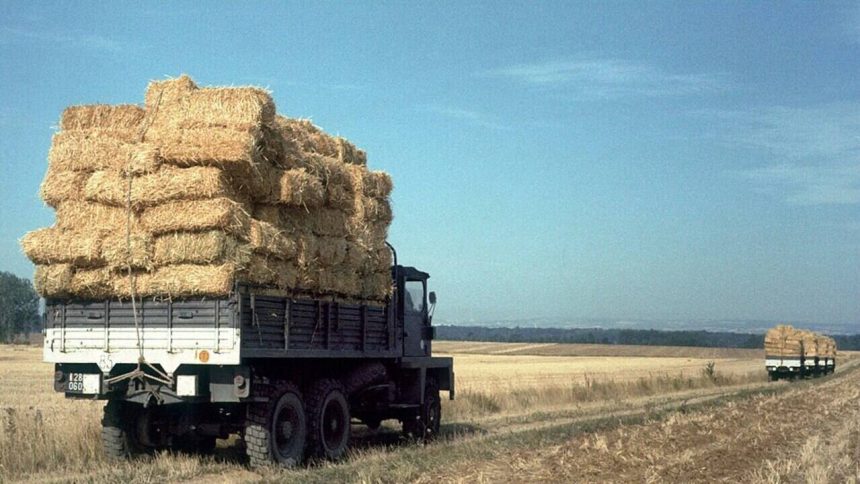
It was mid-July 1976, and the once-green pastures of rural France had turned to dust. A severe drought had gripped the nation, leaving behind a desolate landscape of brown fields, parched crops, and desperate farmers. The country’s livestock, too, were struggling to survive, with many facing the real threat of starvation due to a lack of feed. The situation was dire, and the French government knew it had to act fast to prevent a full-blown crisis.
A Nationwide Straw Operation
In a remarkable show of logistical coordination, the French government launched a massive straw operation to bring much-needed feed to the country’s rural areas. Trains were pressed into service, hauling an astonishing 60,000 tonnes of straw from the south of France to areas where the livestock were running out of food. The operation was unprecedented in its scale, and it required the coordination of multiple government agencies, railway workers, and farmers to make it happen. From the start, it was clear that this was a make-or-break situation for France’s agricultural industry.
The trains, which were specially modified to carry the heavy loads, traveled for hours every day, often in challenging conditions. The drivers, who were mostly experienced railwaymen, were tasked with ensuring the safe transportation of the straw, which was often loaded onto the trains in precarious conditions. Despite the difficulties, the drivers remained committed to their mission, knowing that their efforts were crucial to saving the livestock of rural France.
The Human Side of the Crisis
Behind the statistics and logistical challenges of the straw operation, there were countless stories of human resilience and determination. Farmers, who had worked tirelessly to plant and harvest their crops, were now struggling to keep their livestock from starving. Many had to make difficult decisions about which animals to cull, and which ones to keep alive, despite the dwindling food supplies. The emotional toll of the crisis was immense, with many farmers feeling helpless and frustrated in the face of a natural disaster that seemed to have no end in sight.
For the families who depended on the livestock for their livelihoods, the situation was particularly dire. The loss of their animals would not only mean financial ruin but also a loss of identity and cultural heritage. Many of these families had been farming for generations, and the thought of losing their livestock was a prospect that filled them with dread.
A Last-Minute Solution
Despite the challenges and uncertainties of the straw operation, the French government’s initiative showed a remarkable willingness to adapt and respond to the crisis. In the face of a severe drought, the government had acted swiftly and decisively to prevent a disaster from unfolding. The operation was a testament to the resilience of the French people, who had come together to support each other in the face of adversity.
As the trains continued to rumble across the countryside, carrying their precious cargo of straw to the rural areas, there was a sense of hope in the air. The livestock, too, seemed to sense that help was on the way, and their spirits began to lift as the food supplies began to arrive. Although the drought would eventually pass, its impact on rural France would be felt for years to come. But for now, at least, the French people had reason to be proud of their ability to come together and overcome even the most daunting challenges.
The drought of 1976 would eventually become a distant memory, but the lessons learned from it would not be forgotten. The straw operation, which had been a last-minute solution to a desperate problem, would go down in history as a remarkable example of French ingenuity and determination.