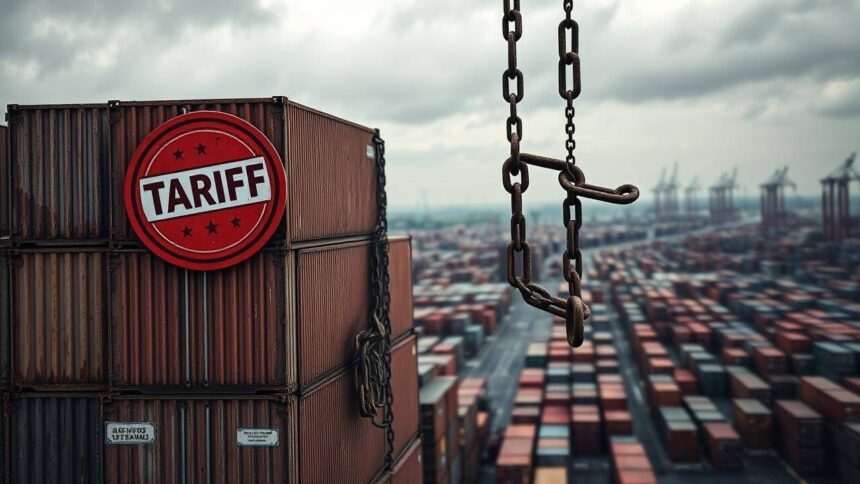
The world economy is standing at a critical juncture, as the relentless march of globalisation is rapidly giving way to a new era of geo-economic fragmentation. This seismic shift has the potential to redraw the economic landscape, with far-reaching consequences for nations, businesses, and individuals alike. At the heart of this transformation lies a deepening economic divide between the East and the West, a chasm that could have devastating effects on global prosperity, with the World Economic Forum warning of a potential $6.9 trillion loss in global GDP by 2025-26 if a full economic decoupling were to occur.
Economic Fragmentation: A New World Order
The evolving economic landscape is marked by a series of complex and interconnected factors, including rising geopolitical tensions, trade wars, and a marked decline in international cooperation. These developments have created an environment in which nations are increasingly seeking to protect their own economic interests, often at the expense of global integration. This trend towards economic fragmentation is not only undermining the principles of free trade and open markets but also threatening the very foundations of the global economy.
A key driver of this fragmentation is the growing rivalry between the East and the West, with nations on both sides of the divide seeking to assert their economic and geopolitical influence. The East, led by China, is rapidly emerging as a major economic powerhouse, with a growing presence in global trade, investment, and technology. In contrast, the West, led by the United States, is seeking to maintain its dominance, with a focus on protecting its economic interests and promoting its values of democracy and free markets.
The Human Cost of Economic Decoupling
The potential consequences of a full economic decoupling between the East and the West are dire, with the World Economic Forum warning of a significant decline in global GDP. This loss of economic output would have far-reaching effects, including higher unemployment, lower living standards, and reduced economic opportunities. The human cost of such a decoupling would be particularly severe in developing nations, where economic growth is often closely tied to international trade and investment.
The impact of economic decoupling would also be felt in the West, where businesses and consumers would face higher costs, reduced access to markets, and decreased economic competitiveness. The effects would be particularly pronounced in industries that rely heavily on global supply chains, such as technology, manufacturing, and logistics. As nations turn inward, the flow of goods, services, and ideas would be severely curtailed, leading to a decline in innovation, productivity, and economic growth.
A Path Forward: Cooperation and Dialogue
Despite the challenges posed by economic fragmentation, there is still a window of opportunity for nations to come together and promote a more cooperative and integrated global economy. This would require a renewed commitment to international dialogue, a willingness to address the underlying causes of fragmentation, and a focus on promoting shared economic interests. By working together, nations can create a more stable and prosperous global economy, one that benefits all nations and peoples, regardless of their geographic location or economic system.
The path forward will not be easy, and it will require significant efforts from nations, businesses, and individuals alike. However, the stakes are too high to ignore, and the potential rewards of a more integrated and cooperative global economy are too great to miss. As the world teeters on the brink of a new era of economic fragmentation, it is imperative that we work together to promote a more prosperous, stable, and equitable global economy for all.