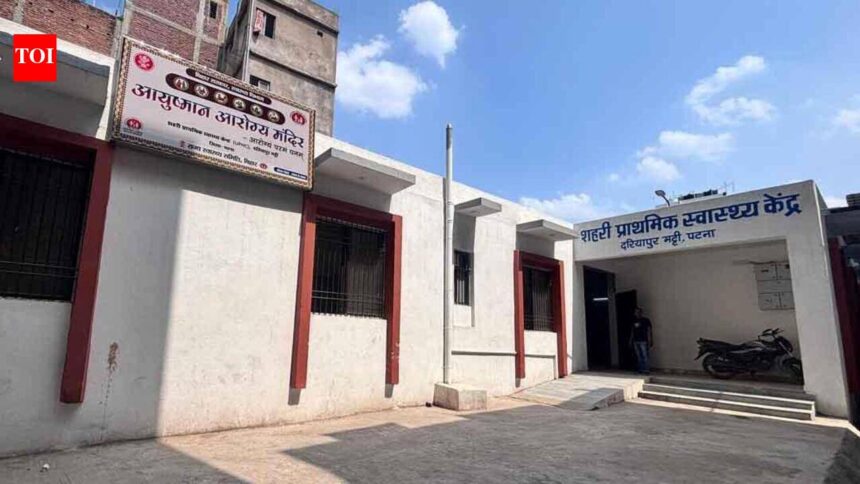
The Patna Health Minister’s ambitious plan to revolutionize healthcare in the state capital is finally taking shape. Two newly developed urban health centres, modelled on Delhi’s mohalla clinics, have started operating at two locations in Patna. The centres, which are designed to provide quality healthcare services to residents of urban areas, are still awaiting a formal inauguration from the Health Minister. The centres have been equipped with state-of-the-art medical facilities and a team of skilled medical professionals who will provide a range of services including routine check-ups, vaccinations, and chronic disease management. The centres will also have a pharmacy, a laboratory, and a diagnostic centre on site, making it a one-stop-shop for all healthcare needs.
Modelled on Delhi’s Success Story
The idea of mohalla clinics, where healthcare services are provided in local communities, was first introduced in Delhi in 2015. Since then, Delhi has expanded its mohalla clinic network to over 1,200 clinics across the city. The clinics have been a huge success, providing essential healthcare services to millions of residents in Delhi. The clinics have been particularly effective in improving maternal and child healthcare, reducing infant mortality rates, and increasing access to essential medicines. The Bihar government is hoping to replicate this success in Patna and has modelled its urban health centres along similar lines.
The urban health centres in Patna will be staffed by a team of doctors, nurses, pharmacists, and other healthcare professionals who will provide a range of services including routine check-ups, vaccinations, and chronic disease management. The centres will also offer health education and awareness programmes to residents of the area. The Bihar government has also plans to expand the network of urban health centres to other cities in the state, with the aim of providing quality healthcare services to residents of urban areas.
Benefits for Residents
The urban health centres are expected to have a significant impact on the health and wellbeing of residents in Patna. The centres will provide access to quality healthcare services, reducing the burden on private hospitals and clinics. The centres will also reduce the out-of-pocket expenditure on healthcare, making healthcare more affordable for the poor and vulnerable. The centres will also provide health education and awareness programmes, empowering residents to take charge of their health and wellbeing. The Bihar government is hoping that the centres will serve as a model for other states in the country and help to improve healthcare outcomes across the country.
The Bihar government has also plans to integrate the urban health centres with the existing healthcare system in the state. This will ensure seamless coordination between the centres and other healthcare facilities, making it easier for residents to access healthcare services. The government is also planning to use technology to streamline the functioning of the centres, making it easier for residents to book appointments and access healthcare services online.
Challenges Ahead
Despite the promising start, the urban health centres in Patna face several challenges ahead. One of the major challenges is the recruitment and retention of skilled medical professionals. The Bihar government has plans to improve the incentives and benefits for healthcare professionals working in the centres, but it remains to be seen whether this will be enough to attract and retain the best talent. Another challenge is the integration of the centres with the existing healthcare system in the state. This will require significant investment in infrastructure and technology, as well as changes to existing policies and procedures. The Bihar government will need to work closely with healthcare professionals, civil society organisations, and other stakeholders to overcome these challenges and ensure the success of the urban health centres.
The urban health centres in Patna are a welcome step towards improving healthcare outcomes in the state capital. With the right support and resources, these centres have the potential to transform the way healthcare is delivered in urban areas. The Bihar government must continue to invest in these centres and work closely with healthcare professionals and other stakeholders to ensure their success.