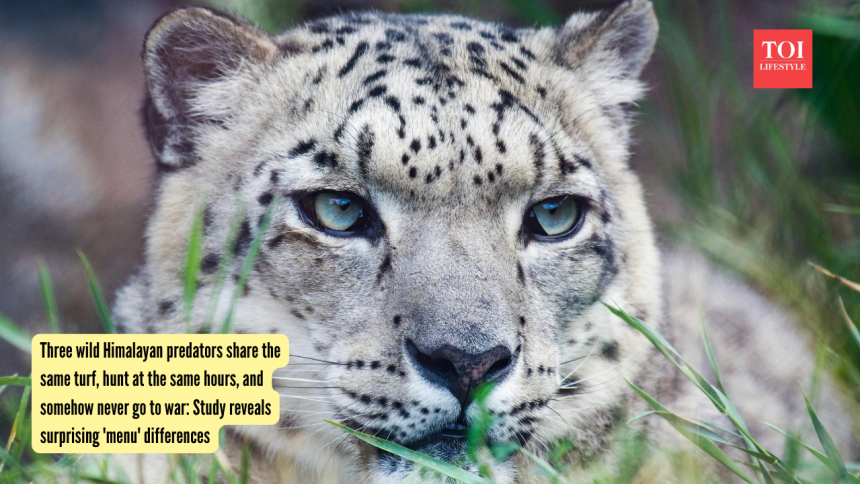
The Himalayas have long been a subject of fascination, with their rugged landscapes, diverse wildlife, and mysterious ways. Among the many wonders of this ancient mountain range, one phenomenon stands out: the harmonious coexistence of three apex predators – the snow leopard, the Tibetan wolf, and the Eurasian lynx. These wild animals not only share the same territory but also hunt during the same hours, yet they seem to have found a way to avoid conflict, leaving scientists and wildlife enthusiasts alike in awe of their remarkable ability to peacefully coexist.
Unraveling the Mystery of Coexistence
Researchers have been studying the behavior of these predators, attempting to understand the underlying factors that contribute to their harmonious relationship. One of the key findings is that each species has a unique ‘menu’ of prey, which significantly reduces competition among them. The snow leopard, for instance, primarily feeds on mountain goats and blue sheep, while the Tibetan wolf preys on smaller mammals like marmots and hares. The Eurasian lynx, on the other hand, has a more varied diet that includes birds, rodents, and even the occasional domestic livestock.
This difference in prey preference is believed to be a major factor in the peaceful coexistence of these predators. By focusing on distinct food sources, they minimize the risk of encountering each other during hunts, thus reducing the potential for conflict. Additionally, the vast and diverse landscape of the Himalayas provides ample space for each species to establish its own territory, further decreasing the likelihood of overlap and competition.
The Role of Habitat and Prey Distribution
The unique geography of the Himalayas plays a significant role in shaping the behavior and distribution of these predators. The mountain range’s diverse landscape, which includes forests, grasslands, and alpine meadows, supports a wide variety of prey species. This, in turn, allows the snow leopard, Tibetan wolf, and Eurasian lynx to occupy distinct ecological niches, reducing the need for competition and aggression. Furthermore, the prey distribution in the Himalayas is often patchy and unpredictable, making it essential for predators to be adaptable and flexible in their hunting strategies.
The adaptability of these predators is also reflected in their ability to adjust their activity patterns in response to changing environmental conditions. For example, during periods of harsh weather or scarce prey, they may alter their hunting schedules or range sizes to optimize their chances of survival. This flexibility is crucial in the face of the many challenges posed by the Himalayan environment, including steep terrain, limited food resources, and extreme weather conditions.
Conservation Implications and Future Directions
The discovery of the harmonious coexistence among the snow leopard, Tibetan wolf, and Eurasian lynx has significant implications for conservation efforts in the Himalayas. By recognizing the importance of preserving the diverse prey base and habitat complexity, conservationists can develop more effective strategies to protect these apex predators and their ecosystems. This may involve initiatives such as habitat restoration, prey management, and human-wildlife conflict mitigation, all of which can contribute to the long-term survival of these incredible animals.
As scientists continue to unravel the secrets of the Himalayan predators’ harmonious relationship, they are reminded of the awe-inspiring complexity and beauty of the natural world. The coexistence of the snow leopard, Tibetan wolf, and Eurasian lynx serves as a powerful symbol of the resilience and adaptability of life in the face of adversity, inspiring a deeper appreciation for the importance of preserving the world’s most remarkable ecosystems.