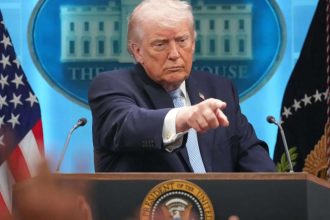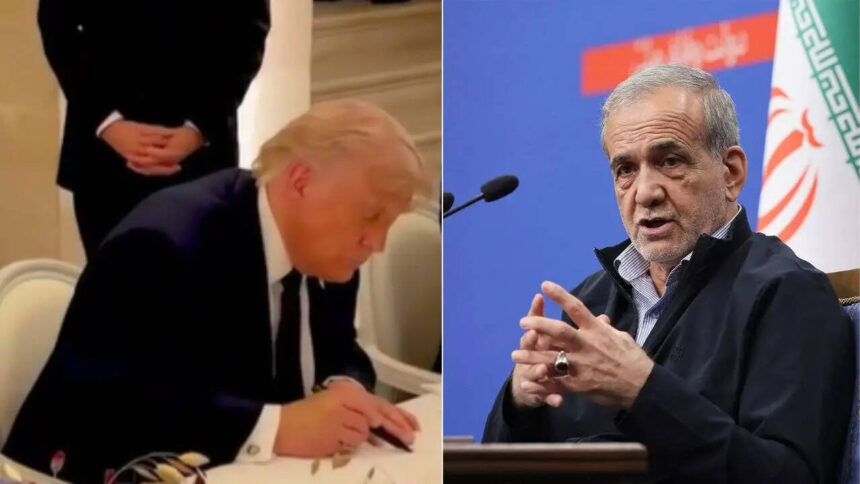
The United States and Iran have taken a significant step towards ending decades of hostility with the virtual signing of a 14-point memorandum of understanding (MoU) by US President Donald Trump and Iranian President Masoud Pezeshkian. This historic agreement, finalized after months of intense negotiations, aims to reopen the Strait of Hormuz, a critical waterway that has been a major point of contention between the two nations. The MoU also paves the way for broader discussions on sanctions relief and Iran’s nuclear program, marking a major breakthrough in diplomatic efforts to resolve the protracted conflict.
Background and Implications
The US-Iran conflict has been a major source of instability in the Middle East, with both countries engaging in a series of escalating tensions and proxy wars. The signing of the MoU marks a significant shift in the dynamics of the region, with potential far-reaching implications for global politics and economies. The agreement is expected to have a positive impact on the global energy market, as the reopening of the Strait of Hormuz will increase oil exports and reduce prices. Additionally, the MoU is seen as a major victory for diplomatic efforts, demonstrating that even the most entrenched conflicts can be resolved through dialogue and negotiation.
The 14-point MoU covers a range of issues, including the establishment of a joint committee to oversee the implementation of the agreement, the lifting of certain sanctions, and the launch of negotiations on a comprehensive nuclear deal. The agreement also includes provisions for increased cooperation on counter-terrorism and regional security, as well as the promotion of people-to-people exchanges and cultural dialogue. While the MoU is a significant step forward, it is clear that much work remains to be done to fully normalize relations between the two countries.
Reactions and Next Steps
The signing of the MoU has been met with widespread acclaim from the international community, with leaders from around the world welcoming the agreement as a major breakthrough. The European Union, in particular, has been a strong supporter of diplomatic efforts to resolve the US-Iran conflict, and has pledged to provide significant economic and political support to help implement the agreement. The United Nations has also welcomed the MoU, with Secretary-General António Guterres praising the agreement as a major step towards reducing tensions in the Middle East.
As the two countries begin to implement the MoU, there are likely to be significant challenges ahead. The agreement will require careful monitoring and verification, as well as the establishment of robust mechanisms for dispute resolution. Additionally, there may be opposition to the agreement from hardline elements in both countries, who may seek to undermine the diplomatic efforts. However, with the support of the international community and the commitment of both governments, there is a strong foundation for success.
Long-term Prospects and Regional Implications
The signing of the US-Iran MoU has significant implications for the broader region, with the potential to reshape the geopolitical landscape of the Middle East. The agreement could have a positive impact on the ongoing conflicts in Syria and Yemen, where Iran and the US have been backing opposing sides. Additionally, the MoU could help to reduce tensions between Iran and its regional rivals, such as Saudi Arabia and Israel, and pave the way for increased cooperation on regional security issues.
The long-term prospects for the US-Iran relationship are uncertain, but the signing of the MoU marks a significant step towards a more stable and cooperative future. As the two countries begin to implement the agreement, they will need to navigate complex issues such as sanctions relief, nuclear inspections, and regional security. However, with the support of the international community and the commitment of both governments, there is a strong foundation for a more positive and productive relationship. The US and Iran have taken a significant step towards a brighter future, and it will be important to continue to support and nurture this diplomatic effort in the months and years ahead.