The Indian government’s ambitious push for flex-fuel vehicles could soon revolutionize the country’s transportation landscape, with far-reaching implications for both its crude oil imports and carbon emissions. At the heart of this revolution lies the concept of flex-fuel vehicles, which can run seamlessly on multiple fuel types, offering consumers unparalleled flexibility and reducing dependence on traditional fossil fuels. As the world grapples with the existential threat of climate change, India’s bet on flex-fuel technology has the potential to transform its energy mix and accelerate the transition to a more sustainable future.
Breaking Down the Benefits of Flex-Fuel Vehicles
Flex-fuel vehicles, also known as dual-fuel or multi-fuel vehicles, are designed to operate on a range of fuel types, including gasoline, diesel, ethanol, and compressed natural gas (CNG). This versatility allows consumers to choose the most affordable and environmentally friendly option, depending on the availability and pricing of different fuels in their region. For instance, in regions where ethanol is cheaper and more readily available, flex-fuel vehicles can seamlessly switch to ethanol, reducing greenhouse gas emissions and dependence on crude oil imports.
One of the key advantages of flex-fuel vehicles is their ability to adapt to changing fuel prices and availability. This flexibility can help mitigate the economic impact of price volatility, ensuring that consumers enjoy a stable and affordable transportation experience. Moreover, flex-fuel vehicles can help reduce the country’s reliance on crude oil imports, which currently account for a significant portion of India’s energy mix. By harnessing the potential of domestic biofuels and reducing dependence on imported fuels, India can not only save precious foreign exchange but also create new economic opportunities and jobs in the renewable energy sector.
Creating a Supportive Ecosystem for Flex-Fuel Vehicles
While the benefits of flex-fuel vehicles are evident, their widespread adoption will depend on the development of a supportive ecosystem, encompassing fuel availability, infrastructure, and wider model launches. Industry leaders, policymakers, and regulatory bodies must work in tandem to create a robust framework that incentivizes the production and sales of flex-fuel vehicles, while also investing in the necessary infrastructure to support their widespread adoption. This will require significant investments in fueling stations, maintenance facilities, and research and development to improve the performance and efficiency of flex-fuel vehicles.
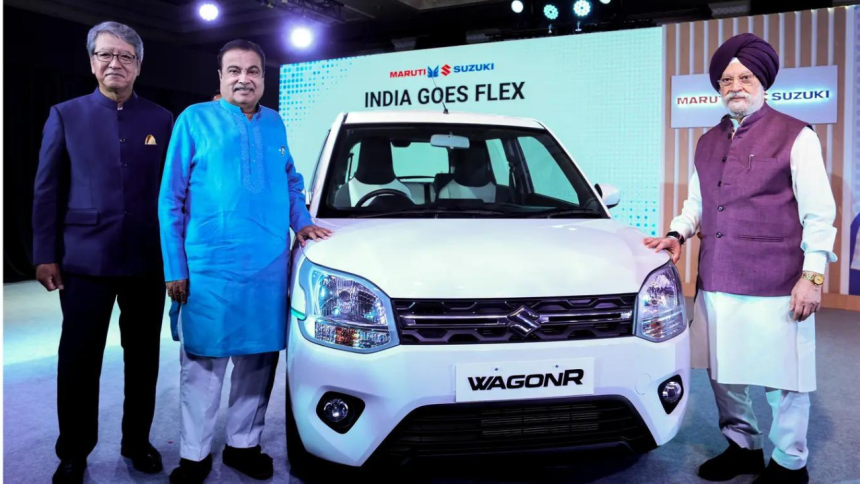
Maruti Suzuki India, one of the country’s leading automobile manufacturers, has already begun to explore the potential of flex-fuel technology. Its Managing Director and CEO, Hisashi Takeuchi, has emphasized the need for a full supporting ecosystem to drive the adoption of flex-fuel vehicles. By working collaboratively with government agencies, industry partners, and consumers, India can create a seamless and efficient transition to a flex-fuel future, unlocking a new era of sustainable mobility and economic growth.
Unlocking the Full Potential of Flex-Fuel Technology
The Indian government’s commitment to flex-fuel vehicles is a testament to its dedication to reducing carbon emissions and promoting sustainable energy. As the country embarks on this revolutionary journey, it is essential to create a roadmap that addresses the challenges and opportunities associated with flex-fuel technology. This will involve investing in research and development, upgrading infrastructure, and promoting public awareness and education about the benefits and advantages of flex-fuel vehicles.
With its vast population, growing economy, and ambitious climate goals, India is uniquely positioned to become a global leader in flex-fuel technology. By harnessing the potential of flex-fuel vehicles, the country can not only reduce its carbon footprint but also create new economic opportunities, jobs, and industries that drive sustainable growth and development. As India embarks on this exciting journey, it is poised to unlock a new era of sustainable mobility, one that promises to transform the country’s energy mix, transportation landscape, and economic prosperity.