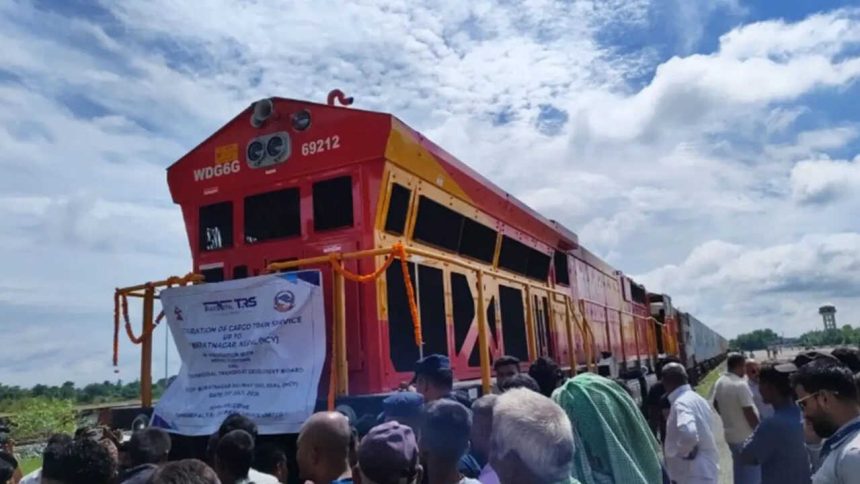
A historic milestone was achieved last week when the first-ever direct commercial container freight train completed its journey from Kolkata Port to Biratnagar Customs Yard in Nepal, marking a new era in India-Nepal rail connectivity. The train, carrying canola oil in 40 tank wagons, successfully traversed the distance, paving the way for increased trade and economic cooperation between the two nations. This development is expected to have far-reaching implications for the regional economy, with potential benefits for businesses, industries, and consumers alike.
Enhancing Trade Ties
The maiden freight train journey is a significant step forward in strengthening India-Nepal trade relations, which have been growing steadily over the years. The rail link is expected to reduce transportation costs and time, making Indian goods more competitive in the Nepalese market. Nepal, a landlocked country, has long relied on Indian ports for international trade, and this new rail link will provide a faster and more efficient way to transport goods. The Indian government has been actively promoting regional connectivity and cooperation, and this project is a testament to its commitment to fostering economic growth and development in the region.
The direct freight train service will also boost Nepal’s exports, particularly in the areas of agriculture and manufacturing. Nepalese businesses will now have easier access to Indian markets, enabling them to expand their customer base and increase their revenue. Furthermore, the rail link will facilitate the transportation of essential goods, such as food, medicine, and fuel, which will have a positive impact on the daily lives of people in Nepal. As trade volumes increase, the rail link is expected to create new job opportunities and stimulate economic growth in both countries.
Infrastructure Development
The successful completion of the freight train journey is a result of significant infrastructure development and investment in the rail network. The Indian government has been upgrading its rail infrastructure, including the construction of new lines, upgrading of existing tracks, and improvement of signaling systems. The Biratnagar Customs Yard in Nepal has also been modernized to handle increased cargo volumes and facilitate smooth customs clearance. The development of the rail link has involved close cooperation between Indian and Nepalese authorities, with both countries working together to overcome technical and logistical challenges.
The infrastructure development has not only improved the efficiency of the rail network but also enhanced safety and security. The use of modern signaling systems and advanced technology has reduced the risk of accidents and improved the overall safety of the rail journey. As the rail link expands, it is expected to attract more investment in infrastructure development, creating a positive impact on the regional economy. The development of the rail link has also highlighted the importance of regional cooperation and the need for continued investment in infrastructure development to support economic growth and development.
Future Prospects
The maiden freight train journey has opened up new opportunities for trade and economic cooperation between India and Nepal. As the rail link expands, it is expected to have a positive impact on the regional economy, creating new job opportunities and stimulating economic growth. The Indian government has announced plans to extend the rail link to other parts of Nepal, which will further increase trade volumes and deepen economic ties between the two nations. The development of the rail link has also highlighted the potential for increased cooperation in other areas, such as tourism, education, and healthcare.
The future prospects of the rail link are promising, with potential benefits for businesses, industries, and consumers in both countries. As trade volumes increase, the rail link is expected to create new opportunities for investment and economic growth, contributing to the development of the regional economy. The successful completion of the maiden freight train journey has marked a new chapter in India-Nepal relations, and it is expected to have a lasting impact on the regional economy and the lives of people in both countries. The rail link has the potential to become a model for regional cooperation and economic development, and its success will be closely watched by other countries in the region.