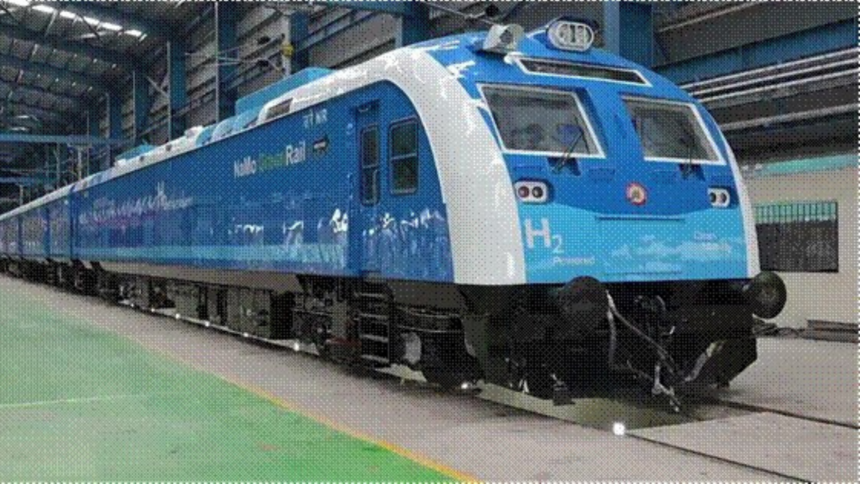
On July 17, a significant milestone will be achieved in India’s journey towards sustainable mobility as Prime Minister Narendra Modi flags off the country’s first hydrogen-powered train. The launch of the train, which will operate between Jind and Sonipat, marks a crucial step in India’s commitment to reducing its carbon footprint and transitioning to cleaner sources of energy. This historic moment has the potential to revolutionize the way India approaches transportation, and it’s an opportunity that the country is eager to seize.
What is a Hydrogen Train?
A hydrogen train is a type of train that runs on hydrogen fuel cells, which produce electricity through a chemical reaction between hydrogen and oxygen. This process releases only water vapor and heat as byproducts, making it an extremely environmentally friendly and sustainable mode of transportation. Unlike traditional diesel or electric trains, hydrogen trains do not emit any greenhouse gases, making them an attractive option for countries looking to reduce their carbon footprint.
Hydrogen trains have been in operation in countries like Japan and Germany for several years, and they have proven to be a reliable and efficient mode of transportation. India’s decision to adopt hydrogen trains is a significant step towards achieving its goal of becoming a low-carbon economy by 2070.
Benefits of Hydrogen Trains
Hydrogen trains offer several benefits over traditional modes of transportation. For one, they are extremely environmentally friendly, producing zero emissions and reducing greenhouse gas emissions. Additionally, hydrogen trains are quieter and smoother than traditional trains, providing a more comfortable ride for passengers. They also have the potential to reduce maintenance costs, as they have fewer moving parts than traditional trains.
Another significant advantage of hydrogen trains is their ability to reduce dependence on fossil fuels. As the world continues to transition towards cleaner sources of energy, hydrogen trains offer a promising solution for countries looking to reduce their carbon footprint. With the launch of India’s first hydrogen train, the country is taking a significant step towards achieving its goal of becoming a low-carbon economy.
Challenges and Future Plans
While the launch of India’s first hydrogen train is a significant step towards a cleaner future, there are still several challenges that need to be addressed. One of the major challenges is the lack of infrastructure to support the production and distribution of hydrogen fuel. Additionally, the cost of hydrogen fuel cells is still relatively high, making it a costly mode of transportation.
Despite these challenges, the Indian government is committed to making hydrogen trains a reality. In the coming years, the government plans to roll out more hydrogen trains across the country, connecting major cities and reducing dependence on fossil fuels. The launch of India’s first hydrogen train is just the beginning of a new era in sustainable mobility, and it’s an opportunity that the country is eager to seize.
As Prime Minister Modi flags off India’s first hydrogen train, the country is taking a significant step towards a cleaner future. The launch of this train marks a crucial step in India’s commitment to reducing its carbon footprint and transitioning to cleaner sources of energy. As the world continues to transition towards cleaner sources of energy, India’s decision to adopt hydrogen trains is a significant step towards achieving its goal of becoming a low-carbon economy.