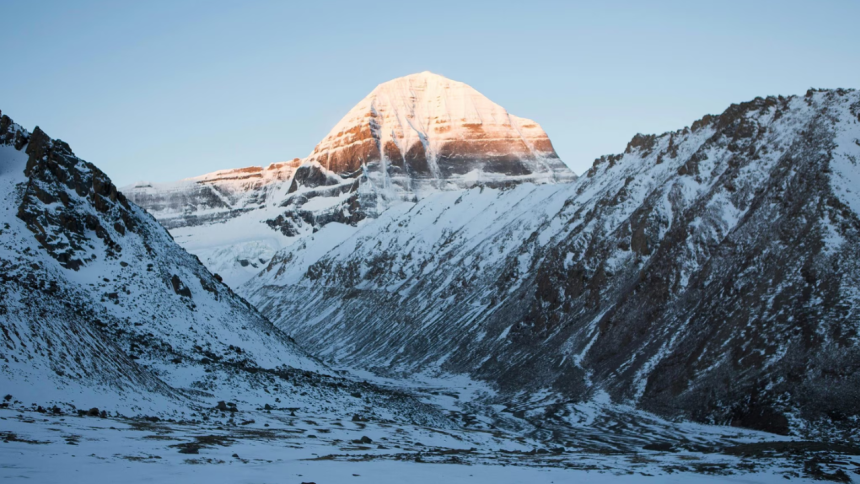
India has dismissed Nepal’s objection to the Kailash yatra route that passes through the Lipulekh Pass, a strategic location in the Himalayas that has been a point of contention between the two countries. The new government in Kathmandu had officially objected to India’s decision to allow pilgrims to travel to Kailash Mansarovar through the Lipulekh Pass, citing concerns over sovereignty and territorial integrity. However, India has maintained that the route has been used by pilgrims for decades and that there is no basis for Nepal’s objection.
Historical Context
The Lipulekh Pass has been a point of dispute between India and Nepal for many years, with both countries claiming sovereignty over the region. The area is strategically important, as it provides access to the Kailash Mansarovar, a sacred site for Hindus and Buddhists. India has long maintained that the pass is part of its territory, while Nepal claims that it is part of its own territory. The dispute has been ongoing, with both countries engaging in diplomatic efforts to resolve the issue.
Despite the objections from Nepal, India has continued to allow pilgrims to travel to Kailash Mansarovar through the Lipulekh Pass. The Indian government has maintained that the route is safe and convenient for pilgrims, and that it has been used for decades without any issues. However, Nepal has continued to express its concerns, citing the potential for India to use the route to expand its territorial claims.
Diplomatic Efforts
The dispute over the Lipulekh Pass has strained relations between India and Nepal, with both countries engaging in diplomatic efforts to resolve the issue. The Indian government has maintained that it is committed to resolving the dispute through dialogue and diplomacy, while Nepal has called for a more concrete solution to the issue. The two countries have been engaged in talks to resolve the dispute, but so far, no agreement has been reached.
The dispute has also had an impact on the people living in the region, with many communities dependent on the pilgrimage route for their livelihood. The pilgrims who travel to Kailash Mansarovar through the Lipulekh Pass also contribute to the local economy, and any disruption to the route could have significant economic implications. The Indian government has maintained that it is committed to finding a solution that takes into account the concerns of all parties involved.
Future Prospects
Despite the current impasse, there are hopes that the dispute over the Lipulekh Pass can be resolved through diplomatic efforts. The Indian government has maintained that it is committed to finding a solution that is acceptable to all parties, and Nepal has also expressed its willingness to engage in talks. The two countries have a long history of cooperation and friendship, and it is hoped that this relationship can be leveraged to find a solution to the dispute.
The resolution of the dispute will require careful consideration of the concerns of all parties involved, including the pilgrims, the local communities, and the governments of India and Nepal. It will also require a commitment to diplomacy and dialogue, as well as a willingness to find creative solutions to the issue. With the right approach, it is possible to find a solution that benefits all parties and strengthens the relationship between India and Nepal. The Indian government’s decision to stand firm on the Kailash yatra route has sent a strong message that it will not compromise on its territorial integrity, and it is now up to Nepal to respond and find a way forward.