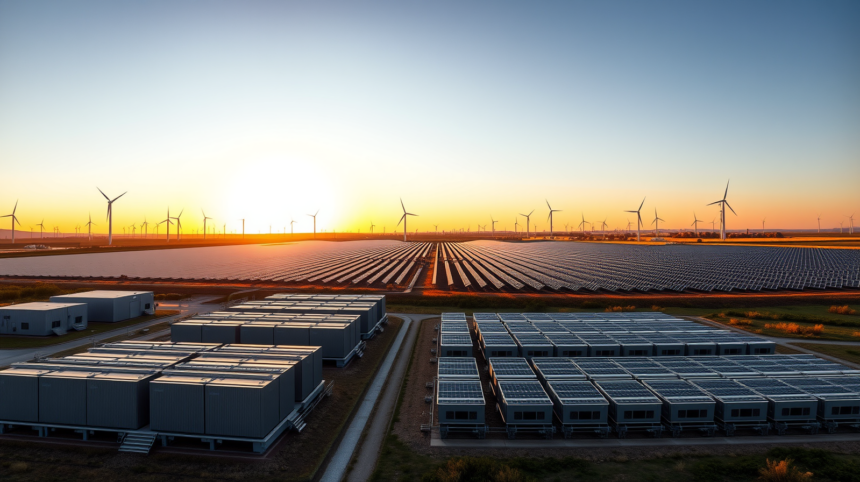
As the world’s third-largest energy consumer, India is taking a significant leap forward in its efforts to address the pressing issue of power storage. With a staggering 47 GW of battery energy storage system (BESS) capacity and 23 GW of pumped hydro storage projects in various stages of development, the country is poised to meet the rising electricity demand and support the rapid expansion of renewable energy. This massive push towards energy storage infrastructure is a testament to India’s commitment to a sustainable and reliable energy future.
India’s Power Storage Journey: A Breakdown of the Projects
The power ministry has revealed that a total of 47 GW of BESS capacity is in various stages of development, with the majority of the projects in the tendering stage. This includes lithium-ion battery storage systems, flow battery storage systems, and other emerging technologies. The ministry also confirmed that 23 GW of pumped hydro storage projects are in the pipeline, which are expected to provide a significant boost to the country’s energy storage capacity. These projects are expected to be developed in various states across the country, with a focus on regions with abundant renewable energy resources.
The development of these projects is expected to have a transformative impact on India’s energy landscape. With the increasing adoption of renewable energy sources, the demand for power storage solutions is growing exponentially. The power ministry’s efforts to support the development of these projects are expected to meet the rising electricity demand and ensure a reliable energy supply. Moreover, these projects are expected to create thousands of jobs and stimulate economic growth in the renewable energy sector.
Pumped Hydro Storage: A Key Player in India’s Energy Storage Strategy
Pumped hydro storage (PHS) is a mature technology that has been used to store energy for decades. It involves pumping water from a lower reservoir to an upper reservoir during off-peak hours when energy demand is low, and then releasing the water back to the lower reservoir during peak hours when energy demand is high. India has identified PHS as a key player in its energy storage strategy, with 23 GW of projects in the pipeline. These projects are expected to provide a significant boost to the country’s energy storage capacity and help meet the rising electricity demand.
The development of PHS projects is expected to have several benefits, including improved energy security, reduced greenhouse gas emissions, and increased economic benefits. Moreover, PHS projects are expected to create thousands of jobs and stimulate economic growth in the renewable energy sector. The power ministry’s efforts to support the development of these projects are expected to have a transformative impact on India’s energy landscape.
India’s Power Storage Revolution: A Catalyst for Sustainable Growth
India’s power storage revolution is a testament to the country’s commitment to a sustainable and reliable energy future. With over 70 GW of projects in the pipeline, the country is poised to meet the rising electricity demand and support the rapid expansion of renewable energy. The development of these projects is expected to have several benefits, including improved energy security, reduced greenhouse gas emissions, and increased economic benefits. Moreover, these projects are expected to create thousands of jobs and stimulate economic growth in the renewable energy sector.
As India continues to grow and develop, the need for reliable and sustainable energy sources is becoming increasingly important. The power ministry’s efforts to support the development of energy storage projects are expected to play a critical role in meeting this need. With the increasing adoption of renewable energy sources, the demand for power storage solutions is growing exponentially. India’s power storage revolution is a catalyst for sustainable growth and a key player in the country’s efforts to become a global leader in renewable energy.
The power ministry’s efforts to support the development of energy storage projects are expected to have a transformative impact on India’s energy landscape. With over 70 GW of projects in the pipeline, the country is poised to meet the rising electricity demand and support the rapid expansion of renewable energy. As India continues to grow and develop, the need for reliable and sustainable energy sources is becoming increasingly important. The power ministry’s efforts to support the development of energy storage projects are expected to play a critical role in meeting this need.