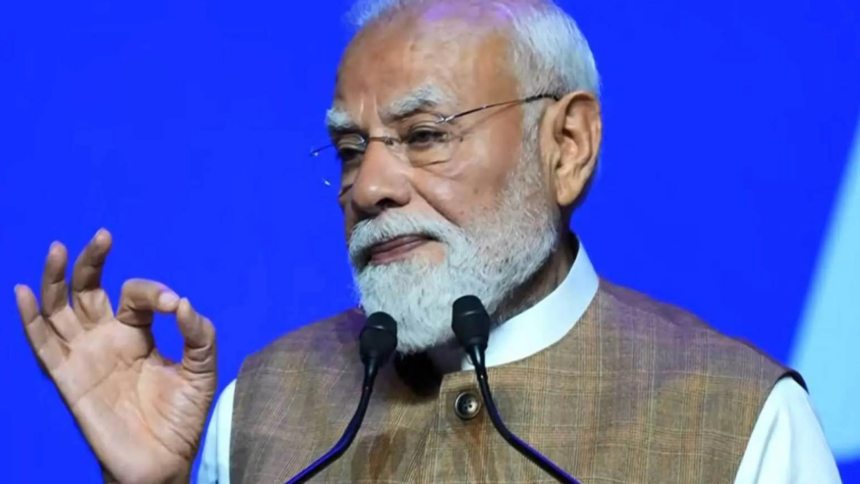
Prime Minister Narendra Modi addressed a packed audience at VivaTech 2026 in Paris on Thursday, his message of hope and inclusivity resonating with the global tech community. At the largest technology event in Europe, Modi stressed that technology can only lead to progress when it is democratized, making access to innovation and technology available to all. The Prime Minister’s vision for a future where technology serves the greater good has set the tone for India’s AI revolution, an endeavor that promises to bridge the gap between technology and humanity.
Breaking Down Barriers: AI for All
Modi’s emphasis on ‘All Inclusive’ AI reflects India’s commitment to making technology accessible to every citizen, regardless of socio-economic background or geographical location. The country’s Digital India initiative, launched in 2015, aims to ensure that every Indian has access to digital services, bridging the digital divide and empowering marginalized communities. With AI at its core, this initiative seeks to harness the power of technology to drive inclusive growth and development.
The Prime Minister’s vision for AI is not limited to economic progress, but also extends to its potential to improve lives. He highlighted the role of AI in healthcare, education, and governance, where technology can help bridge the gap between resources and people. By leveraging AI, India can provide quality services, especially to those who need them the most, such as rural communities and disadvantaged groups.
Democratizing Innovation: India’s AI Roadmap
India’s AI roadmap is centered around democratizing innovation, making it accessible to startups, entrepreneurs, and researchers. The government has established various initiatives, such as the AI for All program, to support the development of AI products and services. These initiatives aim to create a thriving ecosystem that encourages innovation, entrepreneurship, and collaboration between industry, academia, and government.
Modi also emphasized the importance of data, a critical component of AI development. He stressed that data must be made available and accessible to everyone, not just to a select few. This approach will enable AI developers to create solutions that cater to diverse needs and preferences, ultimately making technology more inclusive and responsive to society’s demands.
A Human-Centric Approach: The Future of AI
Modi’s human-centric approach to AI is a departure from the conventional focus on technology for technology’s sake. He believes that AI should be used to improve human lives, rather than just driving economic growth. This approach is reflected in India’s emphasis on AI-powered solutions for social welfare, education, and healthcare.
The Prime Minister’s vision for AI is not limited to India, but also has global implications. As the world grapples with the challenges of a rapidly changing economy and societal landscape, Modi’s message of hope and inclusivity serves as a powerful reminder of the potential of technology to drive progress and improve lives. By adopting a human-centric approach to AI, India is poised to become a leader in the global tech community, demonstrating that technology can be a force for good when used responsibly and innovatively.
As the world watches India’s AI revolution unfold, one thing is certain: the country’s commitment to democratizing technology and making it accessible to all will have far-reaching consequences. Modi’s vision for a future where AI serves humanity, rather than the other way around, has set a new standard for the global tech community, inspiring a new wave of innovation and collaboration that will shape the future of our world.