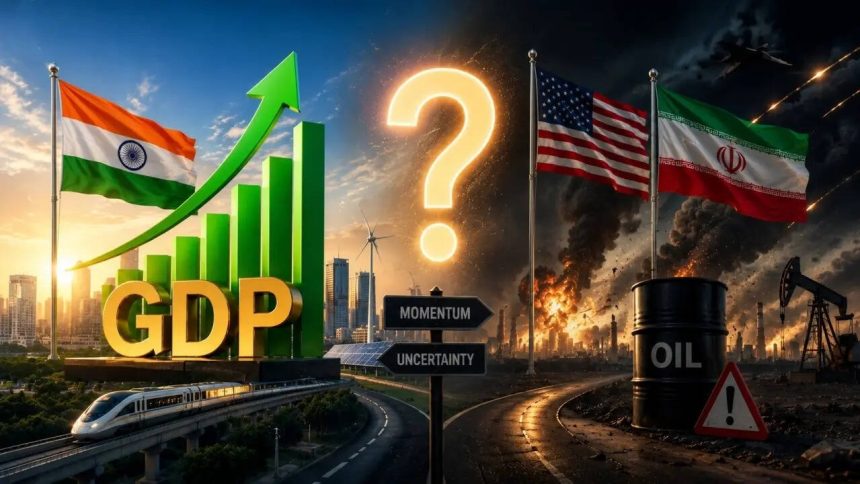
India’s economy has once again proven its resilience, with the country’s GDP growth rate coming in at 7.7% for the fiscal year 2026, surpassing expectations and silencing skeptics who had predicted a slowdown. This impressive growth rate is a testament to the country’s strong fundamentals and its ability to navigate the complexities of the global economy. As the world grapples with the challenges posed by the US-Iran war, India’s economic performance has raised hopes that the country can continue to thrive, even in the face of adversity.
Economic Growth Drivers
So, what has driven India’s economic growth in recent times? The answer lies in a combination of factors, including a surge in consumer spending, a revival in investment, and a robust performance by the services sector. The government’s efforts to boost infrastructure development, simplify tax laws, and promote foreign investment have also played a significant role in driving growth. Additionally, the country’s diversified economy, with a strong presence of industries such as IT, pharmaceuticals, and automotive, has helped to mitigate the impact of external shocks.
The services sector, in particular, has been a key driver of growth, with the IT industry continuing to be a major contributor. The sector has seen a significant increase in exports, driven by the growing demand for digital services and the availability of a skilled workforce. The government’s initiatives to promote digitalization and the startup ecosystem have also helped to foster innovation and entrepreneurship, leading to the creation of new jobs and opportunities.
Challenges Ahead
While India’s economic growth is a cause for celebration, there are challenges ahead that need to be addressed. The US-Iran war has created uncertainty in the global economy, and India is not immune to its impact. The conflict has led to a surge in oil prices, which could have a negative impact on India’s trade deficit and inflation. The country is also heavily reliant on imports, and any disruption to global supply chains could have a significant impact on its economy.
The government will need to take proactive measures to mitigate the impact of the US-Iran war and ensure that the economy continues to grow. This could involve diversifying the country’s energy sources, promoting domestic manufacturing, and strengthening trade relationships with other countries. The government will also need to continue to invest in infrastructure development, education, and healthcare to ensure that the benefits of growth are shared by all sections of society.
Sustainability of Growth
So, can India’s economic growth be sustained in the long term? The answer depends on the government’s ability to implement policies that promote economic development, while also addressing the country’s social and environmental challenges. The government will need to continue to invest in human capital, promote innovation and entrepreneurship, and ensure that the benefits of growth are shared by all sections of society. The country will also need to address its environmental challenges, including climate change, air pollution, and water scarcity, to ensure that growth is sustainable.
India’s economic growth has been a remarkable story, and the country has the potential to continue to thrive in the years ahead. However, the government will need to be proactive in addressing the challenges ahead and ensuring that the benefits of growth are shared by all. With the right policies and investments, India can continue to defy expectations and emerge as a major economic power in the years to come. The country’s growth story is a testament to the resilience and determination of its people, and it is likely to continue to inspire and motivate others in the years ahead.