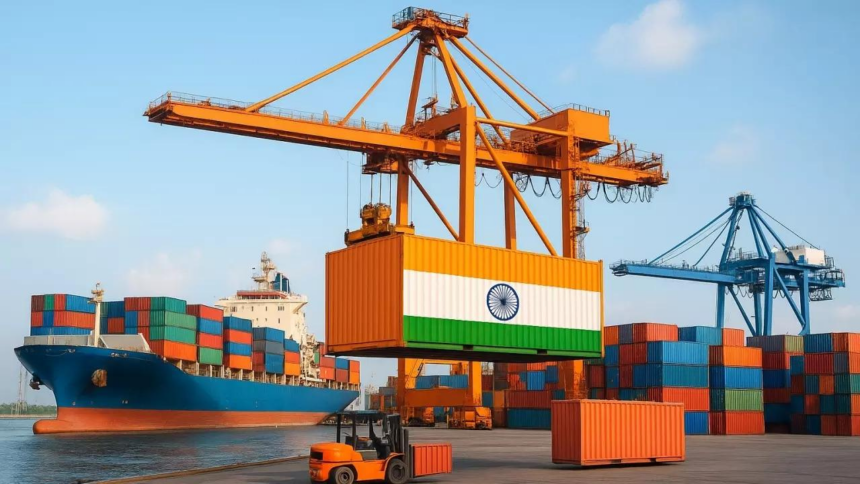
India’s merchandise exports have witnessed a significant surge, rising 18% year-on-year to $45.2 billion in May, marking the highest monthly growth in six months. This impressive growth has been driven by a robust performance in key sectors such as engineering goods, petroleum products, and gems and jewelry. However, the widening trade deficit, which stood at $28.21 billion, has raised concerns among policymakers and economists, as higher imports of petroleum products amid a surge in crude oil prices continue to exert pressure on the country’s trade balance.
Driving Forces Behind Export Growth
The growth in exports can be attributed to a combination of factors, including a strong demand for Indian products in key markets such as the United States, the European Union, and the Middle East. The government’s efforts to boost exports through various initiatives, such as the Production Linked Incentive (PLI) scheme and the Remission of Duties and Taxes on Exported Products (RoDTEP) scheme, have also started to yield results. Additionally, the Indian rupee’s relative stability against major currencies has made Indian products more competitive in the global market, further contributing to the export growth.
A closer look at the export data reveals that engineering goods, which account for a significant share of India’s total exports, have been a major driver of growth, with exports rising by over 20% in May. The gems and jewelry sector has also performed well, with exports increasing by over 15% during the same period. The growth in these sectors is expected to continue, driven by strong demand and the government’s efforts to promote exports through various initiatives.
Widening Trade Deficit: A Cause for Concern
The widening trade deficit, however, is a cause for concern, as it highlights the country’s dependence on imports to meet its energy needs. The surge in crude oil prices has resulted in higher imports of petroleum products, which has exerted pressure on the trade balance. The trade deficit has widened by over 50% in May, compared to the same period last year, and is expected to continue to pose a challenge to policymakers in the coming months.
To address the widening trade deficit, the government will need to focus on reducing the country’s dependence on imports, particularly in the energy sector. This can be achieved by promoting the use of renewable energy sources, such as solar and wind power, and by increasing the production of domestic oil and gas. Additionally, the government will need to take steps to boost exports, particularly in sectors such as textiles and pharmaceuticals, which have the potential to drive growth and create jobs.
Way Forward
The growth in exports is a positive development, and the government will need to build on this momentum to drive economic growth and create jobs. To achieve this, the government will need to continue to focus on promoting exports, particularly in key sectors such as engineering goods, gems and jewelry, and textiles. Additionally, the government will need to take steps to address the widening trade deficit, by reducing the country’s dependence on imports and promoting the use of renewable energy sources.
As the Indian economy continues to navigate the challenges posed by the COVID-19 pandemic and the ongoing geopolitical tensions, the growth in exports provides a welcome boost. However, the widening trade deficit is a reminder that there are still challenges to be addressed, and the government will need to take a comprehensive approach to promote exports, reduce imports, and drive economic growth. The coming months will be crucial, as the government seeks to build on the momentum in exports and address the challenges posed by the trade deficit, to drive economic growth and create jobs for millions of Indians.