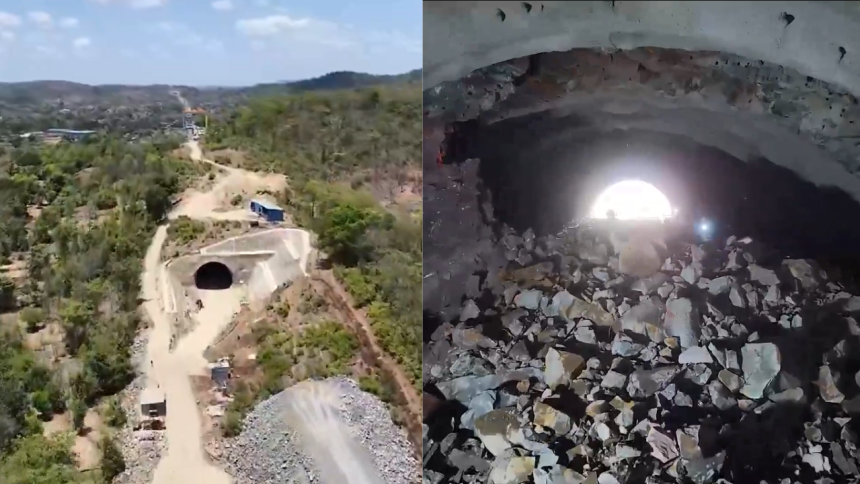
The Mumbai-Ahmedabad Bullet Train project has achieved a significant milestone with the completion of its third mountain tunnel breakthrough in Maharashtra, marking a major step forward in the construction of India’s first high-speed rail corridor. This breakthrough, which comes within five months, underscores the rapid progress being made on the project, which is expected to revolutionize the country’s transportation landscape. The 508-kilometer corridor, which will connect Mumbai and Ahmedabad, is being built at a cost of over Rs 1.08 lakh crore and is slated for completion by 2026.
Project Overview
The Mumbai-Ahmedabad Bullet Train project is one of the most ambitious infrastructure projects undertaken in India, with the potential to transform the way people travel between the two cities. The high-speed rail corridor will enable trains to run at speeds of up to 320 kilometers per hour, reducing travel time between Mumbai and Ahmedabad to just over two hours. The project involves the construction of 12 stations, including four in Maharashtra and eight in Gujarat, as well as the building of several bridges, tunnels, and viaducts.
The project is being implemented by the National High-Speed Rail Corporation Limited (NHSRCL), a special purpose vehicle set up by the Government of India to oversee the development of high-speed rail corridors in the country. The NHSRCL has awarded contracts to several Indian and international companies to undertake various aspects of the project, including construction, design, and procurement of rolling stock.
Construction Challenges
Despite the progress made on the project, the construction of the Mumbai-Ahmedabad Bullet Train corridor has not been without its challenges. The project involves the construction of several tunnels and bridges, including a 21-kilometer tunnel in the Thane district of Maharashtra, which is one of the longest tunnels in the country. The construction of these tunnels and bridges has required the use of advanced technology and specialized equipment, including tunnel boring machines and cranes.
The project has also faced opposition from local communities and farmers, who have raised concerns about the impact of the project on their livelihoods and the environment. The NHSRCL has had to undertake extensive consultations with these stakeholders to address their concerns and provide compensation for the land acquired for the project. Despite these challenges, the project has made significant progress, with over 70 percent of the land required for the project having been acquired so far.
Benefits and Implications
The Mumbai-Ahmedabad Bullet Train project has the potential to transform the economy of the region, by enabling faster and more efficient movement of people and goods. The project is expected to create thousands of jobs, both during the construction phase and after the corridor becomes operational. The project will also enable the development of new industries and businesses along the corridor, including logistics and tourism.
The project also has significant implications for the environment, as it will reduce the need for personal vehicles and other modes of transportation, which are major contributors to pollution and greenhouse gas emissions. The project will also enable the use of renewable energy sources, such as solar and wind power, to power the trains and other infrastructure along the corridor. With the completion of the third mountain tunnel breakthrough, the project has achieved another significant milestone, and is one step closer to becoming a reality.