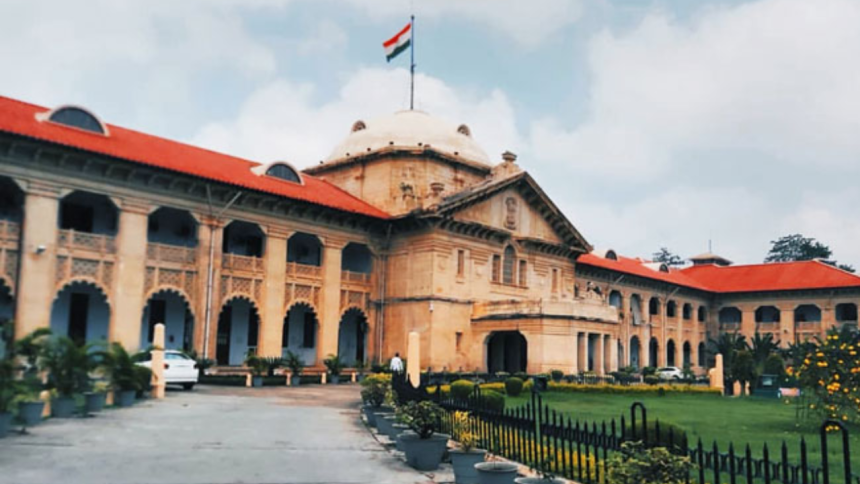
The Allahabad High Court has issued a landmark ruling that will have far-reaching implications for India’s complex relationship with its sacred spaces. In a verdict that seeks to balance the rights of the devout with the need to preserve public land for the greater good, the court has held that there is no unilateral right for individuals or groups to claim exclusive use of public land for religious gatherings. This decision is a significant step towards ensuring that India’s rich cultural heritage is protected and preserved for future generations.
Protecting Public Land for the Greater Good
The court’s ruling was prompted by a series of petitions filed by individuals and groups seeking to claim exclusive rights to public land for religious purposes. In its verdict, the court observed that while religion plays a vital role in Indian society, it cannot be used as a weapon to deny others their rights to use public land. The court noted that public land is a valuable resource that belongs to the people, and that its use should be subject to the principles of equity and justice.
The court’s decision is a recognition of the fact that public land is not a private asset that can be claimed by individuals or groups for their exclusive use. Instead, it is a shared resource that should be used for the benefit of all members of society. By striking down the concept of unilateral rights to public land, the court has ensured that India’s sacred spaces will continue to be a source of inspiration and spiritual nourishment for generations to come.
A Delicate Balance between Rights and Responsibilities
The court’s ruling is not a rejection of the importance of religion in Indian society. Rather, it is a recognition of the need to balance individual rights with the greater good. The court observed that while individuals and groups have the right to practice their faith, they also have a responsibility to respect the rights of others and to use public land in a manner that is consistent with the principles of equity and justice.
The court’s decision is a reminder that India’s sacred spaces are not just sacred for one particular group or community, but for all Indians. By protecting public land for the greater good, the court has ensured that India’s cultural heritage will continue to be a source of pride and inspiration for all citizens.
A New Era for India’s Sacred Spaces
The court’s ruling is a significant step forward in India’s journey towards a more inclusive and equitable society. It recognizes that public land is a shared resource that should be used for the benefit of all members of society, and that individual rights should be balanced with the greater good. As India continues to evolve and grow, this decision will play an important role in shaping the country’s relationship with its sacred spaces.
The court’s verdict is a testament to the fact that India’s sacred spaces are not just physical locations, but also a source of collective identity and shared values. By protecting public land for the greater good, the court has ensured that India’s cultural heritage will continue to be a source of inspiration and spiritual nourishment for generations to come.
As India looks to the future, this decision will play an important role in shaping the country’s relationship with its sacred spaces. It is a reminder that India’s cultural heritage is not just a relic of the past, but a living, breathing part of the country’s identity and values.