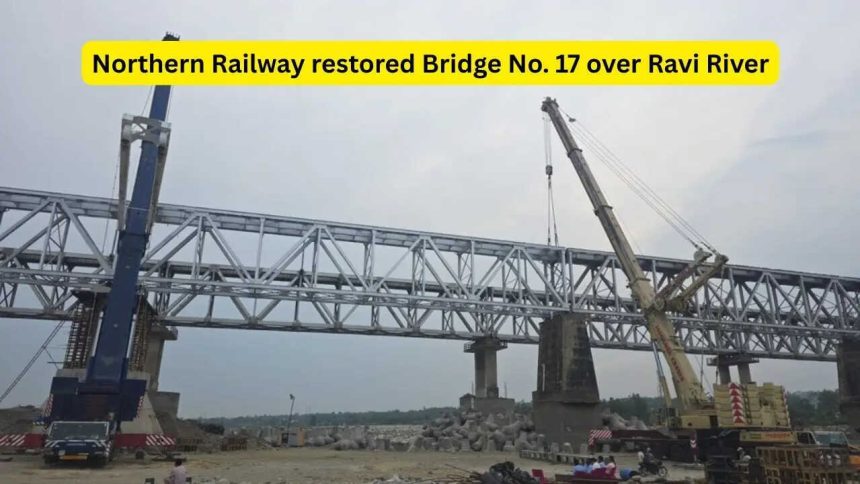
The wait is finally over for thousands of commuters who rely on the Jammu Rail Services, as the vital transportation link has resumed operations after months of disruption. The reopening of the Ravi Bridge has paved the way for the restoration of one of northern India’s most significant rail corridors, bringing relief to those heading to Jammu and Kashmir. The prolonged closure had caused significant inconvenience to travellers, with many being forced to opt for alternative modes of transport or endure lengthy detours. However, with the rail services back on track, the region is once again connected, and the economy is expected to receive a significant boost.
Restoration of Rail Services
The Ravi Bridge, which spans the Ravi River, is a critical component of the Jammu Rail Services, and its reopening marks a major milestone in the restoration of the rail network. The bridge’s closure had resulted in the suspension of train services, affecting not only passengers but also the transportation of goods. The resumption of rail services is expected to have a positive impact on the local economy, as it will facilitate the movement of people and goods, thereby boosting trade and commerce. Moreover, the restoration of rail services will also provide a much-needed fillip to the tourism industry, which is a significant contributor to the region’s economy.
The restoration of the Ravi Bridge is a testament to the efforts of the engineers and workers who toiled tirelessly to complete the repair work. The challenging task required meticulous planning, precise execution, and unwavering dedication, and the successful completion of the project is a tribute to their hard work and perseverance. With the bridge now open, train services have resumed, and passengers can once again travel comfortably and efficiently to their destinations.
Impact on Travellers
The resumption of Jammu Rail Services is a welcome development for travellers, who can now look forward to a hassle-free journey. The rail network provides a convenient and affordable mode of transport, connecting Jammu and Kashmir to other parts of the country. Passengers can now travel with ease, without having to worry about the inconvenience and expense of alternative modes of transport. Moreover, the restoration of rail services will also provide a boost to the region’s tourism industry, as visitors can now travel to popular destinations such as Srinagar, Gulmarg, and Pahalgam without any hassle.
The reopening of the Ravi Bridge has also brought a sense of relief to the local population, who had to endure significant hardships during the closure of the rail services. The resumption of train services will enable people to travel to their workplaces, schools, and colleges without any difficulty, thereby minimizing disruptions to their daily lives. Furthermore, the restoration of rail services will also facilitate the transportation of essential goods, such as food, medicine, and other necessities, which is critical for the well-being of the local population.
Future Prospects
The resumption of Jammu Rail Services marks a new beginning for the region, and the future prospects look promising. The restoration of the rail network is expected to have a positive impact on the local economy, and the tourism industry is likely to receive a significant boost. The region’s natural beauty, rich culture, and warm hospitality make it an attractive destination for visitors, and the convenient rail connectivity will only add to its appeal. As the region continues to grow and develop, the rail services will play a vital role in facilitating the movement of people and goods, thereby contributing to the region’s prosperity.
The reopening of the Ravi Bridge and the resumption of Jammu Rail Services is a significant development that will have far-reaching consequences for the region. As the rail network continues to operate smoothly, the region is likely to experience significant growth and development, and the local population will reap the benefits of convenient and efficient transportation. With the rail services back on track, the future looks bright for Jammu and Kashmir, and the region is poised to emerge as a major tourist and economic hub in the coming years.