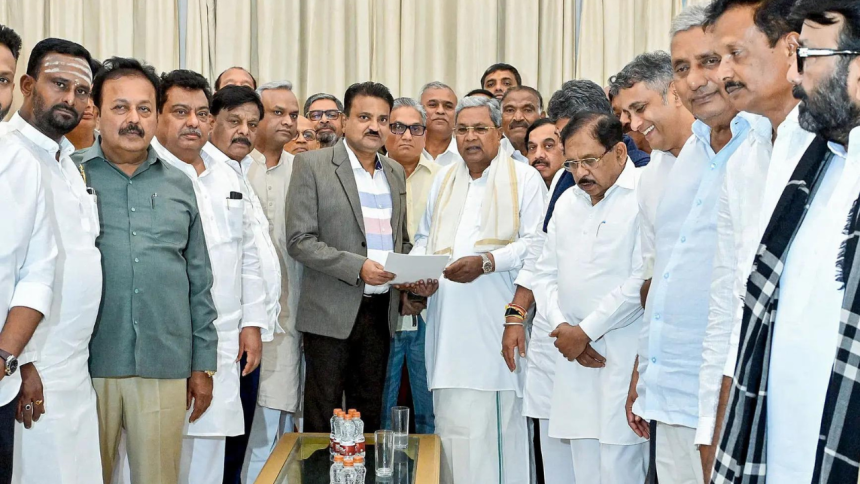
Karnataka’s political landscape has witnessed a dramatic shift with Chief Minister Siddaramaiah tendering his resignation on Thursday, paving the way for a new era in the state’s governance. The move comes as a result of directions from the Congress high command, marking a significant turning point in the party’s fortunes in the region. As the news sent shockwaves across the nation, Governor Thaawar Chand Gehlot convened an emergency meeting in Bengaluru to formalize the resignation and dissolve the council of ministers with immediate effect.
Reasons Behind Siddaramaiah’s Resignation
The reasons behind Siddaramaiah’s decision to step down remain unclear, but sources suggest that the Congress leader was facing mounting pressure from party leaders who felt that his tenure was marred by controversies and scandals. Despite achieving notable successes in areas such as healthcare and education, Siddaramaiah’s administration was criticized for its handling of the state’s economy, which has been struggling to recover from the pandemic-induced recession. Additionally, the party’s prospects in the upcoming local body elections looked uncertain, further fueling the leadership’s desire for change.
The speculation surrounding Siddaramaiah’s resignation has been fueled by the presence of potential successors within the party. Names such as D.K. Shivakumar and R.V. Deshpande have been doing the rounds, with many analysts predicting a power struggle in the coming days. However, it remains to be seen whether the party’s leadership will opt for a consensus candidate or choose to go with a fresh face.
New Era for Karnataka’s Governance
With the dissolution of the council of ministers, Karnataka is poised to embark on a new chapter in its governance. The state’s citizens are eagerly awaiting the formation of a new government, which is expected to bring a fresh perspective to the state’s development agenda. As the search for a new Chief Minister gathers pace, the focus will shift to areas such as economic recovery, infrastructure development, and social welfare programs. Karnataka’s new leadership will face the daunting task of addressing the state’s pressing issues, including the ongoing farmers’ protests and the need for infrastructure development in the wake of rapid urbanization.
The transition also presents an opportunity for the Congress party to rebrand itself and connect with the state’s voters on a deeper level. The party will need to adapt to the changing dynamics of Karnataka’s politics, where the emergence of regional parties and independent candidates has altered the electoral landscape. By appointing a new leadership team, the party can attempt to regain its lost ground and become a formidable force in the state’s politics once again.
Impact on National Politics
The implications of Siddaramaiah’s resignation extend beyond Karnataka’s borders, with the development likely to have a ripple effect on national politics. The Congress party’s fortunes in the state will have a direct bearing on its prospects in the upcoming general elections. A strong showing in Karnataka can help the party regain its footing in the southern states, where it has been struggling to maintain its influence. Conversely, a poor performance could lead to further erosion of the party’s base and make its task of regaining power at the national level even more daunting.
As Karnataka begins its transition to a new era, the nation watches with bated breath. The impact of this development will be felt across the country, and it remains to be seen whether the Congress party will be able to capitalize on this opportunity to revitalize its fortunes and regain its position as a major player in Indian politics.
In a region known for its vibrant politics and passionate citizens, Karnataka’s leadership shuffle marks a significant turning point in the state’s history. While the immediate future of the state’s governance remains uncertain, one thing is clear – the people of Karnataka are ready for change and will demand nothing but the best from their new leaders.