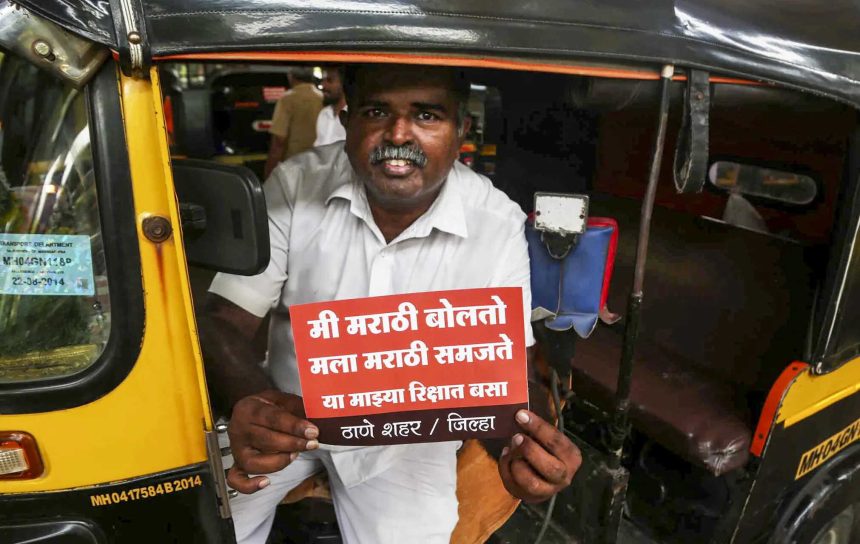
The Maharashtra transport minister, Pratap Sarnaik, has put a hold on the decision to cancel the licences and permits of auto and taxi drivers who refuse to speak Marathi, a move that was set to take effect from May. This decision has sparked a mix of relief and concern among the drivers, who were facing the possibility of losing their livelihoods over a language issue. The controversy began when some drivers were accused of being rude to passengers who spoke to them in Marathi, prompting calls for action against them.
Background to the Controversy
The issue of Marathi language proficiency among auto and taxi drivers in Maharashtra has been a contentious one for some time. Many passengers have complained about drivers being unable to understand or speak Marathi, which is the official language of the state. The transport department had initially threatened to take action against drivers who failed to demonstrate proficiency in the language, citing the need to provide better service to passengers. However, the move was met with resistance from some drivers, who argued that language should not be a barrier to their ability to earn a living.
The transport minister’s decision to put the brakes on the plan has been seen as a temporary reprieve for the drivers, but it is unclear what the long-term solution will be. The minister has stated that he will be holding talks with drivers and other stakeholders to find a way forward, but it is unclear what the outcome of these talks will be. Meanwhile, passengers continue to face the inconvenience of dealing with drivers who may not be able to understand or communicate with them effectively.
Implications of the Decision
The decision to put a hold on the plan to cancel licences and permits has significant implications for the transport sector in Maharashtra. On the one hand, it provides a temporary reprieve for drivers who were facing the possibility of losing their livelihoods. On the other hand, it raises questions about the effectiveness of the transport department’s efforts to regulate the sector and ensure that passengers receive good service. The issue also highlights the broader challenge of promoting the use of Marathi language in the state, particularly in the context of public services.
The transport minister’s move has also been seen as a political gesture, aimed at placating drivers and other stakeholders who were opposed to the plan. However, it remains to be seen whether this will be enough to address the underlying issues and find a long-term solution to the problem. As the talks between the minister and stakeholders get underway, it is clear that finding a way forward will not be easy, and will require careful consideration of the competing interests and concerns involved.
Way Forward
The way forward on this issue will depend on the outcome of the talks between the transport minister and stakeholders. One possible solution could be to provide training and support to drivers to help them improve their Marathi language skills, rather than simply penalizing them for not speaking the language. This approach would recognize the importance of language proficiency in providing good service to passengers, while also acknowledging the challenges faced by drivers who may not be fluent in Marathi.
As the situation unfolds, it is clear that the issue of Marathi language proficiency among auto and taxi drivers in Maharashtra is a complex one, with no easy solutions. However, by engaging with stakeholders and exploring alternative approaches, it may be possible to find a way forward that balances the needs of passengers with the concerns of drivers. The transport minister’s decision to put a hold on the plan to cancel licences and permits is a welcome move, and it is now up to him to find a long-term solution that works for everyone involved.