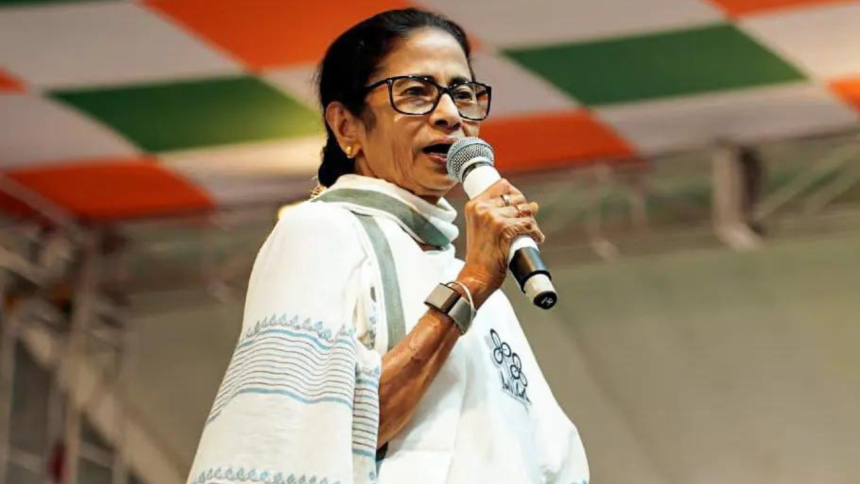
As the Bengali New Year, Poila Boishakh, dawned on West Bengal, Chief Minister Mamata Banerjee extended her warmest greetings to the people of the state, while also using the occasion to launch a scathing attack on the powers that be in Delhi. In a message that was both a celebration of Bengali culture and a call to arms, Banerjee urged her fellow Bengalis to unite against the ‘zamindars’ of Delhi, who she claimed were trying to exert their dominance over the state. The message was seen as a clear reference to the ruling party at the center, with whom Banerjee’s Trinamool Congress has been at loggerheads for some time now.
The Significance of Poila Boishakh
Poila Boishakh, the first day of the Bengali New Year, is a time of great celebration in West Bengal, with people from all walks of life coming together to mark the occasion. The festival is a time for family, friends, and community, with traditional foods, music, and dance being an integral part of the celebrations. However, this year’s Poila Boishakh was also marked by a sense of politics, with Banerjee using the occasion to reach out to the people of the state and urge them to stand up against what she sees as the excesses of the central government.
For Banerjee, the message was also an opportunity to connect with the people of the state and reassure them that her government was committed to protecting their interests. The Chief Minister has been a vocal critic of the central government’s policies, particularly with regard to issues such as federalism and the rights of states. Her message on Poila Boishakh was seen as a reflection of her commitment to these issues and her determination to stand up for the rights of West Bengal.
The Politics of Zamindari
Banerjee’s reference to the ‘zamindars’ of Delhi was a clear nod to the state’s complex history and its relationship with the central government. The term ‘zamindar’ originally referred to a type of feudal landlord, but in modern times it has come to be used as a metaphor for those who wield power and influence. By using this term to describe the powers that be in Delhi, Banerjee was drawing a parallel between the feudal lords of the past and the modern-day rulers of the country.
The message was also seen as a reflection of the growing tensions between the center and the states, with Banerjee’s Trinamool Congress being at the forefront of the opposition to the central government’s policies. The party has been vocal in its criticism of the government’s handling of issues such as federalism, economic development, and social justice, and Banerjee’s message on Poila Boishakh was seen as a call to arms for the people of the state to stand up against what she sees as the excesses of the central government.
A Call to Action
As the people of West Bengal celebrated Poila Boishakh, Banerjee’s message was a reminder that the festival was not just a time for celebration, but also a time for reflection and action. The Chief Minister’s call to unite against the ‘zamindars’ of Delhi was a clarion call to the people of the state to stand up for their rights and to demand a better deal from the central government. It was also a reminder that the struggle for justice and equality was an ongoing one, and that the people of the state needed to remain vigilant and committed to the cause.
As the festivities of Poila Boishakh come to an end, the people of West Bengal will be watching with keen interest to see how the state government’s message is received by the central government and the people of the state. Will Banerjee’s call to action be heeded, or will it fall on deaf ears? Only time will tell, but one thing is certain – the message on Poila Boishakh has set the tone for a new era of politics in West Bengal, one that is marked by a sense of assertiveness and a determination to stand up for the rights of the state.