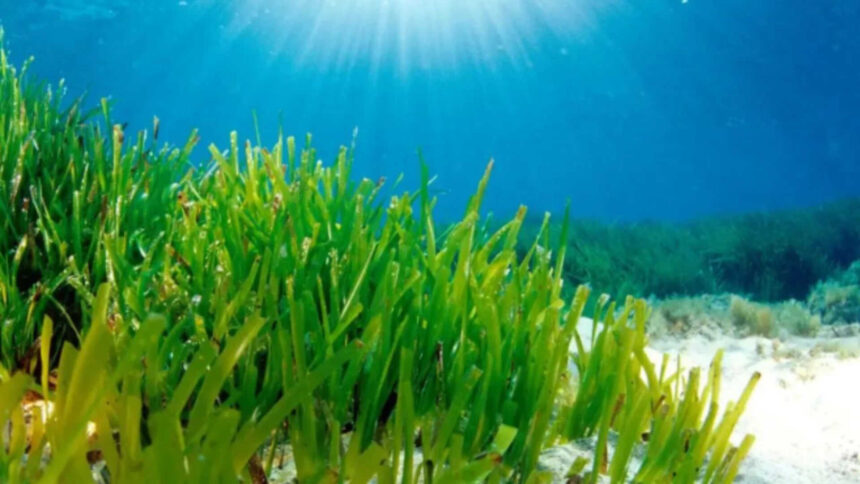
In the depths of the Mediterranean Sea, a remarkable phenomenon unfolds beneath the waves. Vast underwater meadows of seagrass stretch across the seafloor, where sunlight is scarce and the darkness would seem to prohibit life as we know it. Yet, these plants continue to defy expectations, harnessing energy from the dimmest of light sources to photosynthesise, produce oxygen, store carbon, and support an entire ecosystem of marine life. For centuries, scientists have sought to unravel the secrets behind this remarkable adaptation, and recent research has finally shed light on the key to seagrass’s success.
The Unlikely Light-Harvesters
Seagrass, a type of marine grass that thrives in shallow coastal waters, has evolved an extraordinary mechanism to capture light in the dimly lit Mediterranean seabed. By expanding its photosynthetic antenna, seagrass has managed to increase its surface area, allowing it to absorb more energy from the available light. This unique adaptation enables the plant to produce the necessary energy for growth, reproduction, and the support of the diverse array of marine species that call these underwater meadows home. But how do seagrass’s photosynthetic antenna expand in the first place?
Researchers have discovered that seagrass has developed a sophisticated system to control the expansion and contraction of its photosynthetic antenna in response to changing light conditions. When light levels are low, the plant’s antenna expands to maximise energy capture, while in brighter conditions, it contracts to prevent over-excitation and damage to the photosynthetic apparatus. This remarkable flexibility allows seagrass to survive and thrive in environments where other plants would struggle to survive.
The Carbon-Capturing Champions
Seagrass plays a crucial role in the Mediterranean ecosystem, not only as a source of food and shelter for countless marine species but also as a key player in the global carbon cycle. By harnessing energy from the dimmest of light sources, seagrass is able to store carbon in its biomass and sediment, thus mitigating the impacts of climate change. In fact, studies have shown that seagrass meadows can sequester up to 20 times more carbon than terrestrial forests, making them a vital component of global carbon capture efforts.
As the world grapples with the challenges of climate change, seagrass offers a beacon of hope. By understanding the secrets behind its remarkable adaptation, scientists hope to develop new strategies for enhancing carbon sequestration and promoting ecosystem resilience in the face of a changing climate.
The Future of Seagrass Research
While significant progress has been made in understanding the secrets behind seagrass’s success, there is still much to be learned. Future research will focus on unraveling the mechanisms behind seagrass’s expanded photosynthetic antenna and exploring new ways to harness this technology for human benefit. By continuing to explore the mysteries of seagrass, scientists aim to unlock new avenues for carbon capture, sustainable energy production, and the preservation of marine ecosystems.
As we look to the future, it is clear that the Mediterranean seagrass has much to teach us about resilience, adaptability, and the power of nature to overcome even the most daunting challenges. By embracing the lessons of this remarkable plant, we may yet find a way to thrive in a world where the boundaries between light and darkness are increasingly blurred.