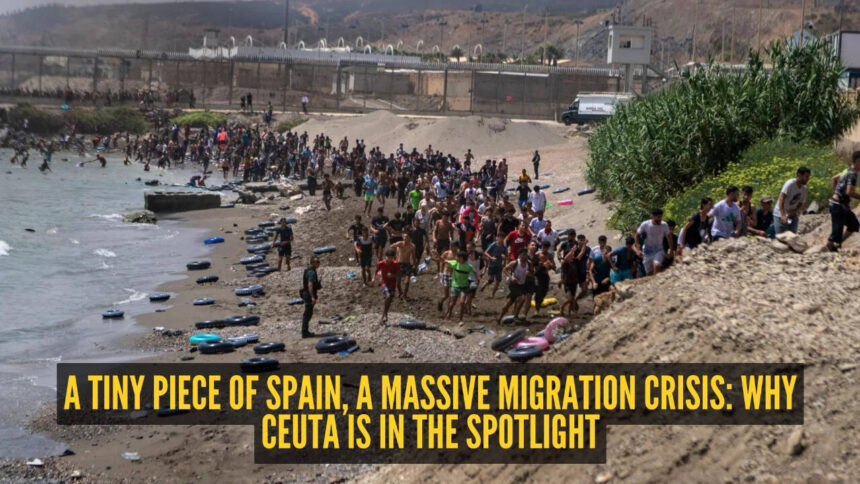
On a map, Ceuta appears as a tiny patch of land on the northern coast of Africa, jutting out into the Mediterranean like a shard of stone. This small Spanish enclave, nestled between Morocco and the sea, is home to a population of just over 80,000 people. But despite its size, Ceuta has become a crucial focal point in Europe’s migration crisis, drawing in thousands of asylum seekers and migrants each year.
The Path to Europe
The journey to Ceuta is long and treacherous, often undertaken by those fleeing conflict, poverty, or persecution in their home countries. Many of these migrants set out from Morocco, where they may have been living for years, but now face increasing pressure from the authorities to leave. The Moroccan government has been accused of forcibly removing migrants, leaving them to their own devices in the unforgiving desert landscape. From there, they make their way to the coast, where they are met with a daunting prospect: the narrow, rock-strewn waters of the Strait of Gibraltar.
For those who make it to Ceuta, the experience is often one of shock and disorientation. Many are detained in overcrowded facilities, where they are held for extended periods while their asylum claims are processed. The conditions are often harsh, with inadequate food, water, and sanitation. But despite the difficulties, many migrants remain determined to reach Europe, driven by a desire for safety, security, and a better future.
Border Tensions
The situation in Ceuta is further complicated by the complex history and politics of the region. Spain has maintained a military presence in Ceuta since the 19th century, and the enclave remains a source of tension between Madrid and Rabat. Morocco has long claimed sovereignty over Ceuta, and has made repeated demands for its return. The Spanish government, meanwhile, has vowed to defend its territory at all costs. The result is a precarious balance of power, with migrants caught in the middle.
The border between Ceuta and Morocco is heavily fortified, with a fence and watchtowers designed to prevent unauthorized crossings. But despite these efforts, many migrants continue to make their way to the border, often using the services of smugglers to facilitate their journey. The risk is high, with many migrants reported to have been injured or even killed in the attempt.
A Humanitarian Crisis
As the migration crisis continues to unfold, Ceuta has become a symbol of the humanitarian costs of Europe’s border policies. The treatment of migrants in the enclave has been widely criticized, with allegations of abuse, neglect, and even torture. The Spanish government has faced calls to improve conditions in the detention facilities, and to provide greater support for asylum seekers. But despite these efforts, the situation remains dire.
The people of Ceuta, meanwhile, are caught in the middle of the crisis. Many are frustrated by the influx of migrants, which they see as straining local resources and threatening the community’s way of life. But others are more sympathetic, recognizing the humanity of those seeking refuge in their midst. As the situation in Ceuta continues to evolve, one thing is clear: this small Spanish enclave will remain at the heart of Europe’s migration crisis for the foreseeable future.