
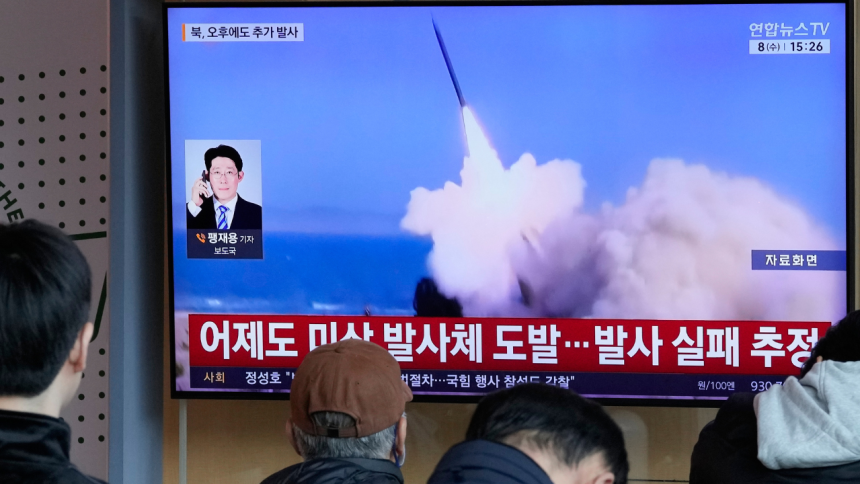
The world watched with a mix of confusion and concern as North Korea launched multiple rounds of ballistic missiles on Wednesday, a move that seemed to contradict the rare conciliatory note signaled by leader Kim Jong Un just days prior. The launches, which included two rounds of short-range missiles, marked the latest development in a series of events that have left analysts and diplomats scrambling to understand the intentions of the reclusive regime. As the international community struggles to make sense of these mixed signals, one thing is clear: the situation on the Korean Peninsula remains as volatile as ever.
Kim’s Overture and Lee’s Apology
Just days before the missile launches, Kim Jong Un made a rare gesture of goodwill toward his southern counterparts, praising the South Korean president’s efforts to improve relations between the two nations. This unexpected praise was seen as a significant shift in tone, particularly given the tensions that have characterized relations between North and South Korea in recent years. Meanwhile, South Korean President Lee made a public apology for a recent incident that had sparked outrage in the North, further fueling speculation that a thaw in relations might be on the horizon. However, the missile launches have raised questions about the sincerity of Kim’s overture and the true intentions of the North Korean regime.
Despite the apparent contradiction between Kim’s conciliatory words and the subsequent missile launches, some analysts believe that the two events may be connected. According to this view, the launches may have been intended as a demonstration of North Korea’s military capabilities, a reminder to the South and other nations that the regime will not be ignored or taken for granted. At the same time, the fact that the launches were relatively low-key and did not appear to be targeted at any specific country may suggest that the North is still open to dialogue and willing to explore the possibility of improved relations.
Regional Reactions and Global Implications
The missile launches have sparked a range of reactions from nations in the region, with some expressing concern and others calling for calm and restraint. Japan, which has long been a target of North Korean aggression, was quick to condemn the launches, while China, the North’s closest ally, urged all parties to remain calm and avoid escalating the situation. The United States, which has been a key player in efforts to negotiate a nuclear deal with the North, also weighed in, with officials expressing disappointment and concern about the launches.
The global implications of the missile launches are significant, particularly given the already tense state of international relations. The launches have raised concerns about the potential for conflict on the Korean Peninsula, which could have far-reaching consequences for regional and global stability. At the same time, the fact that the launches did not appear to be targeted at any specific country may suggest that the North is still open to dialogue and willing to explore the possibility of improved relations. As the situation continues to unfold, diplomats and analysts will be watching closely to see whether the North’s mixed signals are a genuine attempt to improve relations or simply a clever ploy to gain leverage and attention.
Looking Ahead: Uncertainty and Opportunity
As the world struggles to make sense of North Korea’s latest moves, one thing is clear: the situation on the Korean Peninsula remains highly uncertain and potentially volatile. The mixed signals sent by the North, including Kim’s rare praise and the subsequent missile launches, have raised more questions than answers, leaving analysts and diplomats to ponder the regime’s true intentions. Despite the challenges and uncertainties, there may also be opportunities for progress and improved relations, particularly if the North is genuinely willing to engage in dialogue and explore the possibility of a more peaceful and cooperative future.
The coming days and weeks will be critical in determining the trajectory of events on the Korean Peninsula. As the international community continues to navigate the complex and often contradictory signals sent by the North, it is clear that a combination of diplomacy, patience, and vigilance will be required to address the challenges and opportunities that lie ahead. With the fate of the region and potentially the world hanging in the balance, the stakes could not be higher, and the need for careful and informed decision-making has never been more pressing.


