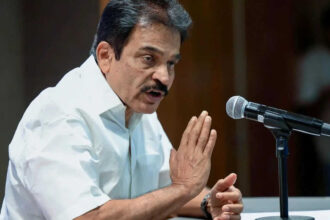
The Indian political landscape was set ablaze on Tuesday when Congress president Mallikarjun Kharge referred to Prime Minister Narendra Modi as a “terrorist” during a public address. The statement, which was swiftly picked up by the media and opposition parties, prompted a furious backlash from the Bharatiya Janata Party (BJP). However, Kharge was quick to issue a clarification, stating that his words were taken out of context and that he never intended to label the Prime Minister a terrorist. The controversy has sparked a heated debate, with the BJP calling Kharge ‘frustrated’ and the Congress party standing by its chief.
Clarification and Controversy
Kharge’s initial remark was made during a speech in which he criticized the Prime Minister’s leadership style, accusing him of using aggressive rhetoric to intimidate his opponents. However, when his words were interpreted as a personal attack on Modi, Kharge swiftly moved to clarify his position. ‘I never said the Prime Minister is a terrorist,’ he explained, adding that his intention was to highlight the aggressive language used by Modi during public speeches. The BJP, however, was unimpressed by Kharge’s clarification, with party leaders accusing him of desperation and frustration.
The war of words between the Congress and the BJP has been escalating in recent weeks, with both parties trading barbs and accusations. The latest controversy has added fuel to the fire, with the BJP calling for Kharge to apologize for his remark. The Congress, on the other hand, has rallied around its chief, accusing the BJP of misinterpreting Kharge’s words and attempting to distract from the real issues facing the country. As the debate rages on, it remains to be seen how the controversy will play out and what impact it will have on the country’s political landscape.
Political Implications
The controversy surrounding Kharge’s remark has significant implications for the Indian political scene. With the country gearing up for a series of crucial state elections, the BJP and the Congress are engaged in a fierce battle for power and influence. The latest controversy has given the BJP an opportunity to launch a counterattack against the Congress, accusing the party of using ‘terrorist’ language to describe the Prime Minister. The Congress, on the other hand, is attempting to turn the tables on the BJP, accusing the party of using dirty tricks and misinformation to discredit its opponents.
The controversy has also sparked a wider debate about the use of language in politics. While some have accused Kharge of using inflammatory language, others have argued that the BJP is guilty of hypocrisy, given its own history of using aggressive rhetoric. As the debate rages on, it remains to be seen how the controversy will impact the country’s political discourse and what lessons can be learned from the incident. The incident has highlighted the need for politicians to be mindful of their language and to avoid using words that can be misinterpreted or used to fuel hatred and violence.
Broader Context
The controversy surrounding Kharge’s remark must be viewed in the broader context of Indian politics. The country is currently witnessing a period of heightened political polarization, with the BJP and the Congress engaged in a bitter struggle for power. The use of aggressive language and personal attacks has become increasingly common, with both parties accusing each other of using dirty tricks and misinformation. The controversy surrounding Kharge’s remark is just the latest example of this trend, and it remains to be seen how the incident will impact the country’s political landscape in the long term.
The incident has also highlighted the importance of responsible leadership and the need for politicians to set a positive example. As the country’s top leaders, politicians have a responsibility to promote unity and understanding, rather than fueling hatred and division. The controversy surrounding Kharge’s remark serves as a reminder of the need for politicians to be mindful of their language and to avoid using words that can be misinterpreted or used to fuel violence. As the country moves forward, it is essential that politicians prioritize responsible leadership and work towards promoting a more positive and inclusive political discourse.