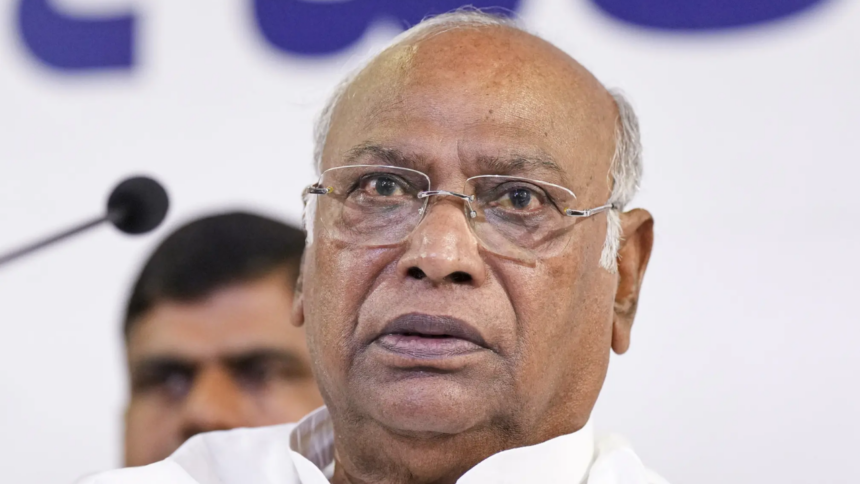
The Indian government is facing intense scrutiny over its handling of relations with China, with the opposition Congress party launching a scathing attack on Prime Minister Narendra Modi’s administration. The criticism comes amidst growing concerns over India’s increasing economic dependence on China, despite the 2020 Galwan clash that resulted in the loss of lives of Indian soldiers. Congress president Mallikarjun Kharge has accused the government of giving China a ‘clean chit’ and compromising national security by allowing Beijing to gain a dominant position in several strategic sectors.
Escalating Tensions
The Galwan clash in 2020 marked a significant turning point in India-China relations, with both countries engaging in a bitter standoff along the Line of Actual Control (LAC). However, despite the tensions, India’s trade deficit with China has continued to widen, with Beijing becoming an increasingly important trading partner for New Delhi. The Congress party has alleged that this growing economic dependence on China has compromised India’s national security, with the government failing to take adequate measures to reduce the country’s reliance on Chinese imports.
The opposition party has also pointed to the increasing presence of Chinese companies in India’s strategic sectors, including telecommunications, electronics, and pharmaceuticals. The Congress has accused the government of failing to ensure that these companies do not pose a threat to national security, with many of these firms having alleged links to the Chinese military or intelligence agencies. The party has demanded that the government take immediate action to review the presence of Chinese companies in these sectors and ensure that they do not compromise India’s national security.
Economic Dependence
India’s economic dependence on China is a complex issue, with the country relying heavily on Chinese imports for a range of goods, including electronics, machinery, and pharmaceuticals. The government has attempted to reduce this dependence through initiatives such as the ‘Make in India’ and ‘Atmanirbhar Bharat’ programs, which aim to promote domestic manufacturing and reduce reliance on imports. However, these initiatives have had limited success, with India’s trade deficit with China continuing to widen.
The Congress party has alleged that the government’s failure to reduce India’s economic dependence on China is a result of its ‘lack of vision’ and ‘inability to take tough decisions’. The party has pointed to the example of other countries, such as the United States and the European Union, which have taken steps to reduce their reliance on Chinese imports and promote domestic manufacturing. The Congress has demanded that the government take similar steps to reduce India’s dependence on China and promote domestic industries.
National Security Implications
The national security implications of India’s growing economic dependence on China are a major concern for the Congress party. The party has alleged that the government’s failure to reduce this dependence has compromised India’s national security, with the country becoming increasingly vulnerable to Chinese pressure and influence. The Congress has pointed to the example of China’s Belt and Road Initiative (BRI), which has been accused of being a tool of Chinese expansionism and a means of exerting pressure on participating countries.
The party has demanded that the government take immediate action to review India’s participation in the BRI and ensure that the country’s national security is not compromised. The Congress has also demanded that the government take steps to promote domestic manufacturing and reduce India’s reliance on Chinese imports, in order to reduce the country’s vulnerability to Chinese pressure and influence. The government’s response to these allegations will be closely watched, with the opposition party likely to continue to press the issue in the coming days and weeks.
The controversy over India’s relations with China is likely to continue to dominate the national agenda, with the opposition Congress party pushing for greater transparency and accountability from the government. As the debate continues, one thing is clear: the Indian government will need to take a long, hard look at its relations with China and ensure that the country’s national security is not compromised. The government’s handling of this issue will have significant implications for India’s future, and the country’s citizens will be watching closely to see how the situation unfolds.