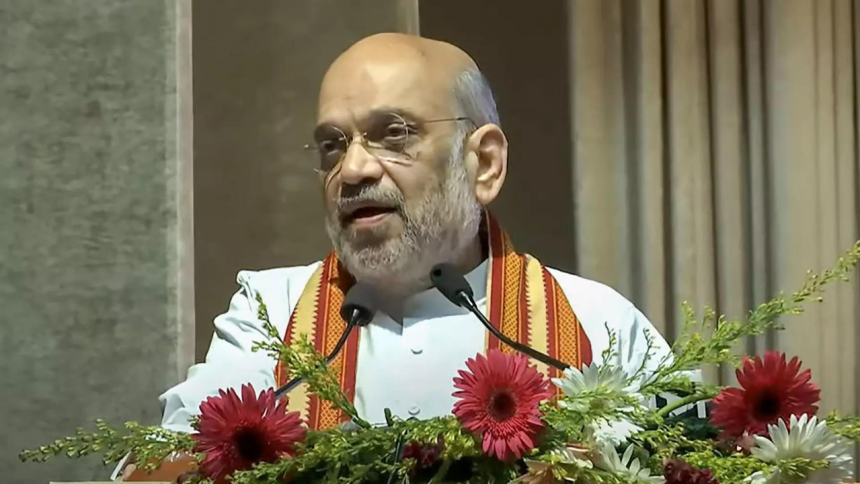
The Modi government is taking a significant step towards bolstering national security by implementing a comprehensive four-layer security grid along the country’s borders. This ambitious project aims to integrate border guarding forces, state and district administrations, central government agencies, and local communities to create a robust and responsive security apparatus. Union Home Minister Amit Shah, while unveiling the initiative, emphasized the importance of this endeavour, stating that it will not only strengthen border security but also foster economic growth and social development in the regions bordering these areas.
Enhancing Border Security: A Four-Layer Grid
The four-layer security grid is designed to address the complexities of border security in a holistic manner. The first layer involves the border guarding forces, comprising the Border Security Force (BSF), the Sashastra Seema Bal (SSB), and the Assam Rifles. These forces will be responsible for patrolling the borders and detecting any potential threats. The second layer will comprise state and district administrations, which will be responsible for providing logistical support, gathering intelligence, and facilitating communication between the different agencies involved. The third layer will consist of central government agencies, such as the Intelligence Bureau, the National Security Guard, and the Defence Research and Development Organisation, which will provide strategic guidance and technical support. The fourth and final layer will involve local communities, who will be empowered to contribute their knowledge and expertise to the security grid.
The integration of these four layers is expected to create a seamless and effective security system that can respond quickly to emerging threats. This approach is being implemented in sensitive regions, including Jammu and Kashmir and the Northeast, where the security challenges are particularly acute. The Union Home Minister has stated that this initiative will not only improve border security but also help to address the developmental needs of these regions.
Addressing Developmental Needs
The Modi government has recognised that border security is not just about military might, but also about addressing the developmental needs of the regions bordering these areas. The four-layer security grid is designed to foster economic growth and social development in these regions by creating a collaborative framework between the government, local communities, and other stakeholders. This includes initiatives such as skill development programmes, infrastructure development, and social welfare schemes. The government believes that by creating a sense of shared responsibility and ownership, the local communities will be more invested in the security of these regions.
The implementation of the four-layer security grid is a significant step towards strengthening national security and fostering economic growth and social development in the regions bordering these areas. While there are challenges ahead, the Modi government is confident that this initiative will help to create a more secure and prosperous India.
Challenges and Opportunities
The implementation of the four-layer security grid is a complex and challenging task, requiring the coordination of multiple agencies and stakeholders. However, the government is confident that this initiative will help to create a more effective and responsive security system that can address the complexities of border security. The challenges ahead include integrating the different agencies involved, addressing the developmental needs of the regions bordering these areas, and ensuring that the local communities are empowered to contribute their knowledge and expertise to the security grid. However, the opportunities presented by this initiative are significant, and the government is hopeful that it will help to create a more secure and prosperous India.
The Modi government’s decision to implement a four-layer security grid is a bold and ambitious initiative that has the potential to transform the way we approach border security. By integrating border guarding forces, state and district administrations, central government agencies, and local communities, this initiative has the potential to create a robust and responsive security apparatus that can address the complexities of border security in a holistic manner.
The success of this initiative will depend on the effective coordination of multiple agencies and stakeholders, as well as the ability of the government to address the developmental needs of the regions bordering these areas. However, the potential benefits of this initiative are significant, and the government is confident that it will help to create a more secure and prosperous India.