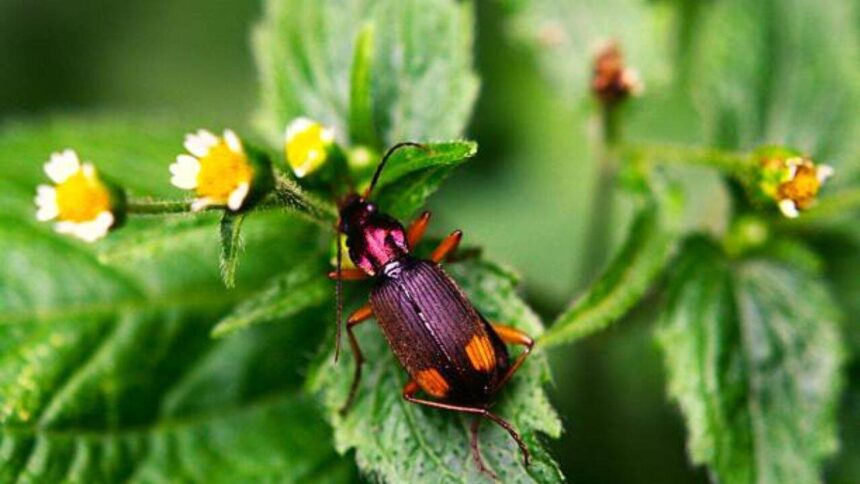
When faced with a threat, most creatures either flee or fight, but the bombardier beetle takes defense to a whole new level. This tiny insect has evolved a unique mechanism to protect itself from predators, by carrying its own bomb and using chemistry to unleash a hot, caustic spray that can reach temperatures of up to 212 degrees Fahrenheit. This remarkable ability has fascinated scientists for decades, and recent studies have shed more light on the intricate details of this complex process.
Chemical Warfare
The bombardier beetle’s defense mechanism involves a combination of hydrogen peroxide and hydroquinone, which are stored in two separate compartments within its abdomen. When the beetle feels threatened, it releases these chemicals into a combustion chamber, where they mix and react to produce a high-temperature, high-pressure gas. This gas is then expelled through a valve-like structure, creating a loud noise and a stream of hot, corrosive liquid that can be aimed directly at the predator.
But how does the beetle avoid harming itself with its own toxic spray? The answer lies in the clever design of its combustion chamber, which is lined with a heat-resistant coating that prevents the beetle’s internal organs from being damaged. Additionally, the beetle’s body is covered in a waxy coating that helps to protect it from the caustic effects of the spray. This remarkable example of evolutionary adaptation has inspired scientists to develop new materials and technologies that could be used in a variety of applications, from medicine to aerospace engineering.
Evolutionary Advantages
The bombardier beetle’s explosive defense mechanism has clearly provided it with a significant advantage in terms of survival and reproduction. By being able to deter predators with its caustic spray, the beetle is able to protect itself and its offspring from harm, and to compete more effectively for resources such as food and shelter. But the beetle’s defense mechanism may also have some unintended consequences, such as attracting other insects that are drawn to the noise and smell of the spray.
Interestingly, the bombardier beetle is not the only creature that uses chemistry to defend itself. Many other insects, such as ants and bees, also use complex chemical signals to communicate and defend themselves. However, the bombardier beetle’s mechanism is unique in terms of its complexity and effectiveness, and has therefore become a subject of intense scientific study and fascination. By understanding how the beetle’s defense mechanism works, scientists may be able to develop new strategies for controlling pests and diseases, and for protecting vulnerable ecosystems.
Future Applications
As scientists continue to study the bombardier beetle’s defense mechanism, they are discovering new and innovative ways to apply this knowledge in a variety of fields. For example, the beetle’s combustion chamber has inspired the development of new types of fuel injectors and propulsion systems, which could be used in everything from cars to spacecraft. Additionally, the beetle’s heat-resistant coating has led to the creation of new materials that could be used in medical implants, fireproof clothing, and other applications where high temperatures are a concern.
As we continue to learn more about the natural world and the incredible diversity of creatures that inhabit it, we are constantly reminded of the importance of preserving and protecting our planet’s ecosystems. The bombardier beetle’s remarkable defense mechanism is just one example of the many fascinating and complex adaptations that have evolved over millions of years, and it highlights the need for continued scientific research and exploration. By studying and learning from the natural world, we can gain a deeper appreciation for the beauty and complexity of life on Earth, and develop new technologies and strategies that can help us to build a more sustainable and equitable future for all.