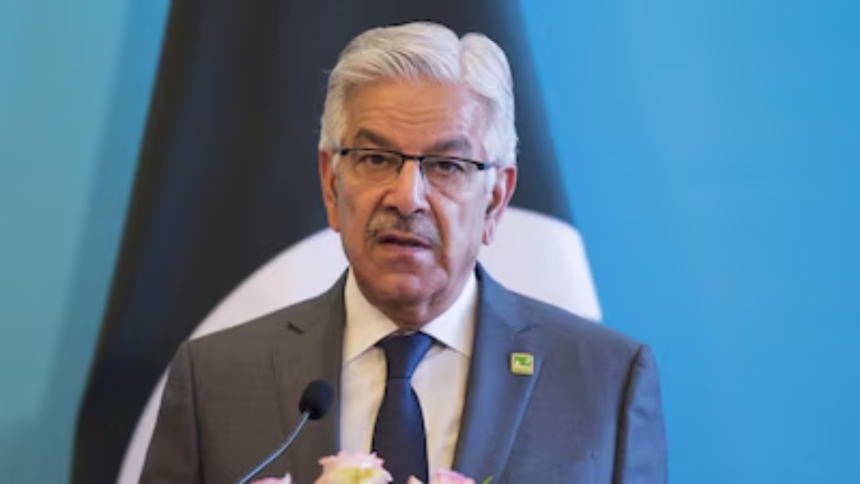
In a stark warning to India, Pakistan’s Defence Minister Khawaja Asif has sent a clear message that his country is prepared to take drastic action in the event of any future aggression. Speaking on Saturday, the high-ranking official stated that Islamabad would unleash a retaliatory strike on the Indian city of Kolkata, a culturally and economically significant hub in eastern India.
Escalating Tensions Between Nuclear Neighbors
The statement from Khawaja Asif comes amid a backdrop of simmering tensions between the two nuclear-armed nations. Relations between India and Pakistan have been strained for decades, with periodic outbreaks of violence along the Line of Control in disputed Kashmir. The current situation is no exception, with a series of recent skirmishes and diplomatic spats between the two governments. The threat of a retaliatory strike on Kolkata is seen by many as an escalation of these tensions, and a stark warning to India to exercise restraint in its dealings with Pakistan.
Indian officials have so far remained tight-lipped on the issue, with some sources suggesting that they are taking the threat seriously. The city of Kolkata is a major cultural and economic hub in eastern India, known for its rich history, vibrant arts scene, and thriving business community. A strike on the city would have significant human and economic costs, and could potentially destabilize the entire region.
The Context of Pakistan’s Warning
Khawaja Asif’s statement is widely seen as a response to recent actions by Indian security forces in Kashmir. Tensions in the region have been high in recent weeks, following a series of incidents including the killing of several civilians by Indian soldiers, and the alleged involvement of Indian intelligence agencies in a plot to destabilize the Pakistani government. The Pakistani defence minister’s warning is seen by many as an attempt to deter India from pursuing further aggression in the region, and to emphasize the potential consequences of such actions.
However, not everyone is convinced that Pakistan’s warning is more than just rhetoric. Some analysts believe that the statement is an attempt to distract from internal issues in Pakistan, and to shift the focus away from the country’s own human rights record and economic challenges. Others argue that the threat of a strike on Kolkata is an empty one, and that Pakistan lacks the military capability to carry out such an attack.
The Way Forward
As tensions between India and Pakistan continue to simmer, the international community is watching the situation with growing concern. Diplomats and security experts are urging both sides to exercise restraint and engage in dialogue to resolve their differences peacefully. However, the threat of a retaliatory strike on Kolkata serves as a stark reminder of the potential for violence in the region, and the devastating consequences that such an event would have for civilians on both sides of the border.
In the face of such uncertainty, one thing is clear: the situation between India and Pakistan is precarious, and requires careful handling to prevent further escalation. As the world watches, the people of India and Pakistan can only hope that their leaders will find a way to resolve their differences peacefully, and avoid the devastating consequences of war.