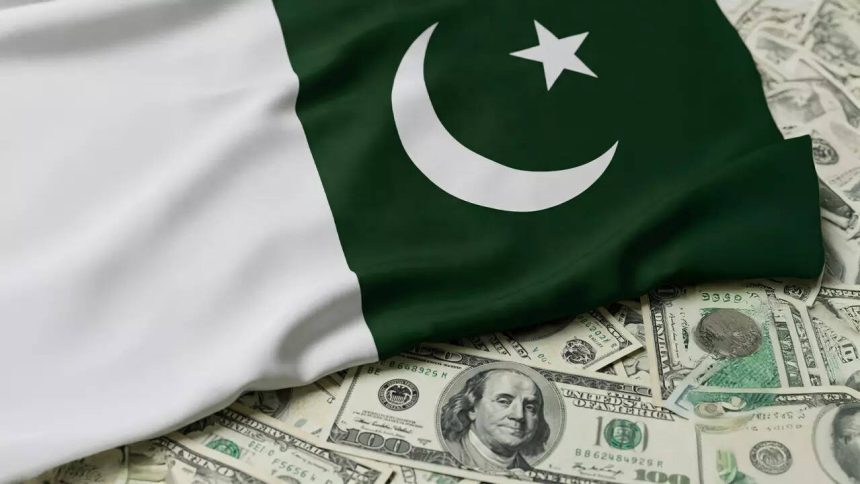
Pakistan’s economy has been facing significant challenges in recent years, but the country has managed to stay afloat thanks to a steady stream of foreign loans. In the last fiscal year, Pakistan received a whopping $27 billion in foreign funding, with Saudi Arabia and China being the largest contributors. This massive influx of capital has helped Pakistan to bolster its dwindling foreign exchange reserves, which had fallen to critically low levels. The loans, which were largely in the form of rollovers, have provided a much-needed lifeline for the country’s economy, allowing it to meet its international obligations and maintain a semblance of stability.
Foreign Funding: A Double-Edged Sword
Pakistan’s reliance on foreign funding is a double-edged sword. On the one hand, it provides the country with the necessary capital to finance its development projects and meet its debt obligations. On the other hand, it increases the country’s dependence on external factors and exposes it to the risk of debt trap. The majority of the $27 billion in foreign loans received by Pakistan in the last fiscal year came from Saudi Arabia and China, with both countries rolling over billions of dollars in loans. While this has helped to alleviate Pakistan’s immediate financial woes, it has also raised concerns about the country’s long-term sustainability.
The provisional report by the ministry of economic affairs reveals that Saudi Arabia and China have been consistent in their support for Pakistan, with both countries providing significant financial assistance to the country over the years. However, the report also highlights the need for Pakistan to diversify its funding sources and reduce its dependence on a few countries. This is crucial for the country’s economic stability and sovereignty, as an over-reliance on foreign funding can limit its policy options and undermine its ability to make independent decisions.
Regional Dynamics and Economic Implications
The $27 billion in foreign loans received by Pakistan has significant implications for the country’s economy and regional dynamics. The fact that Saudi Arabia and China are the largest contributors to Pakistan’s foreign funding suggests that the country is increasingly becoming a part of their geopolitical orbit. This has significant implications for the regional balance of power, as Pakistan’s proximity to both countries could potentially create tensions with other regional players. Furthermore, the influx of foreign capital has also led to an increase in Pakistan’s imports, which has resulted in a widening trade deficit.
The trade deficit has been a major concern for Pakistan’s policymakers, as it has put pressure on the country’s foreign exchange reserves. However, the $27 billion in foreign loans has helped to mitigate this pressure, allowing the country to maintain a stable exchange rate and meet its international obligations. Nevertheless, the country’s policymakers recognize that this is a temporary solution and that a more sustainable approach is needed to address the trade deficit and promote economic growth.
Way Forward: Diversification and Economic Reforms
Pakistan’s economy is at a critical juncture, and the country’s policymakers face significant challenges in the coming years. The $27 billion in foreign loans has provided a temporary reprieve, but it is essential for the country to diversify its funding sources and implement economic reforms to promote sustainable growth. This includes increasing exports, improving the business environment, and investing in human capital. By doing so, Pakistan can reduce its dependence on foreign funding and create a more stable and sustainable economy.
The provisional report by the ministry of economic affairs highlights the need for Pakistan to adopt a more nuanced approach to its economic development. This includes promoting private sector growth, improving governance, and investing in infrastructure. By adopting such an approach, Pakistan can create a more favorable business environment, attract foreign investment, and promote economic growth. The $27 billion in foreign loans has provided a lifeline for the country’s economy, but it is now up to the policymakers to use this opportunity to implement meaningful reforms and promote sustainable development.