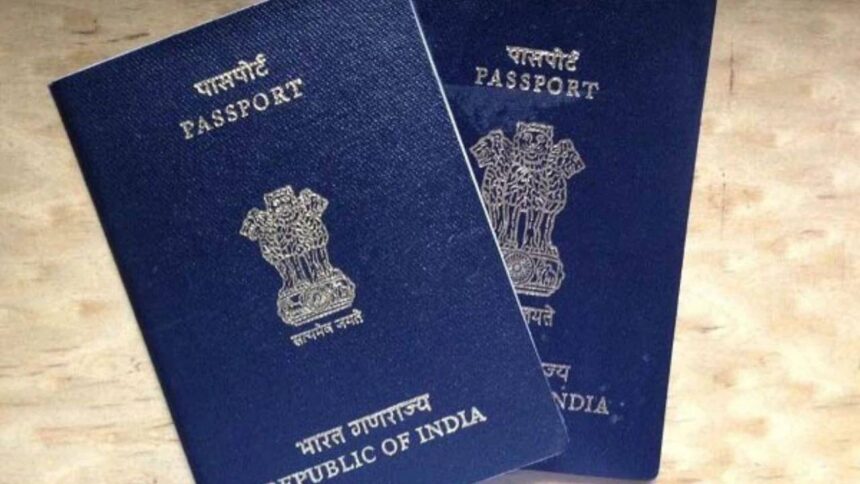
The ongoing debate over the meaning of Indian citizenship has taken an unexpected turn, with records showing that the Ministry of External Affairs (MEA) and the Ministry of Home Affairs (MHA) agreed in 2010 that holders of Indian passports residing abroad can be treated as ‘citizens’ for the purpose of accessing the Right to Information Act. This revelation has sparked a fresh wave of discussion among experts and citizens alike, raising questions about the status of Indian passport holders living overseas and their rights in India.
Interministerial Deliberations: A Glimpse into the Past
Records of interministerial deliberations in 2010, obtained through an RTI application, reveal that the MEA and MHA engaged in a discussion on the scope of the Right to Information Act. During this discussion, the two ministries agreed that individuals holding Indian passports, even if they are resident abroad, can be considered ‘citizens’ for the purpose of accessing information under the Act. This agreement was made in response to a query from an RTI applicant who argued that the passport is not a conclusive proof of citizenship.
The deliberations, which took place in July 2010, were attended by officials from the MEA, MHA, and other government departments. According to the records, the MEA argued that the passport is a travel document that does not necessarily imply citizenship, while the MHA contended that it is a document that is issued to individuals who have been granted citizenship of India. The two ministries eventually agreed to a compromise, with the MEA accepting that passport holders abroad can be treated as ‘citizens’ for the purpose of accessing information under the RTI Act.
Citizenship Debate: What Does it Mean?
The 2010 agreement has sparked a fresh debate on the meaning of Indian citizenship. While some experts argue that the passport is a conclusive proof of citizenship, others contend that it is just a travel document. The debate has also raised questions about the rights and privileges of Indian passport holders living overseas. If passport holders abroad can be treated as ‘citizens’ for the purpose of accessing information under the RTI Act, what does this mean for their rights and obligations in India?
One expert points out that the 2010 agreement has significant implications for the status of Indian passport holders living abroad. ‘If passport holders abroad can be treated as ‘citizens’ for the purpose of accessing information under the RTI Act, it implies that they have certain rights and privileges in India,’ she says. ‘However, it also raises questions about their obligations and duties towards the country.’
Implications and Way Forward
The implications of the 2010 agreement are far-reaching and multifaceted. If passport holders abroad can be treated as ‘citizens’ for the purpose of accessing information under the RTI Act, it has significant implications for the status of Indian citizens living overseas. It also raises questions about the rights and privileges of Indian passport holders living abroad and their obligations towards the country.
The Ministry of External Affairs and the Ministry of Home Affairs have been approached for comments on the matter, but have not responded yet. As the debate continues, one thing is clear: the meaning of Indian citizenship is complex and multifaceted, and the 2010 agreement has only added to the complexity of the issue.
The ongoing debate on the meaning of Indian citizenship has far-reaching implications for the status of Indian citizens living overseas and their rights and obligations in India. As the discussion continues, it is essential to consider the complexities of the issue and the implications of the 2010 agreement for the status of Indian passport holders living abroad.