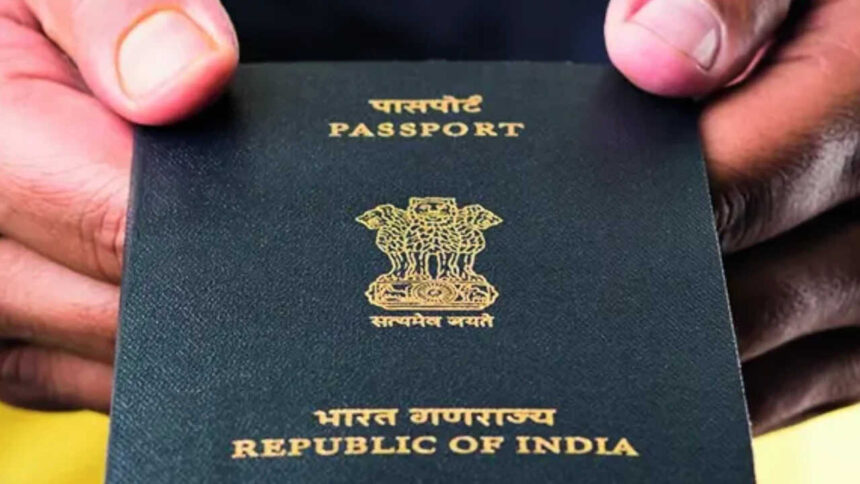
The Ministry of External Affairs (MEA) has reignited a crucial conversation about the role of passports in India, emphasizing that these documents are primarily used to regulate the departure of citizens from the country, rather than serve as proof of citizenship. This clarification comes on the heels of controversy surrounding remarks by government officials that questioned the link between passports and citizenship. The statement is significant, as it underscores the specific legal framework governing passports in India, notably the Passports Act of 1967. This act explicitly outlines the conditions under which passports are issued, emphasizing their purpose in facilitating international travel while ensuring that the government can monitor the movement of its citizens abroad.
Understanding the Passports Act, 1967
The Passports Act, 1967, is the foundational legal document that governs the issuance of passports in India. It is designed to regulate the departure of citizens from India and their entry into foreign countries. The act stipulates the requirements for obtaining a passport, the conditions under which a passport can be issued, and the circumstances under which it can be impounded or revoked. Essentially, the passport serves as a critical document that verifies the identity and nationality of the bearer, facilitating their travel across international borders. However, the MEA’s recent clarification highlights the distinction between a passport’s role in international travel and its implications for domestic citizenship status.
The distinction is important because it addresses concerns that have arisen about the link between holding a passport and being recognized as a citizen of India. The MEA’s statement aims to reassure the public that the primary purpose of a passport is to enable travel, not to confer or deny citizenship rights. This is crucial in a context where issues of citizenship have become increasingly politicized and contentious, with various groups advocating for clearer definitions and protections of citizenship rights.
Citizenship and Travel Documents
The relationship between citizenship and travel documents like passports is complex and varies significantly from one country to another. In India, the legal framework distinguishes between the rights and privileges associated with citizenship and the specific purpose of a passport as a travel document. While a passport is essential for international travel, it does not, in itself, determine an individual’s citizenship status. Citizenship is determined by a broader set of criteria, including birth, descent, naturalization, and other legal provisions outlined in the Citizenship Act of 1955.
The MEA’s clarification on the role of passports is also relevant in the context of ongoing debates about national identity, immigration, and the rights of citizens versus non-citizens. As the Indian government continues to evolve its policies on citizenship and immigration, the distinction between passports as travel documents and proof of citizenship will remain a critical issue. It underscores the need for clear, understandable policies that protect the rights of citizens while also facilitating international travel and cooperation.
Implications and Future Directions
The implications of the MEA’s statement are far-reaching, touching on issues of national identity, international relations, and the legal rights of Indian citizens. By clarifying the role of passports, the government aims to provide a clearer understanding of how citizenship is defined and protected in India. This is particularly important in a global context where the movement of people across borders is increasingly regulated and scrutinized. As India continues to engage with the world, both economically and culturally, the policies governing its citizens’ travel and residence abroad will play a significant role in shaping the country’s international relationships and its position on the global stage.
The clarification also invites a broader reflection on the nature of citizenship and how it is recognized and protected in India. As the country navigates the complexities of globalization, migration, and national security, the legal and administrative frameworks governing citizenship and travel will need to evolve. The MEA’s statement is a step towards providing clarity and reassurance to Indian citizens, emphasizing the government’s commitment to protecting their rights and facilitating their international mobility, while also upholding the legal distinctions that govern these areas.