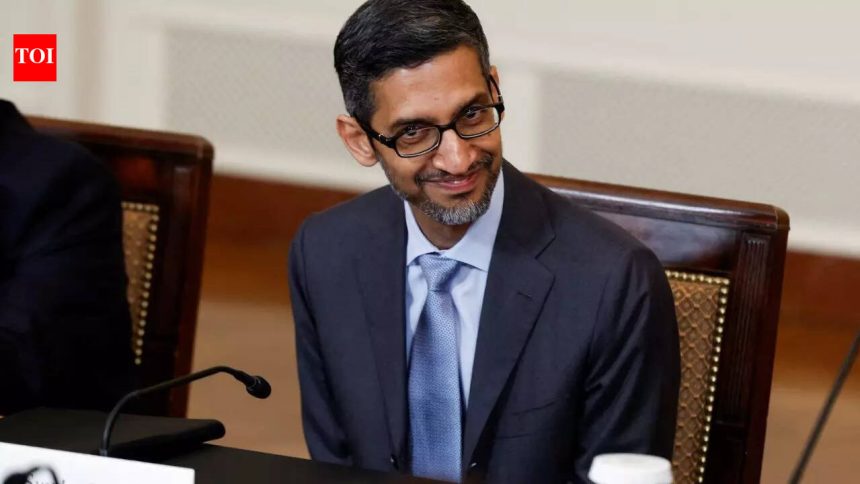
As the world grapples with the rapid advancement of artificial intelligence (AI), concerns have been mounting about the future of work. With various high-profile executives predicting massive job cuts, it’s natural for new graduates entering the workforce to feel uncertain about their prospects. However, Google CEO Sundar Pichai has a reassuring message for those entering the job market, insisting that AI will ultimately create new opportunities and enhance the economy, rather than destroy jobs.
AI: A Catalyst for Growth, Not Job Loss
Pichai’s optimism stems from his belief that AI will augment human capabilities, freeing people from mundane tasks and enabling them to focus on more complex and creative work. By automating routine tasks, AI can increase productivity and efficiency, leading to economic growth and new industries emerging. The Google CEO points out that while AI may displace some jobs, it will also create new ones that we cannot yet imagine, as it did with the rise of the internet and mobile devices.
One notable example of AI-driven innovation is the self-driving car industry, which is expected to create millions of new jobs in the coming years. Similarly, the healthcare sector is utilizing AI to develop personalized medicine and improve patient outcomes, leading to increased demand for skilled professionals. Pichai’s vision for AI is one of collaboration between humans and machines, where technology enhances our capabilities rather than replacing them.
The Human Touch: Why AI Won’t Replace Human Workers
Pichai acknowledges that AI may displace some jobs, particularly those that involve repetitive or routine tasks, but emphasizes that human workers possess unique skills and qualities that AI systems cannot replicate. Creativity, empathy, and problem-solving abilities are essential for many industries, and AI will not replace these essential human qualities. Moreover, AI will create new opportunities for skilled professionals who can work alongside machines to develop and implement AI solutions.
Furthermore, Pichai highlights the importance of human judgment and decision-making in complex situations, where AI systems may not be able to fully understand the nuances of human behavior. By working together with AI, humans can leverage the strengths of both worlds to create innovative solutions and drive economic growth.
A Bright Future: Why Entry-Level Graduates Should Be Optimistic
Pichai’s message to entry-level graduates is clear: the future is bright, and AI will not doom the job market. While it’s natural to feel uncertain about the impact of AI, Pichai’s vision for a collaborative future between humans and machines offers a glimmer of hope. By embracing AI and developing new skills, entry-level graduates can position themselves for success in a rapidly changing job market.
As Pichai so aptly puts it, AI is not a zero-sum game where one side wins and the other loses. Rather, it’s a catalyst for growth, innovation, and creativity, which will ultimately drive economic prosperity and create new opportunities for all.
In a world where automation and AI are increasingly ubiquitous, Pichai’s reassurance offers a much-needed dose of optimism for those entering the workforce. By embracing the possibilities of AI, entry-level graduates can look forward to a future where technology and human ingenuity combine to drive progress and growth.