Climate change is often viewed through the lens of global averages, with discussions centered on the overall rise in temperature. However, a recent breakthrough in climate research has shifted the focus towards the distribution of warming, revealing that the location of climate forcing may be just as crucial as its magnitude. By utilizing advanced climate model simulations, scientists have made a startling discovery: the Earth’s climate system responds dramatically differently depending on where radiative forcing is introduced, with the polar regions emerging as key players in amplifying climate change.
Polar Forcing and Triple Warming
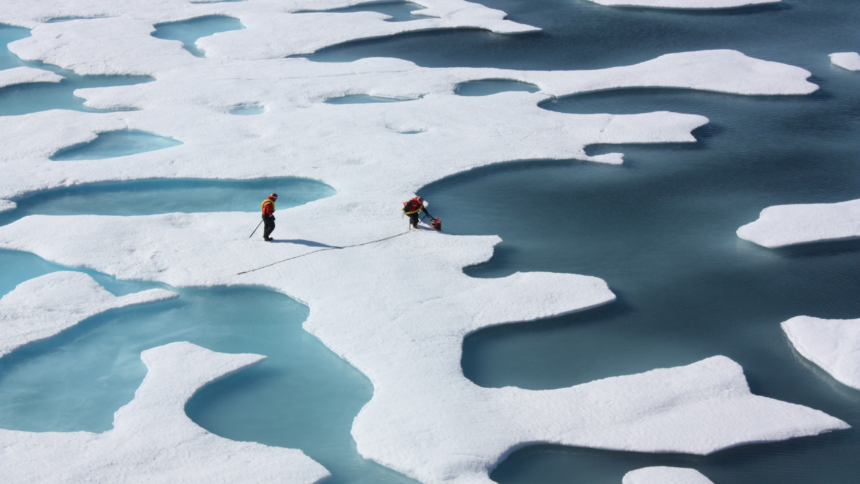
The study’s findings indicate that when radiative forcing is applied at the poles, it triggers a triple warming effect. This phenomenon occurs because the polar regions are more sensitive to climate forcing due to their unique geographical and atmospheric characteristics. The snow-covered surfaces and sea ice found in these areas are highly reflective, bouncing sunlight back into space and keeping the region cool. However, when climate forcing is introduced, it disrupts this delicate balance, leading to rapid warming and the melting of ice sheets. As the ice melts, it exposes darker surfaces that absorb more solar radiation, further accelerating the warming process.
The triple warming effect is also influenced by changes in atmospheric circulation patterns. As the polar regions warm, they create a temperature gradient that drives changes in wind patterns and ocean currents. These changes, in turn, can have far-reaching consequences, impacting weather patterns and climate conditions across the globe. The researchers’ simulations suggest that the polar regions’ amplification of climate change can have significant effects on regional climate variability, leading to more extreme weather events and altered ecosystems.
Climate Modeling and Regional Variability
The study highlights the importance of incorporating regional variability into climate models. By mapping where heat hits, scientists can better understand the complex interactions between different components of the climate system. This knowledge can be used to improve climate predictions, allowing for more accurate forecasts of future climate change. The researchers’ simulations demonstrate that climate models must account for the unique characteristics of each region, including the polar areas, to accurately capture the dynamics of the climate system.
Regional climate modeling can also help identify areas that are most vulnerable to climate change. By analyzing the distribution of warming, scientists can pinpoint regions that are likely to experience the most significant impacts, such as sea-level rise, droughts, or heatwaves. This information can be used to inform climate policy and develop targeted adaptation strategies, helping communities to prepare for and respond to the challenges posed by climate change.
Implications and Future Research
The discovery of the polar regions’ role in amplifying climate change has significant implications for our understanding of the climate system. The findings suggest that the polar areas are not just passive responders to climate change but are instead active participants, driving changes in the global climate. This knowledge can be used to develop more effective climate mitigation strategies, such as reducing black carbon emissions or implementing geoengineering techniques to reflect sunlight and cool the planet.
As the research continues to unfold, scientists are eager to explore the complexities of the climate system further. Future studies will focus on refining climate models, improving regional climate predictions, and investigating the feedback loops that amplify climate change. By advancing our understanding of the climate system, researchers can provide policymakers and stakeholders with the information needed to make informed decisions about climate change mitigation and adaptation. The journey to combat climate change is long and complex, but with continued scientific breakthroughs, we can work towards a more sustainable future for generations to come.
The research community is abuzz with excitement as the implications of the polar regions’ role in climate change continue to sink in. As scientists, policymakers, and the general public come together to address the challenges posed by climate change, one thing is clear: the polar regions are a critical component of the climate system, and their amplification of climate change must be taken into account in our pursuit of a more sustainable future. The time to act is now, and with continued research and collaboration, we can work towards a brighter, more climate-resilient future for all.