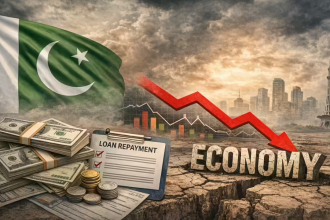
Italy has long been a nation of extremes, where the passionate and the practical coexist in a delicate balance. As the country teeters on the edge of financial ruin, a familiar phrase has begun to resurface, one that speaks to the disconnect between the haves and the have-nots: ‘È facile predicare il digiuno a pancia piena.’ Or, as we might translate it, ‘It is easy to preach fasting when one has a full belly.’
The Empty Vessels of Austerity
Italy’s current crisis is, on paper, a simple tale of fiscal mismanagement. The country’s public debt has spiralled out of control, and its economy is struggling to recover from the effects of the pandemic. But scratch beneath the surface, and a more complex picture emerges. For beneath the rhetoric of austerity and belt-tightening lies a stark reality: the majority of Italians are not in a position to make significant sacrifices.
Take, for example, the issue of pension reform. As the government attempts to trim the fat from Italy’s bloated pension system, many are left wondering how the country’s elderly will cope with reduced benefits. Meanwhile, the wealthy elite continue to enjoy a generous range of tax breaks and loopholes, allowing them to avoid contributing their fair share to the country’s coffers.
This is not to say that Italy does not need to reform its finances. But as the country embarks on a painful process of austerity, it is crucial that those in power remember the human cost of their decisions. The phrase ‘È facile predicare il digiuno a pancia piena’ is more than just a clever quip – it is a stark reminder that the solutions to Italy’s financial woes will not be found in the abstract, but in the very real lives of its citizens.
The Politics of Austerity
So why is it that Italy’s ruling class appears so detached from the reality of the crisis? Part of the answer lies in the country’s peculiar brand of politics. For decades, Italy has been plagued by a system of patronage and clientelism, where politicians trade favours and benefits for votes. This has created a culture of entitlement among the elite, where the notion of sacrifice is seen as something that only applies to others.
But there is also a deeper issue at play. In an era of globalisation and technological change, the old certainties of politics are rapidly disappearing. As traditional industries shrink and new ones emerge, entire communities are being left behind. Italy’s financial crisis is, in part, a symptom of this broader shift, and the country’s politicians would do well to acknowledge it.
By failing to address the root causes of Italy’s problems, the government risks creating a culture of resentment and anger. As the country’s economy continues to contract, and the burden of austerity falls most heavily on the poor and the vulnerable, the phrase ‘È facile predicare il digiuno a pancia piena’ will take on a new and ominous significance.
A Call to Action
So what can be done to change the course of Italy’s crisis? The answer lies in a more nuanced approach to politics, one that takes into account the very real lives of the country’s citizens. This means investing in education and training, to help those who have been left behind by the forces of change. It means addressing the root causes of poverty and inequality, and creating a more just and equitable society.
It also means recognising that the solutions to Italy’s financial woes will not be found in the abstract, but in the very real lives of its citizens. As the country embarks on a painful process of austerity, it is time for its politicians to remember the phrase ‘È facile predicare il digiuno a pancia piena.’ It is time to put the interests of the many above the interests of the few, and to create a more just and equitable society for all.
Only then can Italy truly begin to rebuild, and emerge from its current crisis stronger and more united than ever before.