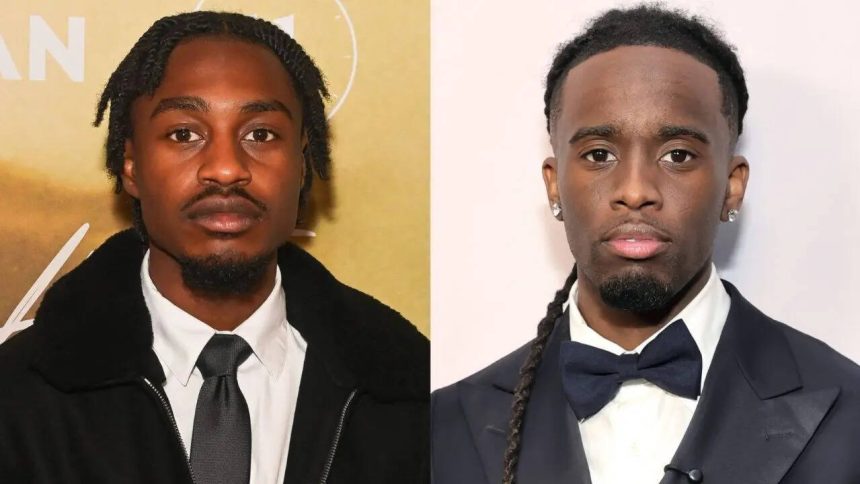
The latest online drama involving Lil Tjay and Kai Cenat has once again blurred the line between entertainment and personal privacy, leaving fans and critics alike questioning the ethics of sharing private messages on social media. What began as subtle tension between two internet personalities quickly exploded after Lil Tjay briefly posted screenshots of private messages connected to Cenat’s former girlfriend, Gigi Alayah. The move sparked a heated debate about the importance of respecting individuals’ private lives, even for those in the public eye.
Exposing Private Lives
The incident has raised concerns about the consequences of sharing private messages without consent, and how this can impact not only the individuals involved but also their relationships and reputation. Lil Tjay’s decision to post the screenshots, although briefly, has been seen by many as a violation of Gigi Alayah’s privacy and a desperate attempt to gain attention and sympathy from his fans. The fact that the messages were connected to Kai Cenat’s ex-girlfriend has only added fuel to the fire, with many fans taking to social media to express their outrage and disappointment.
As the situation continues to unfold, it has become clear that the line between entertainment and personal privacy is increasingly becoming blurred. With the rise of social media, internet personalities are often expected to share aspects of their personal lives with their fans, creating a false sense of intimacy and familiarity. However, this can also lead to a lack of respect for individuals’ private lives, as seen in the case of Lil Tjay and Kai Cenat. The incident serves as a reminder that even public figures have the right to privacy and that sharing private messages without consent can have serious consequences.
Consequences of Online Feuds
The online feud between Lil Tjay and Kai Cenat has also highlighted the consequences of engaging in public disputes on social media. The situation has not only damaged the reputations of those involved but also affected their relationships with their fans. Many fans have expressed disappointment and frustration with the way the situation has been handled, with some even calling for Lil Tjay to apologize for his actions. The incident serves as a reminder that online feuds can have real-life consequences and that internet personalities should be mindful of the impact their actions can have on their fans and the wider community.
The situation has also sparked a wider conversation about the impact of social media on our lives and the importance of respecting individuals’ private lives. As social media continues to play an increasingly important role in our lives, it is essential that we establish clear boundaries and guidelines for what is and is not acceptable behavior online. This includes respecting individuals’ private lives and avoiding the sharing of private messages without consent. By doing so, we can help create a safer and more respectful online community for everyone.
A Call for Accountability
The incident involving Lil Tjay and Kai Cenat has also raised questions about accountability and the role of social media platforms in regulating online behavior. While social media platforms have implemented various measures to prevent the sharing of private messages and other forms of harassment, more needs to be done to prevent such incidents from occurring in the future. This includes implementing stricter guidelines and consequences for those who engage in online harassment and promoting a culture of respect and empathy online.
As the situation continues to unfold, it is essential that we prioritize respect and empathy online and hold internet personalities accountable for their actions. By doing so, we can help create a more positive and respectful online community, where individuals feel safe and supported. The incident involving Lil Tjay and Kai Cenat serves as a reminder that our actions online have real-life consequences and that we must be mindful of the impact our behavior can have on others.