As the scorching summer sun begins to wane, a sense of anticipation fills the air. In Hindu tradition, this month of transition marks the beginning of a spiritually charged period known as Shravan Maas or Saawan, a time when devotees around the world pay homage to the majestic Lord Shiva. For many, it’s not just a month of ritualistic observances but an opportunity to reset, recharge, and reconnect with the divine. This sacred month, revered for its transformative energy, is an ideal time to embark on a journey of self-discovery, spiritual growth, and introspection.
First Section: Preparing for the Month of Devotion
As we enter the month of Shravan, it’s essential to prepare ourselves for the spiritual journey that lies ahead. Devotees typically begin by cleansing their surroundings, both physically and metaphysically. This involves a thorough cleaning of the home, removing clutter and negative energy, and setting up a peaceful and serene environment conducive to meditation and contemplation. An expert in Hindu tradition recommends performing a simple yet powerful ritual known as ‘Ganga Snan’ or taking a sacred bath in a holy river or a nearby water body. This act of purification is believed to wash away sins and imbue the individual with a sense of renewal and rejuvenation.
Apart from these physical preparations, devotees also focus on mental and emotional cleansing. They abstain from non-essential activities, avoid indulging in worldly pleasures, and instead, dedicate themselves to prayer, meditation, and self-reflection. This period of detachment allows individuals to tap into their inner selves, connect with their higher selves, and ultimately, find inner peace and harmony.
Second Section: Powerful Rituals to Follow this Month
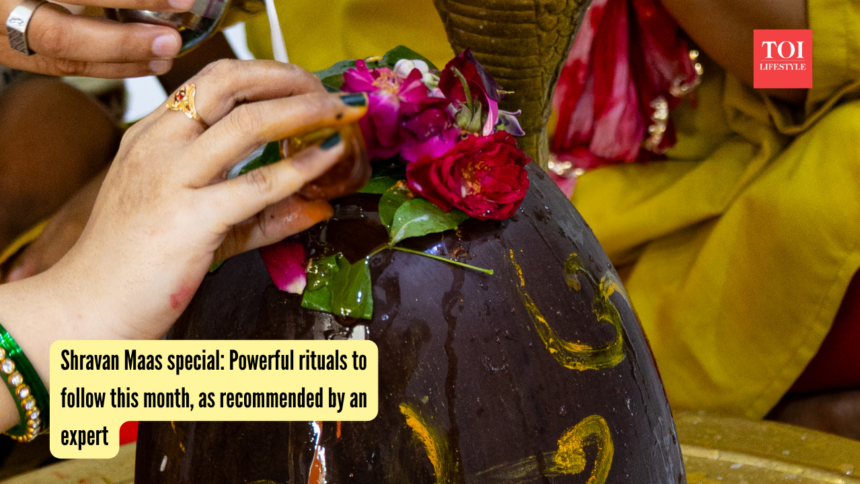
Shravan Maas is a time when the energies are particularly conducive to spiritual growth and transformation. Devotees can harness this energy by performing specific rituals that are believed to attract the blessings of Lord Shiva. One such powerful ritual is the ‘Lingodbhav’ pooja, where a small Shiva Linga is worshipped in the home, symbolizing the birth of Lord Shiva. This ritual is said to bring prosperity, good fortune, and spiritual growth to the individual and their family. Another significant ritual is the ‘Trisandhya Aradhana’, where devotees worship Lord Shiva at three specific times of the day – dawn, noon, and dusk. This act of devotion is believed to bring about a sense of balance, harmony, and unity within the individual and their surroundings.
For those who cannot perform these rituals in person, an expert recommends using sacred symbols and mantras to invoke Lord Shiva’s blessings. Simply placing a small Shiva Linga or a picture of Lord Shiva in a sacred place, and reciting specific mantras throughout the day, can have a profound impact on one’s spiritual growth and well-being. These simple yet powerful rituals can be performed anywhere, at any time, making them accessible to devotees worldwide.
Third Section: Embracing the Spiritual Energy of Shravan Maas
As we embark on this sacred journey, it’s essential to remember that Shravan Maas is not just a month of rituals and observances but a time to immerse ourselves in the spiritual energy that surrounds us. Devotees can tap into this energy by being more mindful and present in their daily lives. This involves being aware of one’s thoughts, emotions, and actions, and aligning them with the principles of Lord Shiva – compassion, forgiveness, and self-realization.
Shravan Maas is a time to awaken our inner selves, to transcend our limitations, and to connect with the divine. As we navigate this transformative period, let us remember to approach it with an open heart, mind, and spirit. By embracing the spiritual energy of this sacred month, we can experience profound growth, renewal, and rejuvenation, ultimately leading us towards a more fulfilling and meaningful life.