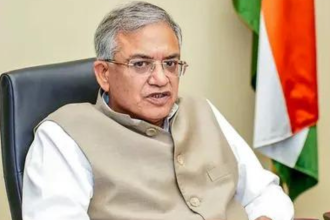
The Telecom Regulatory Authority of India (Trai) has recently clarified that no app can block phone calls originating from the 1600 number series, which are used by regulated entities and the government for official communication with citizens. This means that calls from these numbers will continue to reach your phone, and there is no way to filter them out. In contrast, promotional calls from the 140 number series can be blocked by registering on the do not disturb (DND) registry, but they cannot be tagged or filtered by any app.
A Brief History of DND Registry in India
The DND registry in India was introduced in 2007 to allow subscribers to opt out of receiving unwanted promotional calls and SMS. Over the years, the registry has undergone several changes to make it more effective. However, despite its efforts, the DND registry has limitations, and the Trai’s recent clarification on the 1600 and 140 number series has raised concerns about the effectiveness of the registry. One of the key limitations of the DND registry is that it relies on subscribers to manually register themselves for the service, which can be a tedious process. Moreover, there have been instances where subscribers have reported receiving promotional calls even after registering on the DND registry.
The Trai’s clarification on the 1600 and 140 number series has also raised questions about the regulation of promotional calls in the country. While the government has taken steps to regulate the advertising industry, the lack of clarity on the classification of promotional calls has created a grey area. As a result, some entities continue to misuse the 140 number series for promotional purposes, leading to consumer complaints.
Need for a Comprehensive Solution
The Trai’s recent clarification has highlighted the need for a more comprehensive solution to regulate promotional calls in the country. While the DND registry has been a step in the right direction, it has limitations, and the government needs to explore alternative solutions to address the problem. One possible solution could be to introduce a robust caller ID system that allows subscribers to identify and block unwanted calls. This system could also be integrated with the DND registry to make it more effective.
Another solution could be to introduce stricter regulations on the advertising industry, including fines and penalties for entities that misuse the 140 number series. This could help to create a level playing field for advertisers and protect consumers from unwanted promotional calls. In addition, the government could also consider introducing legislation that would make it mandatory for entities to obtain explicit consent from subscribers before making promotional calls.
Regulatory Body’s Stand on the Issue
The Trai has been consistent in its stance that the 1600 number series is exempt from the National Do Not Disturb (NDNC) registry, citing the fact that these numbers are used for official communication. However, the Trai has also emphasized the need for regulated entities to respect the privacy of subscribers and not misuse the 140 number series for promotional purposes. The Trai has also sought the cooperation of the advertising industry to ensure that promotional calls are made in compliance with the regulations.
In a statement, the Trai has said that it will continue to monitor the situation and take necessary steps to address consumer complaints. The Trai has also urged subscribers to report any instances of unwanted promotional calls to the authority, which will help to build a more effective complaint redressal mechanism.
The Trai’s recent clarification on the 1600 and 140 number series has raised important questions about the regulation of promotional calls in India. While the DND registry has been a step in the right direction, there is a need for a more comprehensive solution to address the problem. The government and regulatory bodies need to work together to create a level playing field for advertisers and protect consumers from unwanted promotional calls.