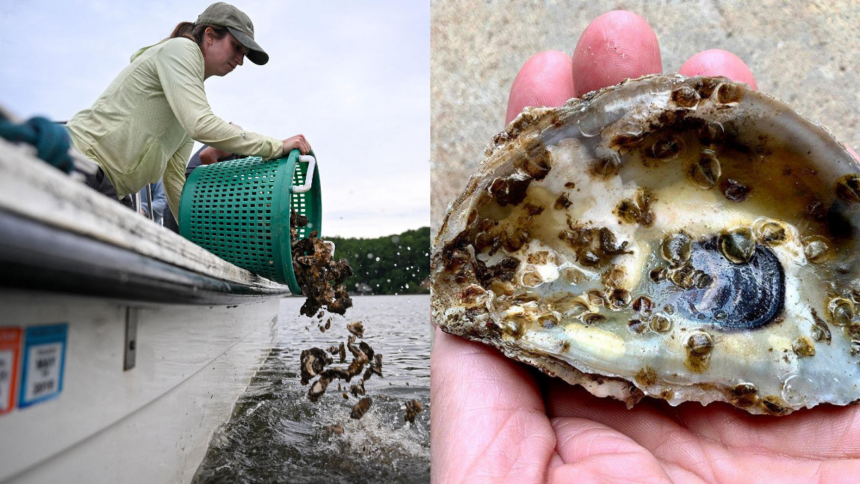
The Chesapeake Bay, a vital estuary stretching across the Mid-Atlantic region, has long suffered from the devastating effects of pollution, overfishing, and climate change. For decades, the delicate balance of its ecosystem has been disrupted, causing widespread declines in water quality and marine life. However, a groundbreaking conservation effort is underway to restore the bay’s former glory, with scientists planting a staggering 30 million oysters in an ambitious bid to revive the region’s ecological health.
Restoring the Bay’s Forgotten Filter
Oysters have long been recognized as the unsung heroes of marine ecosystems, playing a crucial role in maintaining water quality and supporting biodiversity. By filtering vast amounts of water, oysters help to remove pollutants, excess nutrients, and excess algae, which can lead to ‘dead zones’ and harm marine life. The Chesapeake Bay Foundation (CBF), in partnership with the Severn River Association, has been working tirelessly to reintroduce juvenile oysters to the bay, with the latest batch of three million marking a significant milestone in the project.
The planting of oysters in the Severn River, a tributary of the Chesapeake Bay, has been a labor-intensive process, requiring careful consideration of the water’s conditions and the needs of the young oysters. The oysters, typically measuring no larger than a grain of rice, are placed in protected sanctuaries, where they can grow and thrive without the threat of predators or human impact. Scientists are closely monitoring the oysters’ progress, tracking their growth rates and monitoring water quality to ensure the success of the project.
Unlocking the Power of Ecosystem Services
By restoring oyster populations, scientists hope to unlock the full potential of ecosystem services, which can have far-reaching benefits for the environment and human communities. For instance, healthy oyster reefs can provide essential habitats for juvenile fish, help to reduce coastal erosion, and even mitigate the impacts of climate change. The CBF and its partners believe that by investing in oyster restoration, they can create a resilient and thriving ecosystem that supports the well-being of both people and planet.
As the project gains momentum, scientists are eager to explore the potential applications of oyster-based ecosystem services. From water filtration to coastal protection, the benefits of oyster restoration are vast and multifaceted. By harnessing the power of these tiny creatures, researchers hope to inspire a new wave of conservation efforts, empowering communities to take action and protect the delicate balance of our planet’s ecosystems.
A New Era for the Chesapeake Bay
The ambitious 30 million oyster mission is a testament to the power of collaboration and determination in the face of environmental challenges. As the project continues to unfold, scientists, policymakers, and community leaders will be watching with bated breath to see the impact of their efforts. Will this bold initiative mark the beginning of a new era for the Chesapeake Bay, one characterized by restored water quality, thriving marine life, and a renewed sense of hope for the future?
Only time will tell, but one thing is certain: the fate of the Chesapeake Bay hangs in the balance, and the next chapter in its story is being written by the tireless efforts of scientists, conservationists, and community leaders working together to revive this precious ecosystem.