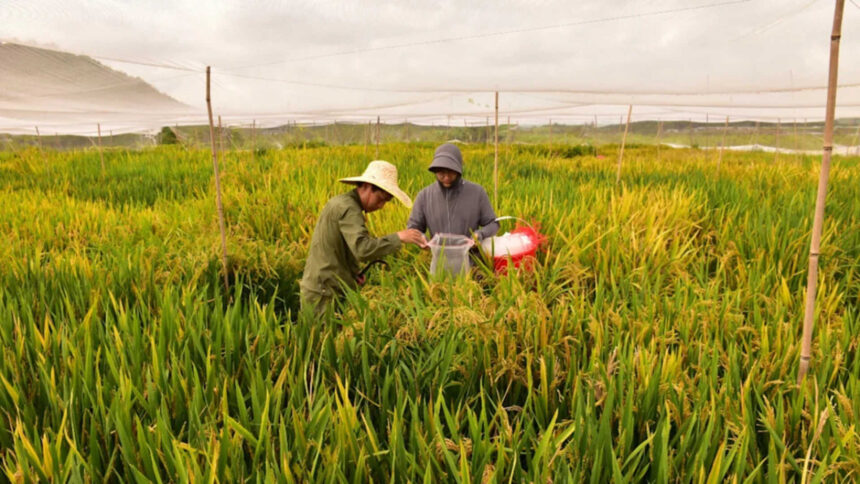
A breakthrough in agricultural technology is poised to revolutionize the way farmers in China cultivate rice, with the development of a new hybrid variety that can preserve its high-yield traits across generations. This innovative breed of rice has the potential to significantly reduce costs for farmers, who currently have to purchase new seeds every year to maintain high yields. The implications of this discovery are far-reaching, with the potential to increase food production, reduce poverty, and promote sustainable agriculture in China and beyond.
Background and Development
The development of this new hybrid rice is the result of years of dedicated research by Chinese scientists, who have been working to overcome the limitations of traditional hybrid rice varieties. These earlier varieties, while high-yielding, had a significant drawback: their yield would decrease dramatically after the first generation, forcing farmers to buy new seeds every year. The new hybrid rice, on the other hand, has been bred to retain its high-yield traits over multiple generations, making it a much more sustainable and cost-effective option for farmers.
The scientists behind this breakthrough have used advanced genetic techniques to identify and breed the desirable traits of high-yielding rice varieties, while also ensuring that these traits are stable and can be passed on to subsequent generations. This has involved careful selection and cross-breeding of different rice strains, as well as rigorous testing to ensure that the resulting hybrid is not only high-yielding but also disease-resistant and adaptable to different environmental conditions.
Implications and Benefits
The potential benefits of this new hybrid rice are numerous and significant. For farmers, the most obvious advantage is the cost savings: by being able to replant seeds from their own crops, rather than having to buy new ones every year, they can reduce their expenses and increase their profits. This, in turn, can help to reduce poverty and improve food security in rural areas, where many farmers struggle to make a living from their crops. Additionally, the increased yields and improved disease resistance of the new hybrid rice can help to ensure a more stable food supply, reducing the risk of crop failures and food shortages.
The new hybrid rice also has the potential to promote more sustainable agricultural practices in China. By reducing the need for external inputs, such as fertilizers and pesticides, farmers can decrease their environmental impact and promote more eco-friendly farming methods. This, in turn, can help to protect China’s natural resources, preserve biodiversity, and mitigate the effects of climate change. Furthermore, the development of this new hybrid rice can serve as a model for other countries, demonstrating the potential of advanced agricultural technologies to drive sustainable development and food security.
Future Prospects and Challenges
While the development of this new hybrid rice is a significant breakthrough, there are still challenges to be overcome before it can be widely adopted by farmers in China. One of the main hurdles is the need for further testing and evaluation to ensure that the new hybrid rice is suitable for different regions and farming systems. This will require collaboration between scientists, farmers, and policymakers to identify the best ways to promote the adoption of this new technology and to address any potential risks or limitations.
Despite these challenges, the future prospects for this new hybrid rice are bright. With its potential to increase food production, reduce poverty, and promote sustainable agriculture, it has the potential to make a significant contribution to China’s development goals and to the global effort to achieve food security and sustainable development. As the world’s population continues to grow, the need for innovative solutions to the challenges of food production and agriculture will only become more pressing. The development of this new hybrid rice is an important step in the right direction, and it will be exciting to see how it is developed and implemented in the years to come.