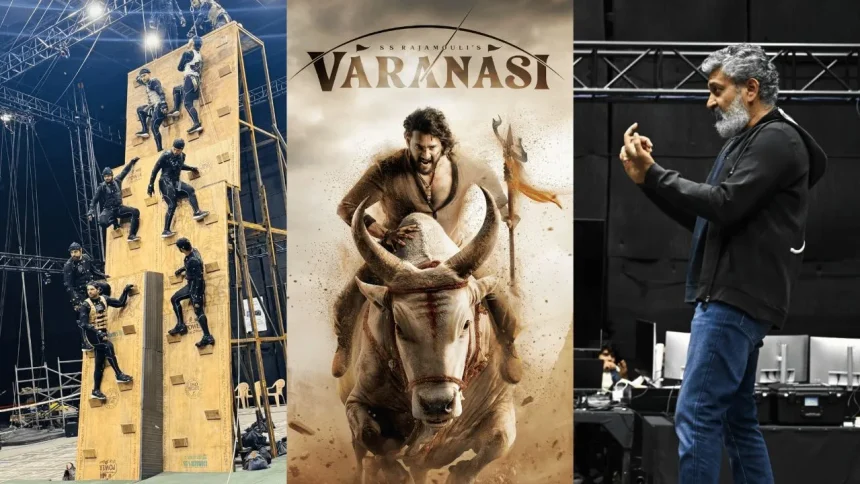
The world of Indian cinema is on the cusp of a revolution, and it’s being driven by cutting-edge technology. The recent unveiling of a state-of-the-art motion-capture facility at Akkineni Nagarjuna’s Annapurna Studios is set to change the face of filmmaking in the country. This innovative tech is already being put to use by acclaimed director SS Rajamouli, who has just wrapped up shooting a thrilling sequence for his upcoming project in the historic city of Varanasi. The result is a breathtaking blend of traditional Indian storytelling and modern visual effects that promises to leave audiences spellbound.
Behind the Scenes of a Technological Marvel
The new motion-capture facility at Annapurna Studios is a testament to the growing importance of technology in Indian filmmaking. This advanced setup allows directors to create complex action sequences and virtual environments with unprecedented ease and precision. By leveraging this technology, filmmakers can significantly reduce shoot time and costs, while also pushing the boundaries of their creative vision. The motion-capture system uses a series of cameras and sensors to track the movements of actors, which are then translated into stunning visual effects. This level of detail and control enables directors to craft scenes that are both visually stunning and deeply immersive.
The use of motion-capture tech also opens up new possibilities for Indian filmmakers to experiment with different genres and styles. With the ability to create complex virtual environments and action sequences, directors can now tackle projects that would have been impossible to realize just a few years ago. This democratization of technology is set to usher in a new era of creativity and innovation in Indian cinema, as more filmmakers are empowered to bring their unique visions to life.
The Creative Possibilities of Motion-Capture
The application of motion-capture technology in Indian filmmaking is not limited to action sequences and visual effects. It also offers a range of creative possibilities for directors to explore. For instance, the tech can be used to create complex characters and creatures that are seamlessly integrated into live-action scenes. This blending of the physical and digital enables filmmakers to craft stories that are both grounded in reality and infused with a sense of wonder and magic. The use of motion-capture also allows directors to work closely with actors, helping them to refine their performances and deliver more nuanced and believable portrayals.
The potential of motion-capture tech to enhance the storytelling process is vast and exciting. By providing filmmakers with a powerful tool to visualize and realize their creative vision, this technology is set to play a major role in shaping the future of Indian cinema. As more directors begin to experiment with motion-capture, we can expect to see a new wave of innovative and imaginative films that push the boundaries of the medium and captivate audiences like never before.
A New Era for Indian Cinema
The advent of motion-capture technology in Indian filmmaking marks the beginning of a new era for the industry. As this tech continues to evolve and improve, we can expect to see a significant shift in the way films are made and consumed. The convergence of technology and creativity will enable filmmakers to craft stories that are more engaging, immersive, and visually stunning than ever before. With the likes of SS Rajamouli already embracing this technology, it’s clear that the future of Indian cinema is bright and full of possibilities.
As the Indian film industry continues to grow and mature, it’s exciting to think about the kind of stories that will be told and the innovative ways in which they will be told. With motion-capture tech at the forefront, the possibilities are endless, and the future of Indian cinema has never looked more promising. The next generation of filmmakers will be empowered to push the boundaries of the medium, experimenting with new genres, styles, and technologies to create a fresh and exciting wave of Indian cinema.
The impact of motion-capture technology on Indian filmmaking will be felt for years to come, as the industry continues to evolve and adapt to new creative possibilities. As audiences, we can look forward to a new era of cinematic storytelling that is more immersive, engaging, and visually stunning than ever before. With the fusion of traditional Indian storytelling and modern technology, the future of Indian cinema is set to be a thrilling and unforgettable ride.